Elevate TPO Commercial Roofing in Lake County: Flat Roof Guide
For many Lake County building owners, the roof is easy to ignore until ponding water, ceiling stains, or repeated service calls start interrupting business. Low-slope commercial roofs in Lake County and southern Wisconsin take a specific kind of beating: freeze-thaw cycles, Lake Michigan moisture, summer heat, hail, and wind-driven rain. That is why Elevate TPO commercial roofing in Lake County is worth understanding before your next roof replacement or major repair. If you are searching for elevate tpo commercial roofing lake county property owners can compare confidently, the system should be evaluated as more than a white membrane. Elevate, formerly Firestone Building Products, is a familiar name in commercial roofing, and TPO is one of the common single-ply options for flat and low-slope buildings that need a clean, durable, reflective roof system.
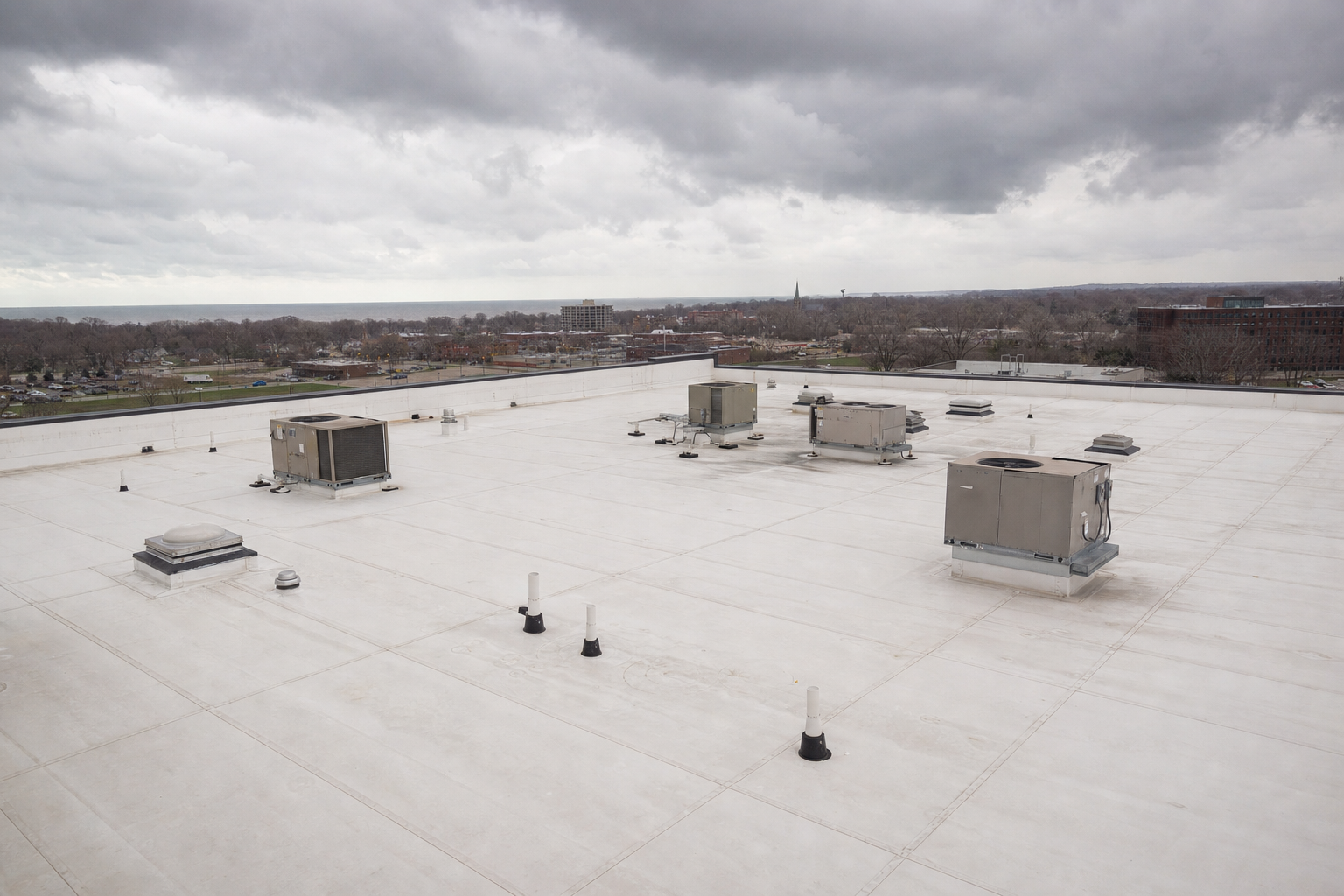
What Elevate TPO Commercial Roofing Means
TPO stands for thermoplastic polyolefin. In plain English, TPO roofing is a single-ply thermoplastic membrane used on low-slope commercial roofs. A low-slope roof is a roof designed with limited pitch that depends on drains, scuppers, or gutters to move water. Instead of layers of asphalt, gravel, or coatings, a TPO system uses large membrane sheets that are attached to the roof deck and heat-welded at the seams. A heat-welded seam is a membrane seam fused with hot air rather than only adhesive.
Elevate is the current roofing brand name for the product line many contractors and property managers still remember as Firestone Building Products; Holcim announced the Firestone Building Products rebrand to Elevate in 2022. [1]
That name change matters because older building records may say “Firestone TPO,” while newer specifications, warranties, and product literature may say “Elevate TPO.” In many cases, people are talking about the same product family under the newer brand. For Elevate TPO commercial roofing Lake County projects, the brand history matters, but the installed roof still depends on the membrane, insulation, attachment method, flashing, drainage, workmanship, and manufacturer documentation.
Why TPO Fits Commercial Flat Roofs in Lake County
TPO is popular for commercial flat roofs because it balances practical installation, reflective performance, and maintainability. For buildings in Waukegan, Gurnee, Zion, North Chicago, Libertyville, Lake Forest, Highland Park, Kenosha County, and Racine County, those points matter.
A good TPO system can help with:
- Reflective roof surface performance during hot summer afternoons
- Heat-welded seams that reduce reliance on adhesives at the laps
- Compatibility with commercial insulation packages
- Easier visual inspection compared with dark, gravel-surfaced systems
- Repairability when punctures, open seams, or flashing issues are caught early
Cool roofs reflect more sunlight and absorb less solar energy than conventional roofs, and the U.S. Department of Energy explains that reflective roofs can stay more than 50 degrees Fahrenheit cooler than conventional roofs under the same sunny conditions. [2]
For property managers comparing a commercial flat roof Lake County proposal, TPO should not be treated as a one-line material choice. TPO membrane roofing Illinois projects can vary by membrane thickness, insulation layout, attachment method, flashing scope, walkway protection, drainage corrections, and warranty documentation. Those details are what separate a basic roof quote from a roof system designed for the building.
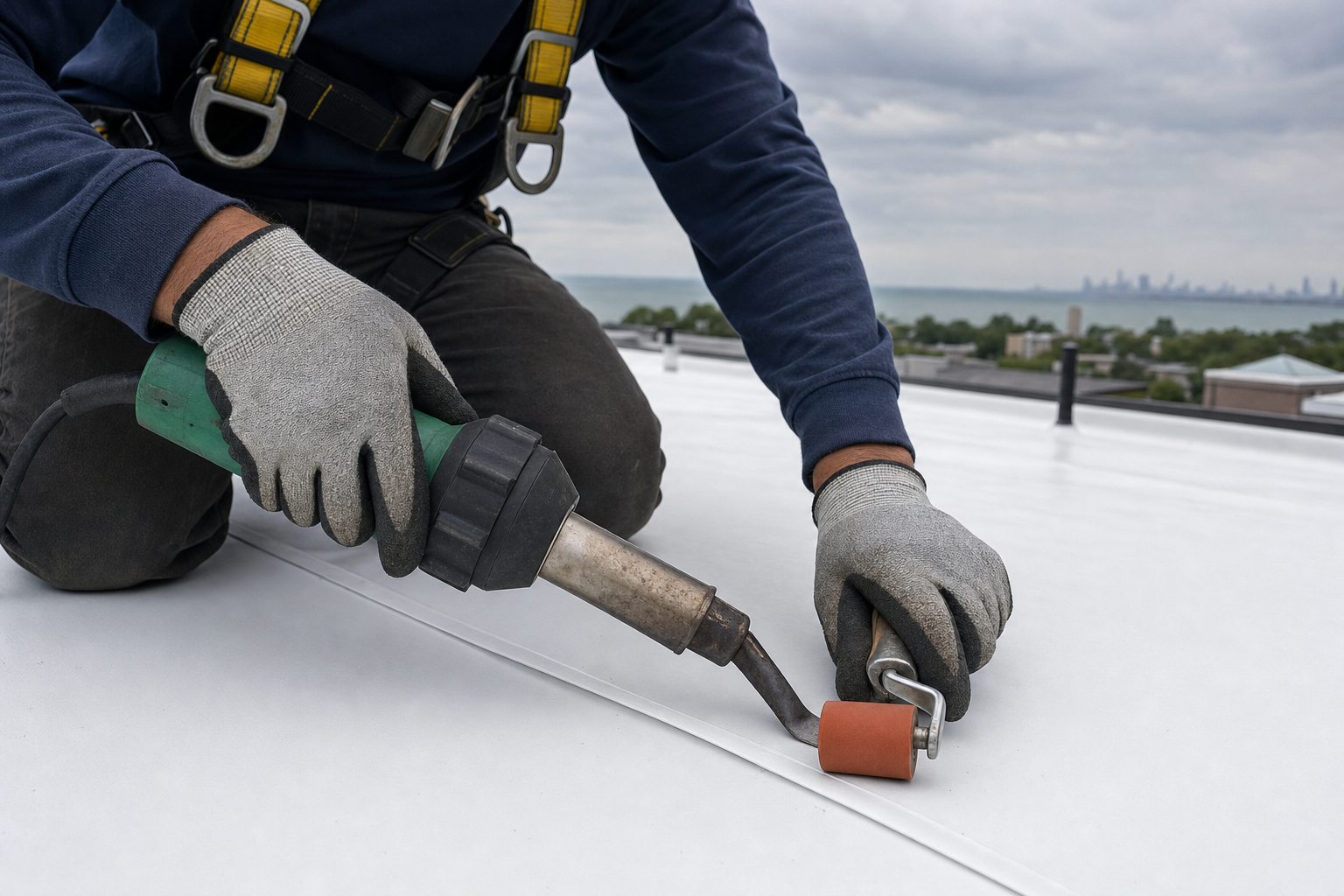
The Midwest Details That Make or Break the Roof
The membrane is only one part of a commercial roof. In Lake County, the details around it usually decide how well the roof performs.
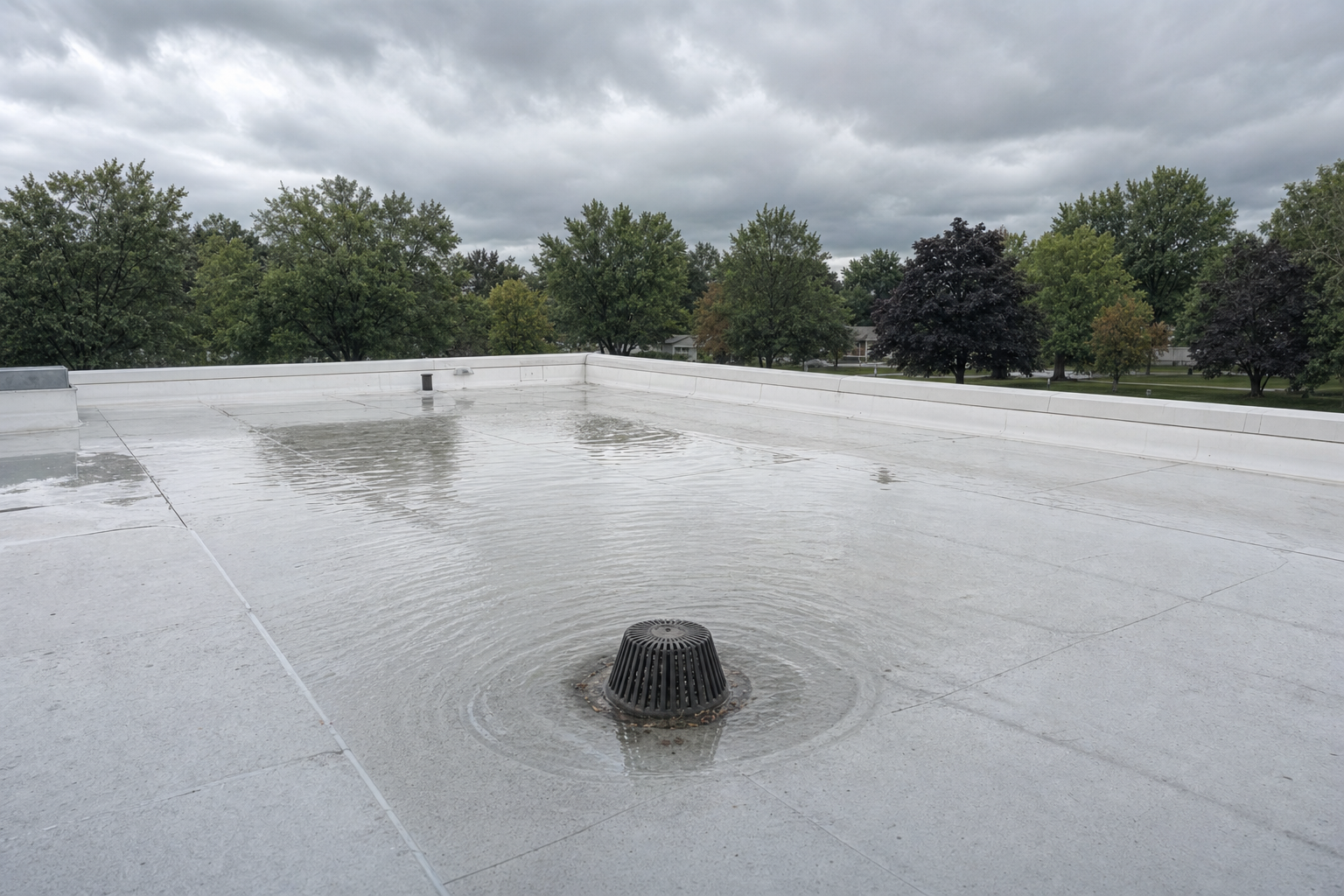
Drainage comes first. A low-slope roof should move water toward drains, scuppers, or gutters instead of holding it in shallow areas. Ponding water means water that remains on the roof after normal drainage time. Ponding water on a low-slope commercial roof can stress seams, insulation, flashing, and roof drains. FEMA guidance for commercial buildings also emphasizes that roof drainage systems, rooftop equipment, edge details, and maintenance conditions can affect how roofs perform in severe weather. [3]
Flashing is next. Rooftop HVAC curbs, parapet walls, pipe penetrations, and access hatches are common leak points. A TPO roof can be installed beautifully in the open field and still fail early if the transitions are rushed.
Insulation also matters. Commercial roof assemblies are often upgraded during replacement because the roof is already open. The right insulation layout can improve drainage, support code requirements, and help the roof assembly manage heat and condensation more effectively. Tapered insulation can be especially important when the existing roof does not move water well toward drains or scuppers.
Finally, foot traffic needs a plan. Restaurants, medical offices, retail strips, warehouses, churches, and apartment buildings often have service technicians walking to rooftop equipment. Walk pads and clear access paths help protect the membrane from avoidable punctures.
For building owners planning commercial flat roof maintenance in Lake County, regular photos, repair records, inspection notes, and warranty documents can make future decisions easier.
When to Consider Replacement Instead of More Repairs
Not every TPO roof issue calls for replacement. A small puncture, isolated flashing defect, or limited seam concern may be repairable. But repeated leaks across different areas usually point to a larger roof-system problem.
Schedule a commercial roof inspection if you are seeing:
- Interior ceiling stains after wind-driven rain
- Ponding water that remains after the roof should have drained
- Loose membrane, wrinkles, or billowing
- Cracked or failing flashing at parapets and curbs
- Repeated repairs in the same general area
- Wet insulation found during a prior service visit
- Hail impact marks on soft metals or rooftop components
For older Firestone-labeled roofs, an inspection can also help clarify what system is currently installed, what condition it is in, and whether an Elevate TPO replacement is a good fit for the building. If the issue is limited, roof repair in Lake County may be the right next step. If recent hail, wind, or severe rain started the leak pattern, storm damage roofing in Lake County should be documented before repair decisions are made.
Recover vs. Tear-Off: A Key TPO Roof Replacement Decision
A recover means installing a new roof system over an existing roof where conditions allow. A tear-off means removing the existing roof assembly before installing the new system.
Recover projects can sometimes reduce disruption and disposal costs, but they depend on the condition of the existing roof, the number of roof layers already in place, trapped moisture, deck condition, local code requirements, and manufacturer requirements. A tear-off is usually more involved, but it can reveal wet insulation, damaged decking, hidden drainage problems, and old flashing issues that should not be buried under a new system.
For TPO roof replacement Lake County IL buildings, this decision should be made after inspection, moisture evaluation where appropriate, and a clear review of the building’s drainage and rooftop equipment. The lowest proposal is not always the best comparison point if one contractor is assuming a recover and another is pricing a full tear-off.
Questions to Ask Before Choosing a TPO System
A good commercial roofing conversation should be specific. Before approving a proposal, ask what membrane, insulation, attachment method, flashing details, drainage improvements, and maintenance expectations are included.
Useful questions include:
- Is this a recover or a full tear-off?
- How will wet insulation be identified and handled?
- Are tapered insulation or drainage corrections included?
- How will rooftop HVAC curbs and penetrations be flashed?
- What walkway protection is included for service access?
- What manufacturer documentation applies to this roof system?
- What routine maintenance should be planned each year?
Clear answers matter more than a fast number. A flat roof protects inventory, tenants, equipment, and daily operations. The proposal should explain the system, not just quote the square footage. A commercial TPO roof estimate should identify the membrane, insulation, attachment method, flashing scope, drainage plan, and warranty documentation.
For Lake County property managers, the proposal should also explain whether the roof is mechanically attached, fully adhered, or attached through another approved method such as induction welding where relevant. The right answer depends on the building, the deck, wind exposure, roof layout, budget, and manufacturer requirements.
Schedule an Elevate TPO Commercial Roof Inspection in Lake County
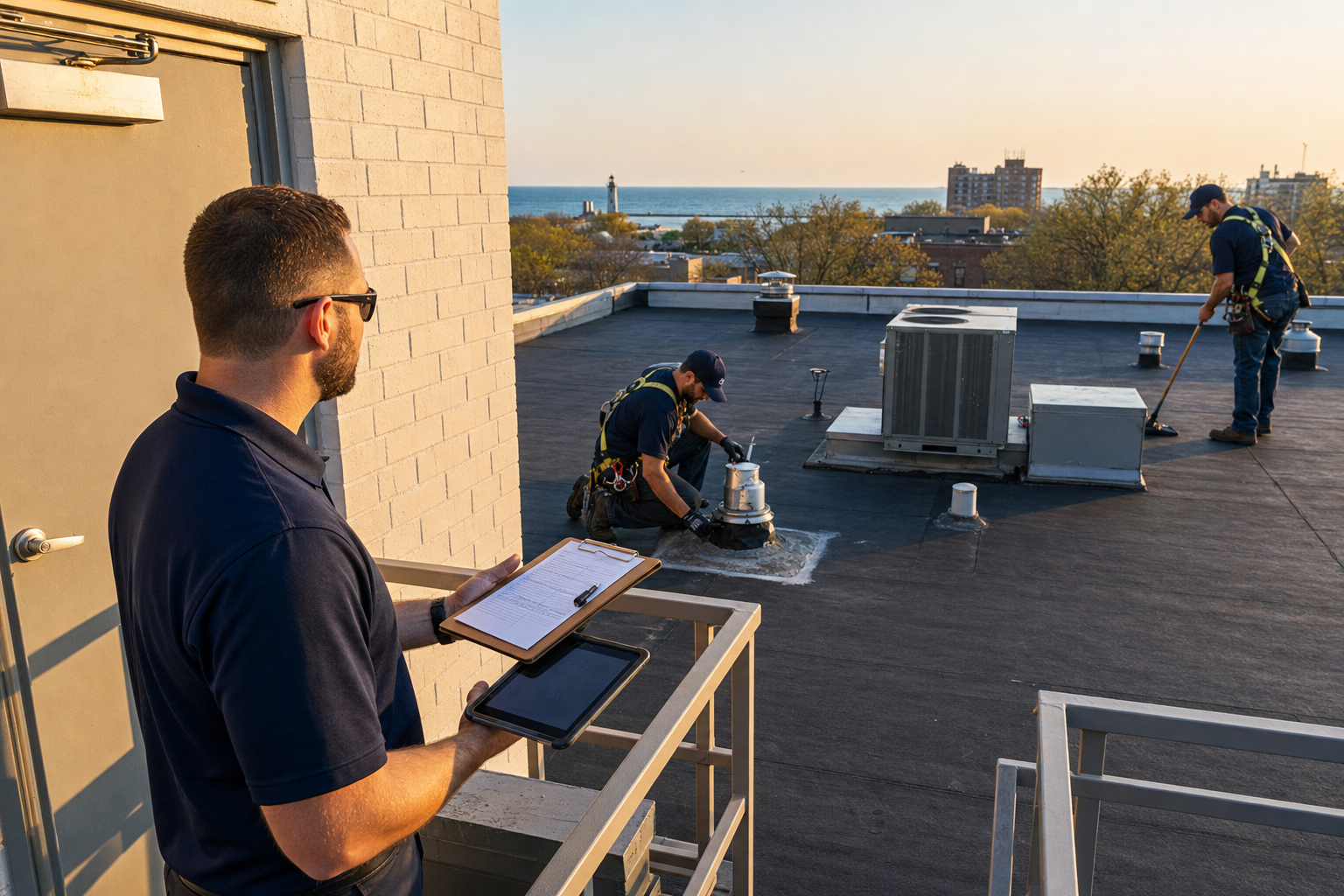
If your Lake County building has ponding water, recurring leaks, aging Firestone paperwork, or a low-slope roof that is ready for a closer look, Lake Point Exteriors can help. Book a free commercial roof inspection or quote for your building in Lake County, IL, or nearby southern Wisconsin, and we will explain what we find in clear, practical terms.
If you are comparing Elevate TPO commercial roofing in Lake County or southern Wisconsin, start with the condition of the roof you already have. A commercial roof inspection in Waukegan can help identify whether repair, maintenance, recover, or replacement is the practical next step. Lake Point Exteriors also supports nearby property owners looking for roofing services in Waukegan, Lake County, and nearby southern Wisconsin communities.
FAQ
What is Elevate TPO commercial roofing?
Elevate TPO commercial roofing is a low-slope roof system that uses thermoplastic polyolefin membrane sheets, heat-welded seams, insulation, flashing, and manufacturer documentation under the Elevate brand formerly associated with Firestone Building Products.
Is Elevate TPO a good option for Lake County commercial flat roofs?
Elevate TPO can be a good fit for many Lake County commercial flat roofs when drainage, insulation, flashing, attachment, rooftop equipment, and maintenance needs are addressed as a full system.
Is Elevate TPO the same as Firestone TPO?
Elevate is the current brand name for the roofing products many people previously knew as Firestone Building Products. Older paperwork may reference Firestone, while newer product and warranty materials may reference Elevate.
Is TPO only for large commercial buildings?
No. TPO is commonly used on many low-slope commercial and multifamily buildings, including retail centers, offices, warehouses, churches, and apartment properties.
Does a white TPO roof help with summer heat?
It can. The roof surface is only one part of building performance, but the Department of Energy notes that reflective cool roofs absorb less solar energy and can reduce heat flow into occupied space. [2]
How often should a commercial TPO roof be inspected?
Many building owners schedule inspections at least once a year and after major wind, hail, or severe rain events. The right schedule depends on age, roof access, drainage, rooftop equipment, and prior repair history.
When should a Lake County building owner replace a TPO roof instead of repairing it?
Replacement should be considered when leaks repeat across multiple areas, insulation is wet, seams or flashing are widely failing, ponding water is chronic, or the roof is near the end of its serviceable life.
What should be included in an Elevate TPO roofing proposal?
A proposal should identify whether the job is a recover or tear-off, the membrane and insulation package, attachment method, flashing details, drainage corrections, walkway pads, and applicable manufacturer documentation.
Does Lake Point Exteriors inspect commercial TPO roofs near Waukegan?
Yes. Lake Point Exteriors can inspect low-slope commercial roofs in Waukegan, Lake County, nearby approved northern Illinois communities, and southern Wisconsin.