Tapered Insulation for Flat Roof Drainage in Lake County
If water keeps sitting on your flat commercial roof after rain, it is not just an annoyance. Ponding water can speed up membrane wear, stress seams, collect debris, create ice buildup in winter, and make small drainage problems harder to ignore after every Lake County storm. For commercial buildings in Waukegan, Gurnee, Zion, Kenosha County, and nearby areas, tapered insulation flat roof drainage is often the practical fix when the roof deck itself does not move water where it needs to go. Instead of treating puddles one drain at a time, tapered insulation builds slope into the roof assembly so water has a clear path toward drains, scuppers, gutters, or roof edges. For buildings already planning commercial flat roof replacement in Lake County, drainage design should be part of the roof conversation from the start.
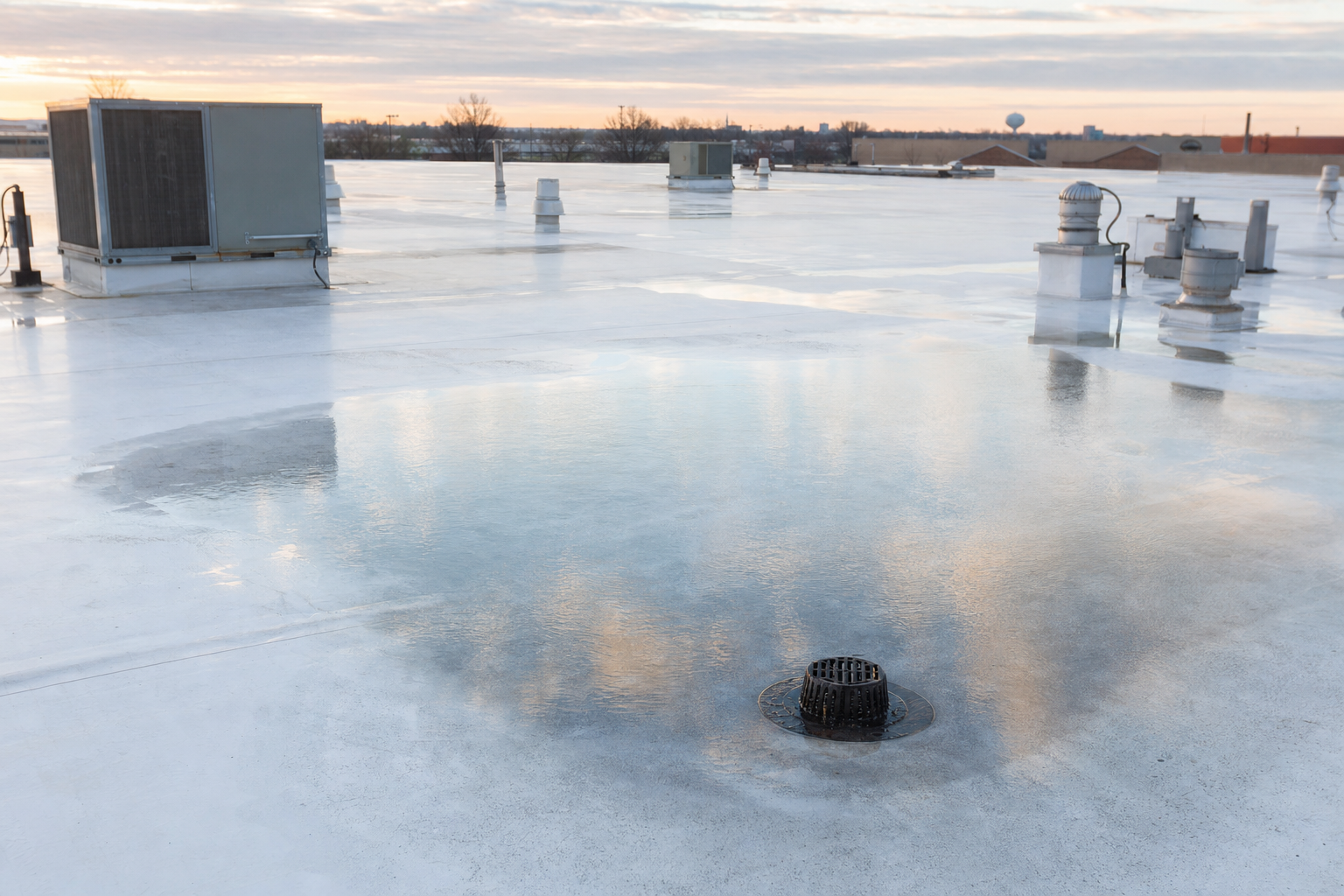
What Ponding Water Means on a Flat Roof
A “flat” commercial roof is really supposed to be low-slope, not dead flat. The goal is positive drainage, which means water should move off the roof surface instead of staying in the same low spots.
Ponding water means water remains on a low-slope roof for about 48 hours after rainfall under drying conditions. NRCA guidance commonly uses that 48-hour benchmark when discussing whether water is still ponding on a roof. [1] Some temporary puddles after a hard rain can happen. Flat roof ponding water that keeps returning to the same areas is different.
Common causes include:
- Low areas in the structural deck
- Drains set too high
- Compressed or uneven insulation
- Poorly placed curbs, HVAC units, or penetrations
- Old repairs that interrupt water flow
- Parapet walls with limited overflow paths
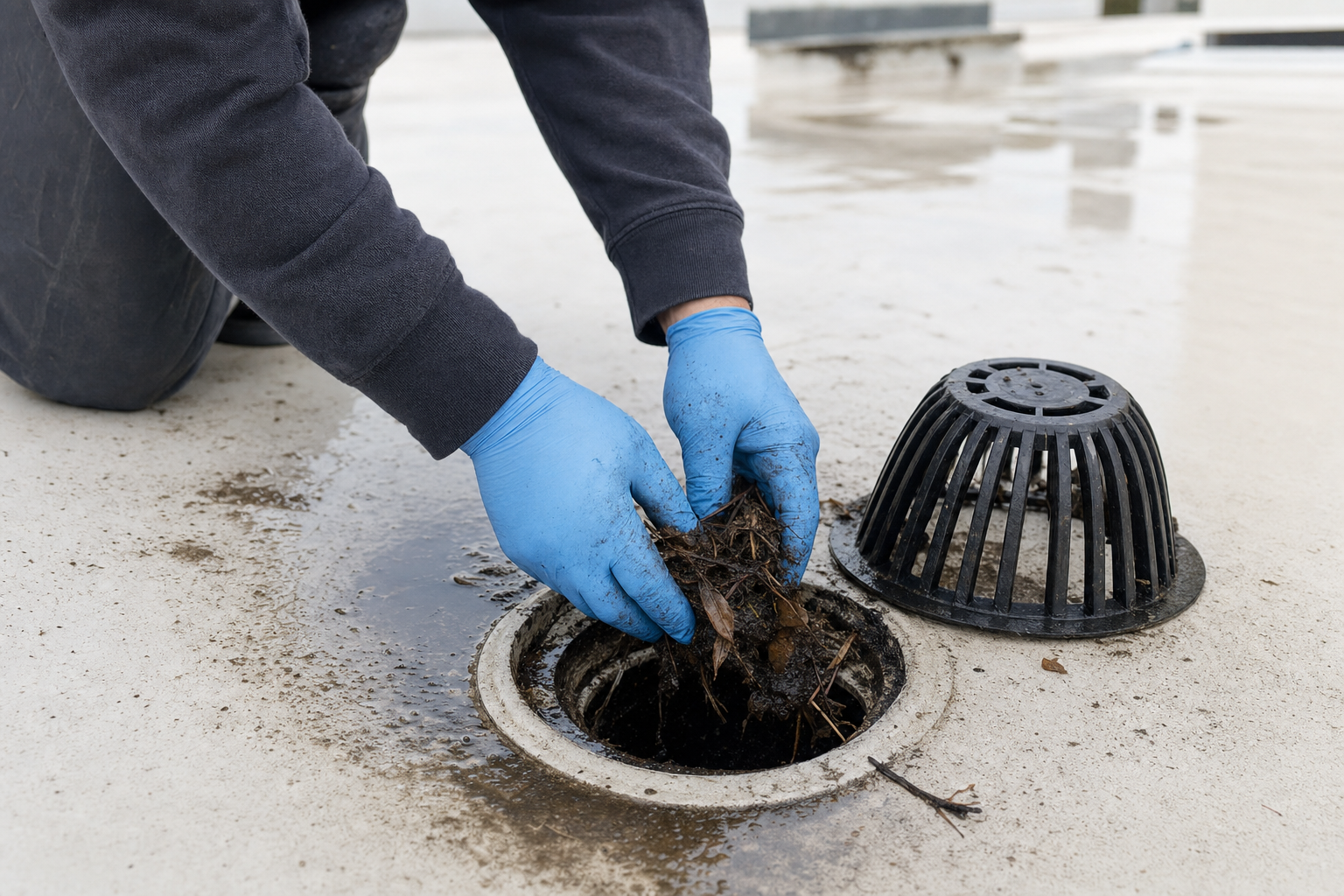
- Clogged strainers, gutters, or downspouts
Around Lake Michigan, freeze-thaw cycles make commercial roof drainage even more important. Standing water can freeze, expand, thaw, and repeat through winter, adding stress around seams, flashings, and drain areas.
How Tapered Insulation Flat Roof Drainage Works
Tapered insulation is rigid low-slope roof insulation manufactured in sloped panels. Instead of installing every insulation board at the same thickness, the system uses boards of different thicknesses to create a planned pitch across the roof. Tapered insulation flat roof drainage works by changing the slope under the membrane, not by adding another surface patch over the puddle.
A common low-slope roof drainage target is 1/4 inch of slope per foot. [2] That slope can direct water toward:
- Internal roof drains
- Scuppers through parapet walls
- Gutters at the roof edge
- Collector boxes and downspouts
- Drain sumps around existing drains
Tapered insulation uses sloped rigid boards to direct water toward drains, scuppers, gutters, or roof edges. Drain sumps lower the area around roof drains so water can reach the drain instead of stopping beside it. Crickets are smaller sloped sections that help move water around curbs, HVAC units, skylights, or other rooftop obstructions.
The important part is the layout. A good tapered design is not just “add thicker insulation over there.” It maps high points, low points, crickets, valleys, and flat roof drain sumps so water moves in the right direction without creating a new pond somewhere else.
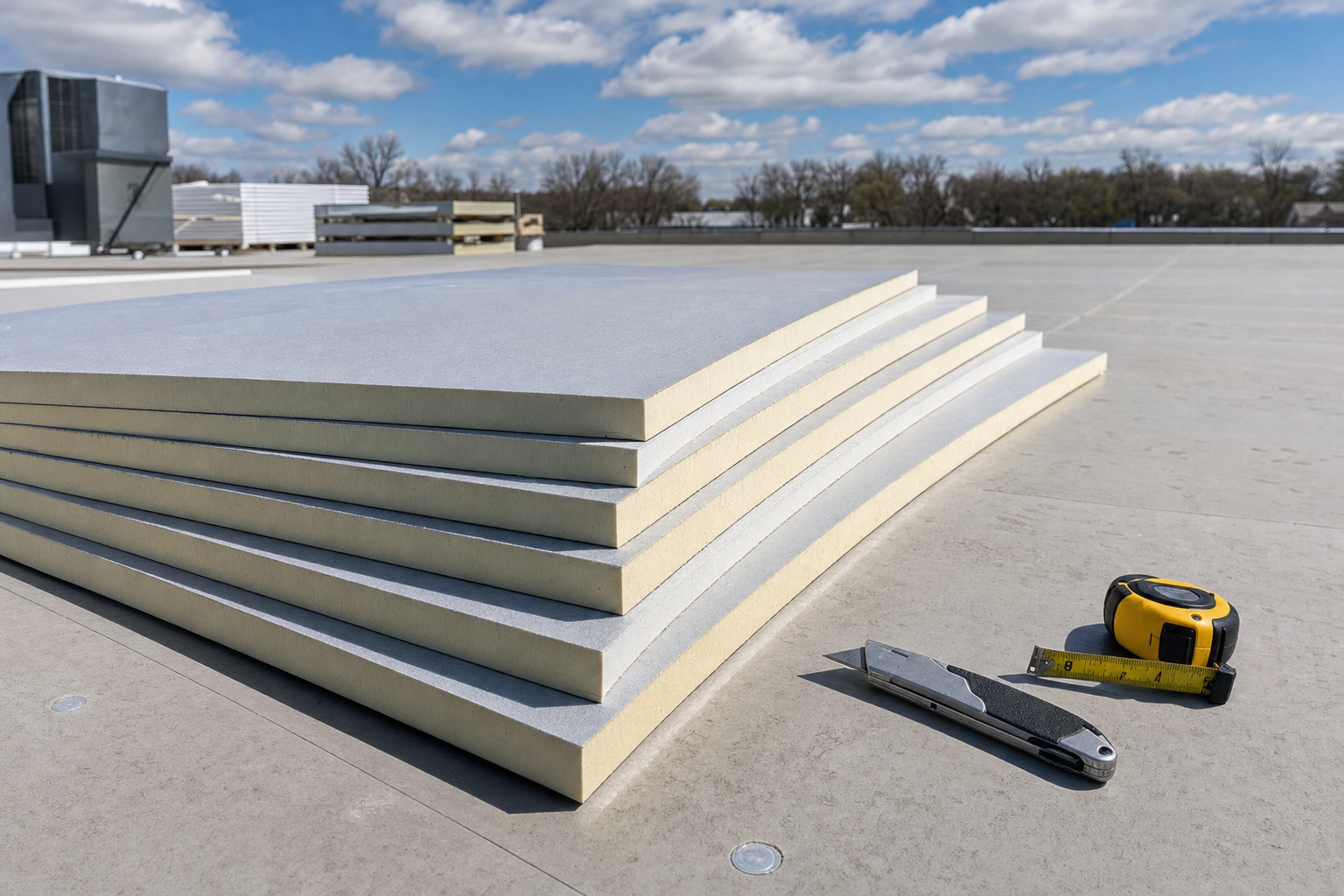
Where Tapered Insulation Fits Best
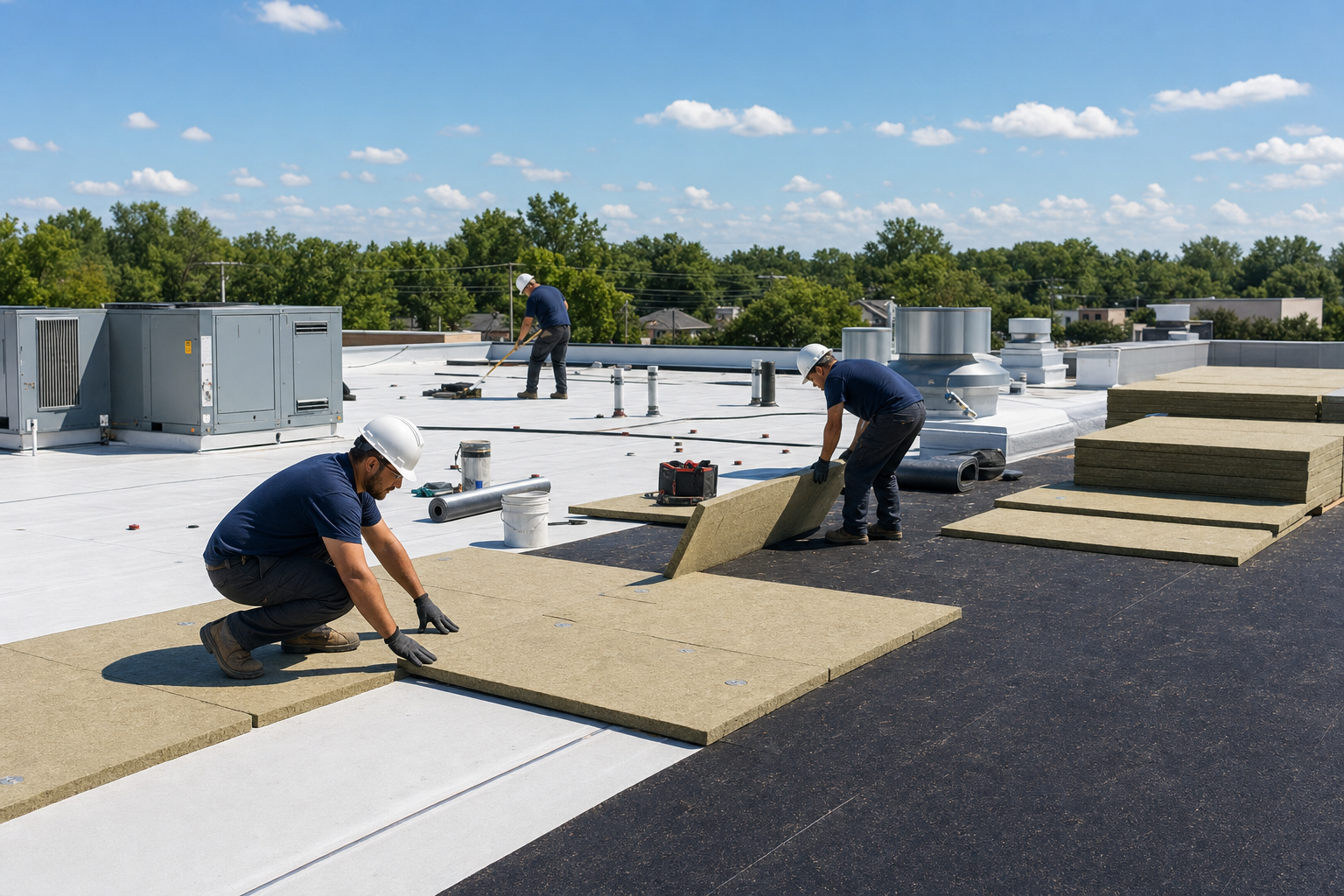
Tapered insulation is commonly used during commercial roof replacement or major recover projects because the roof assembly is already being opened, evaluated, and rebuilt. A recover means installing a new roof system over an existing roof assembly when the existing roof is dry, stable, code-eligible, and compatible with the new system.
Tapered insulation can work with common flat-roof systems Lake Point Exteriors installs and services, including TPO, EPDM, modified bitumen/SBS, and built-up roofing. TPO roof drainage and EPDM roof drainage both depend on the full assembly: insulation layout, cover board, attachment method, membrane details, drains, scuppers, gutters, and downspouts.
It is especially useful when:
- The roof deck cannot be economically re-sloped
- Ponding appears around drains or behind rooftop equipment
- The building has parapets that trap water
- A roof has multiple drain points that need better flow
- The owner wants to improve drainage while upgrading insulation value
Tapered insulation can also help with energy performance because it is part of the insulation package. The R-value and code path still need to be reviewed as part of the roof design, but drainage should come first. A thicker roof that still holds water is not a good outcome.
What a Drainage Inspection Should Check
Before recommending tapered insulation, a contractor should look at the whole drainage pattern. On a commercial roof, one low spot may be a symptom, not the root problem.
A practical inspection should document:
- Where water remains after rain
- Drain and scupper locations
- Drain bowl height compared with the roof surface
- Existing membrane type and condition
- Soft insulation or wet areas
- HVAC curbs, pipe penetrations, and traffic paths
- Parapet height and overflow drainage
- Photos, roof plan notes, and moisture-scan findings when needed
This is where tapered insulation flat roof drainage should be evaluated as a design solution, not just a material upgrade. If the issue is a clogged drain, blocked scupper, or neglected commercial gutters and downspouts, maintenance may solve the immediate problem. If the issue is deck deflection, high drain bowls, trapped water behind equipment, or a dead-flat roof plane, the drainage design may need to change.
Building codes also recognize the importance of roof drainage and emergency overflow. The International Plumbing Code requires secondary roof drains or scuppers where trapped water could build up if primary drains are blocked. [3] Emergency overflow drainage helps reduce trapped-water risk when primary roof drains are blocked.
Tapered Insulation Is a System, Not a Patch
Small puddles sometimes get patched with extra membrane, sealant, or isolated repairs. That may help a leak detail, but it does not fix the drainage plane. Tapered insulation works because it changes the geometry under the membrane.
A complete tapered roof plan may include:
- Field panels that create broad slope
- Crickets that move water around curbs or between drains
- Sumps that lower the area immediately around drains
- Edge details that keep water moving off the roof
- Compatible cover board and membrane installation
- Overflow paths that fit the building’s parapets and drain layout
For Midwest commercial properties, the best time to address ponding is before winter. Fall drainage work can reduce the amount of standing water that turns into ice during December, January, and February. After hail, wind, or heavy rain, storm damage roof inspections can also separate drainage problems from membrane damage, flashing failure, or impact-related roof concerns.
Flat Roof Drainage FAQs
What is tapered insulation on a flat roof?
Tapered insulation is rigid roof insulation installed in sloped panels so a low-slope roof can move water toward drains, scuppers, gutters, or roof edges. It is one of the main ways contractors create positive roof drainage when the structure itself does not provide enough slope.
How much slope does a flat commercial roof need?
Many low-slope roof designs use 1/4 inch per foot as a common drainage target, but the correct design depends on the roof size, structure, drains, parapet walls, and code requirements. [2]
Does tapered insulation stop every puddle?
Not always. The goal is positive drainage, but real roofs have penetrations, structural limits, rooftop equipment, and existing conditions. A good tapered design should reduce chronic ponding and move water toward the intended drainage points.
Can tapered insulation be added over an existing flat roof?
Sometimes. Tapered insulation flat roof drainage can be part of a recover when the current roof is dry, stable, compatible, and allowed by code. Wet insulation, trapped moisture, deck problems, or failing membrane usually point toward deeper correction instead of simply adding a new layer.
Does ponding water always mean the roof needs replacement?
No. Ponding water may come from clogged drains, high drain bowls, compressed insulation, deck deflection, or design issues. An inspection should identify the cause before recommending repair, recover, or replacement.
Can tapered insulation improve TPO or EPDM roof drainage?
Yes. Tapered insulation can be designed under TPO, EPDM, modified bitumen, PVC, or built-up roofing when the full roof assembly is compatible. The membrane choice matters, but the slope, drain layout, cover board, attachment, and edge details matter too.
When should a Lake County building owner ask for a drainage inspection?
Schedule an inspection when water remains in the same areas after storms, especially before winter freeze-thaw cycles. Building owners in Waukegan can start with a Waukegan commercial roofing contractor inspection, and nearby properties can request Gurnee roofing services when ponding keeps returning after rain.
When to Schedule a Commercial Roof Drainage Inspection
If your commercial flat roof has standing water after storms in Waukegan, Gurnee, Libertyville, Lake Forest, Kenosha County, or nearby areas, Lake Point Exteriors can inspect the drainage pattern and explain what is causing the ponding. Book a free commercial roof drainage inspection, and we will give you a clear repair, recover, or replacement quote based on what the roof actually needs.