Lake County Hail Roof Damage: What to Check After a Severe Storm
If hail just came through Waukegan, Gurnee, Zion, Beach Park, Libertyville, Lake Forest, or nearby Chicagoland suburbs, Lake County hail roof damage is not always easy to read from the ground. Sometimes it looks like missing granules, bruised shingles, lifted edges, dented gutters, or small leaks that show up days later. The goal is simple: stay off the roof, document what you can safely see, and get a clear inspection from someone who understands Lake County, Illinois storms, asphalt shingles, siding, gutters, soffit, and fascia.
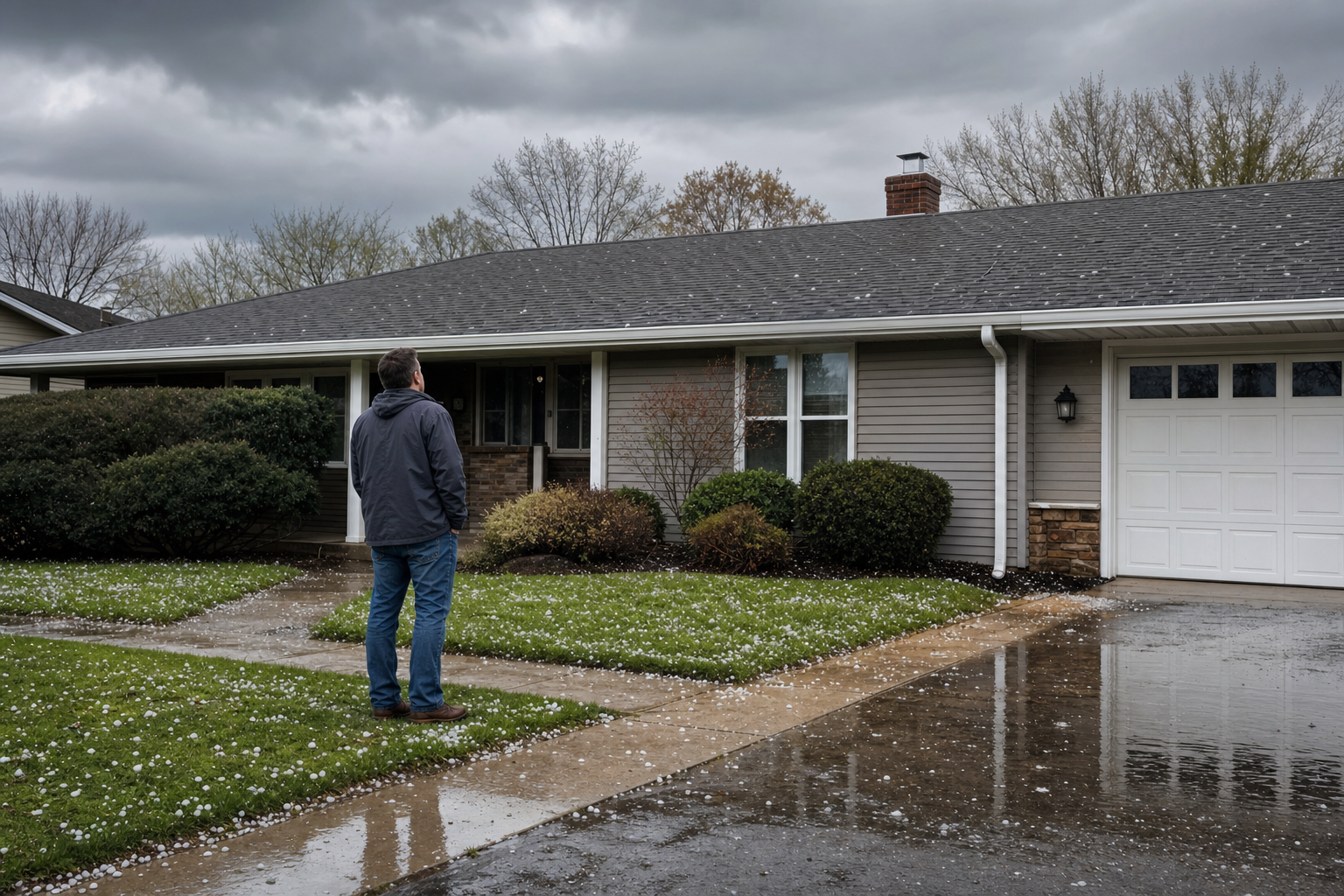
Why Lake County hail can be hard on roofs
Hail does not have to be baseball-sized to matter. Severe thunderstorms produce hail at least 1 inch in diameter or wind gusts of 58 mph or higher. [1] NOAA’s National Severe Storms Laboratory notes that 1-inch to 1.75-inch hail can fall roughly 25 to 40 mph, depending on the storm and hailstone shape. [2]
For Lake County and the North Shore, the storm pattern matters too. Hail may hit one side of a roof harder than the other, especially with wind-driven storms moving across open neighborhoods, mature tree cover, and Lake Michigan moisture. That is why a quick glance from the driveway is useful, but not enough to confirm the full condition of the roof.
What Lake County hail roof damage can look like from the ground
Do not climb onto the roof after a storm. Wet shingles, loose granules, and hidden soft spots make that a bad idea. Start with what you can safely see from the yard, driveway, porch, or sidewalk.
Look for:
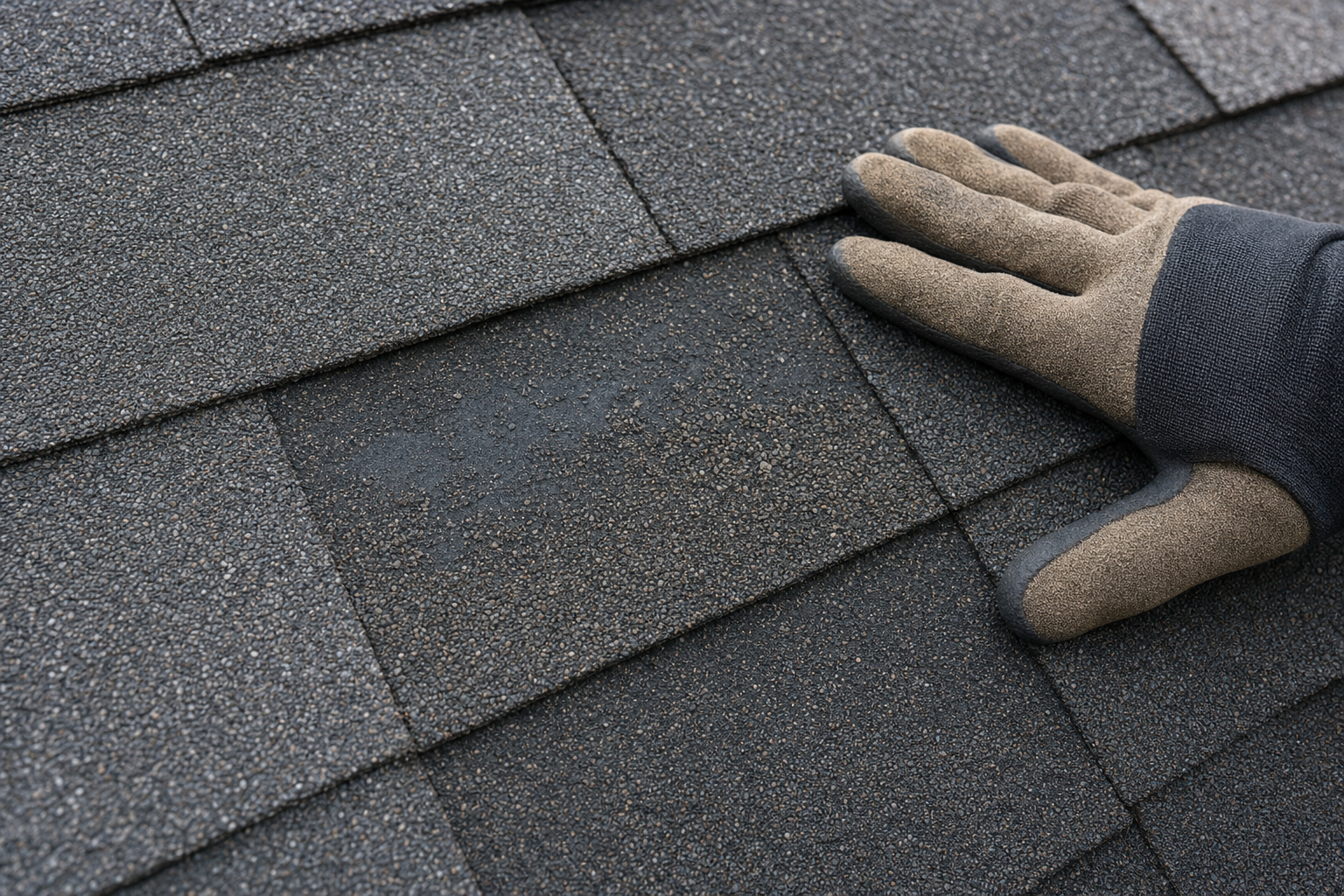
- Dark or uneven patches on asphalt shingles
- Loose granules collecting near downspouts
- Dented gutters, downspouts, fascia, or metal vents
- Shingle tabs that look lifted, curled, cracked, or missing
- Siding marks on the storm-facing side of the home
- New ceiling stains or dripping after the next rain
- Branch impact marks or debris sitting on roof planes
Lake County hail roof damage can affect shingles, gutters, vents, siding, soffit, and fascia in the same storm. Granule loss means the protective mineral surface on asphalt shingles has been knocked loose or worn away; those granules help protect the roof surface from sunlight, rain, and weather exposure. Flashing is the metal or waterproofing detail around roof joints, walls, vents, and chimneys, and it can become a leak path when wind or impact shifts nearby materials.
Hail damage is different from normal aging. Aging usually shows up as broad wear across the roof. Storm damage often follows a pattern tied to the direction of the hail and wind. A good inspection should separate impact marks from older wear, installation issues, manufacturer defects, ventilation problems, or foot traffic.
What to document after hail or wind damage
You do not need to diagnose lake county hail roof damage yourself. You just need useful records that show what happened, where you noticed it, and when the condition appeared.
Right after the storm, write down:
- Date and approximate time the hail or wind hit
- Where you noticed impact, leaks, debris, or dents
- Photos of hailstones next to a coin or ruler if safe
- Photos of gutters, siding, shingles, soffit, fascia, and yard debris
- Screenshots of local weather alerts or radar from that day
- Any interior water stains that appear after the storm
Keep the photos wide enough to show location, then take a closer shot. For example, photograph the whole gutter run, then the dented section. That helps create a timeline and avoids relying on memory later. You can also verify local storm reports through National Weather Service updates or the NOAA NCEI Storm Events Database. [3]
If you choose to contact your homeowner insurance carrier, you remain in control of that process. Lake Point Exteriors LLC can inspect and document exterior conditions as a licensed contractor, but your policy, deductible, and coverage decisions belong between you and your insurer.
Wind damage often travels with hail
Severe storms rarely bring only one problem. Straight-line wind means thunderstorm wind damage that is not tied to rotation, and it can lift shingles, loosen ridge caps, pull at flashing, and push rain under materials that looked fine before the storm. The National Weather Service describes straight-line winds as thunderstorm winds not tied to rotation, and severe thunderstorm warnings are issued when winds reach 58 mph or higher. [4]
That matters in Chicagoland because wind damage may show up as a leak even when hail marks are subtle. A shingle can be creased, loosened, or unsealed without looking dramatic from the ground. Gutters and siding can also tell part of the story. If the metal and siding on one side of the house show fresh impact, the roof above that area deserves a closer look.
What a clear roof inspection should include
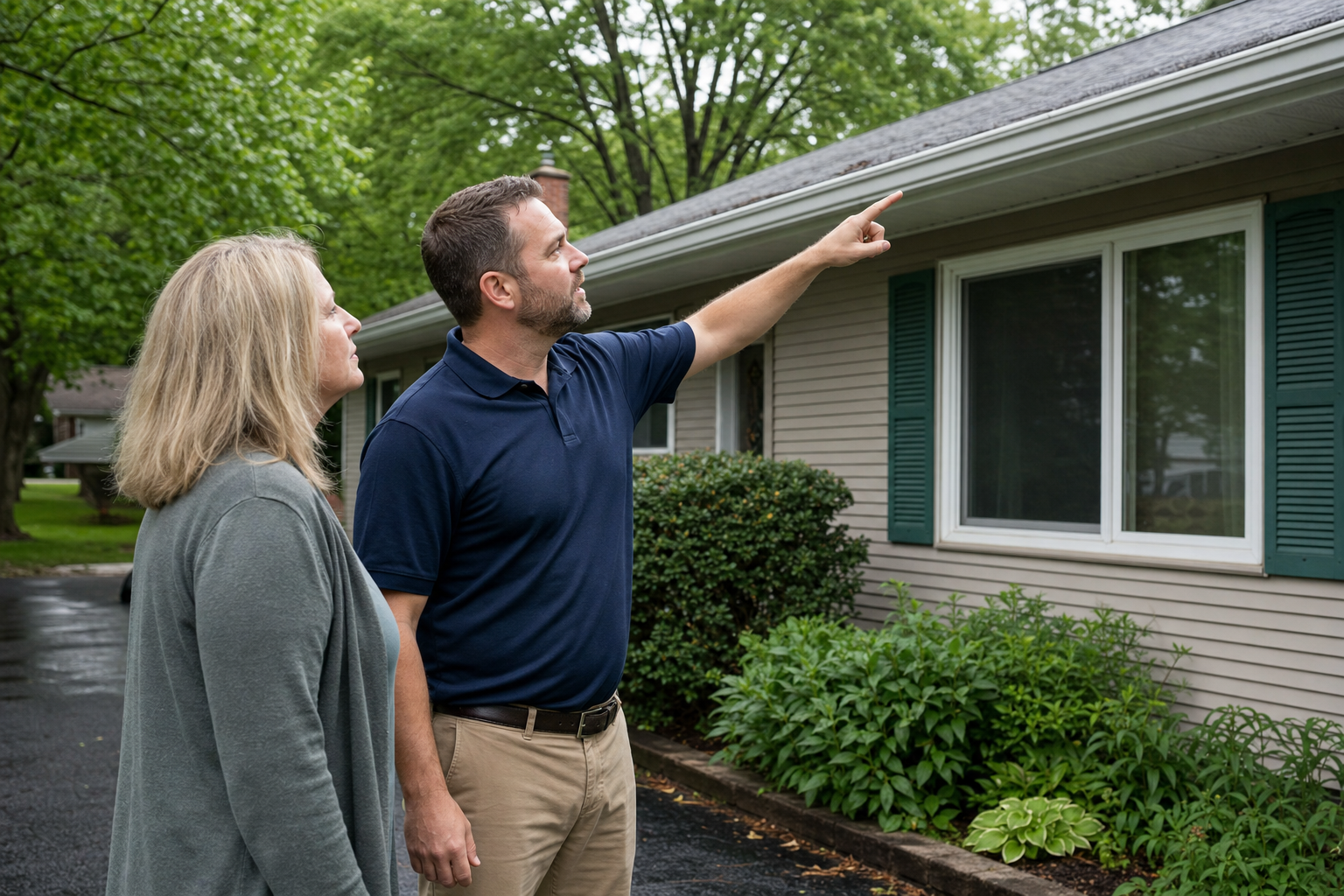
A clear inspection for Lake County hail roof damage should be calm and specific. You should not feel pushed into a replacement conversation before anyone has explained what they found.
A useful inspection should include:
- Photos or video of roof slopes, gutters, siding, soffit, and fascia
- Notes on hail impact patterns versus normal wear
- Checks around vents, flashing, valleys, and ridge areas
- Review of loose, missing, lifted, or creased shingles
- Practical next steps: monitor, repair, quote, or replace if needed
A roof inspection after hail should document impact patterns, material condition, and possible leak paths. It should also explain whether visible marks appear cosmetic, whether they may affect function, and whether the roof needs monitoring, repair, or replacement. Cosmetic hail marks may affect appearance without creating an immediate leak, while functional damage can compromise shingles, flashing, vents, or roof drainage.
For homeowners, the priority is usually asphalt shingle hail damage, gutters, downspouts, siding, soffit, fascia, vents, and flashing. For commercial flat-roof systems in Lake County, Kenosha County, or Racine County, the inspection should also check membrane punctures, seams, drainage points, rooftop equipment, and ponding areas. TPO, EPDM, modified bitumen, and built-up roofing all respond differently to hail and wind, so documentation should match the roof system.
When to call for a Lake County roof inspection
Call for a hail damage roof inspection Lake County homeowners can trust if you see missing shingles, dented gutters, heavy granule buildup, roof debris, loose flashing, new stains, or siding impact on the storm-facing side of the home. A Waukegan roof hail inspection can also make sense when neighbors nearby had confirmed storm damage, even if your roof looks normal from the driveway.
Do not climb the roof, sign a pressure contract, or assume what insurance will or will not cover. Start with safe photos, a practical inspection, and a clear explanation of the roof, gutter, siding, soffit, and fascia condition. For repairs beyond storm documentation, Lake Point Exteriors can also help with asphalt shingle roof repair and replacement and gutter and downspout damage after hail.
FAQ: Lake County hail roof damage
What is Lake County hail roof damage?
Lake County hail roof damage is storm-related impact to shingles, gutters, vents, flashing, siding, soffit, or fascia after hail in Lake County, Illinois.
How soon should I schedule a roof inspection after hail?
Schedule a roof inspection as soon as it is safe to do so. If you see signs of Lake County hail roof damage, including missing shingles, active leaking, dented gutters, or heavy granule loss near downspouts, schedule sooner rather than waiting for the next rain.
Can hail damage a roof without causing a leak right away?
Yes. Hail can loosen granules, bruise shingles, or expose weak areas before a leak appears during a later rain.
Should I climb on my roof after hail?
No. Check safely from the ground and schedule a roof inspection if you see dented gutters, missing shingles, granule loss, roof debris, or interior stains.
What should I photograph after a hailstorm?
Photograph hailstones, gutters, downspouts, siding, roof edges, vents, yard debris, and any interior water stains. Wide photos help show location, and close photos help show the detail.
Does Lake Point Exteriors decide insurance coverage?
No. Lake Point Exteriors can inspect and document exterior conditions, but coverage decisions belong to the insurer and homeowner.
Closing CTA
If hail or severe wind hit your home in Lake County, Waukegan, Gurnee, Zion, Beach Park, Highland Park, Lake Forest, Grayslake, Libertyville, Mundelein, Round Lake, Vernon Hills, Lake Villa, Antioch, Kenosha County, or Racine County, document what you can safely see. Then book a free exterior inspection with Lake Point Exteriors for lake county hail roof damage, wind damage, gutter impact, siding damage, soffit damage, or fascia concerns.
We will look at the roof, gutters, siding, soffit, and fascia, explain what we find in plain English, and give you a clear quote for any repair or replacement work your home actually needs.
References
- National Weather Service severe thunderstorm criteria, https://www.weather.gov/ffc/tstm ↩
- NOAA NSSL Severe Weather 101: Hail Basics, https://www.nssl.noaa.gov/education/svrwx101/hail/ ↩
- NOAA NCEI Storm Events Database, https://www.ncdc.noaa.gov/stormevents/ ↩
- National Weather Service straight-line wind damage explainer, https://www.weather.gov/bro/svrstory_straightlineexplainer ↩