How to Document Hail and Wind Roof Damage in Lake County
When hail or straight-line wind moves through Lake County, the stressful part is often not knowing what changed on your roof, or whether it could become a leak later. A few shingles may look normal from the driveway. Gutters may be dented. Granules may show up near the downspout. And if water starts staining a ceiling days later, it helps to have clear notes from the day of the storm. A good hail damage roof inspection in Lake County starts with safe, calm documentation: photos, dates, visible exterior clues, and a professional look at the roof surface when conditions are safe.
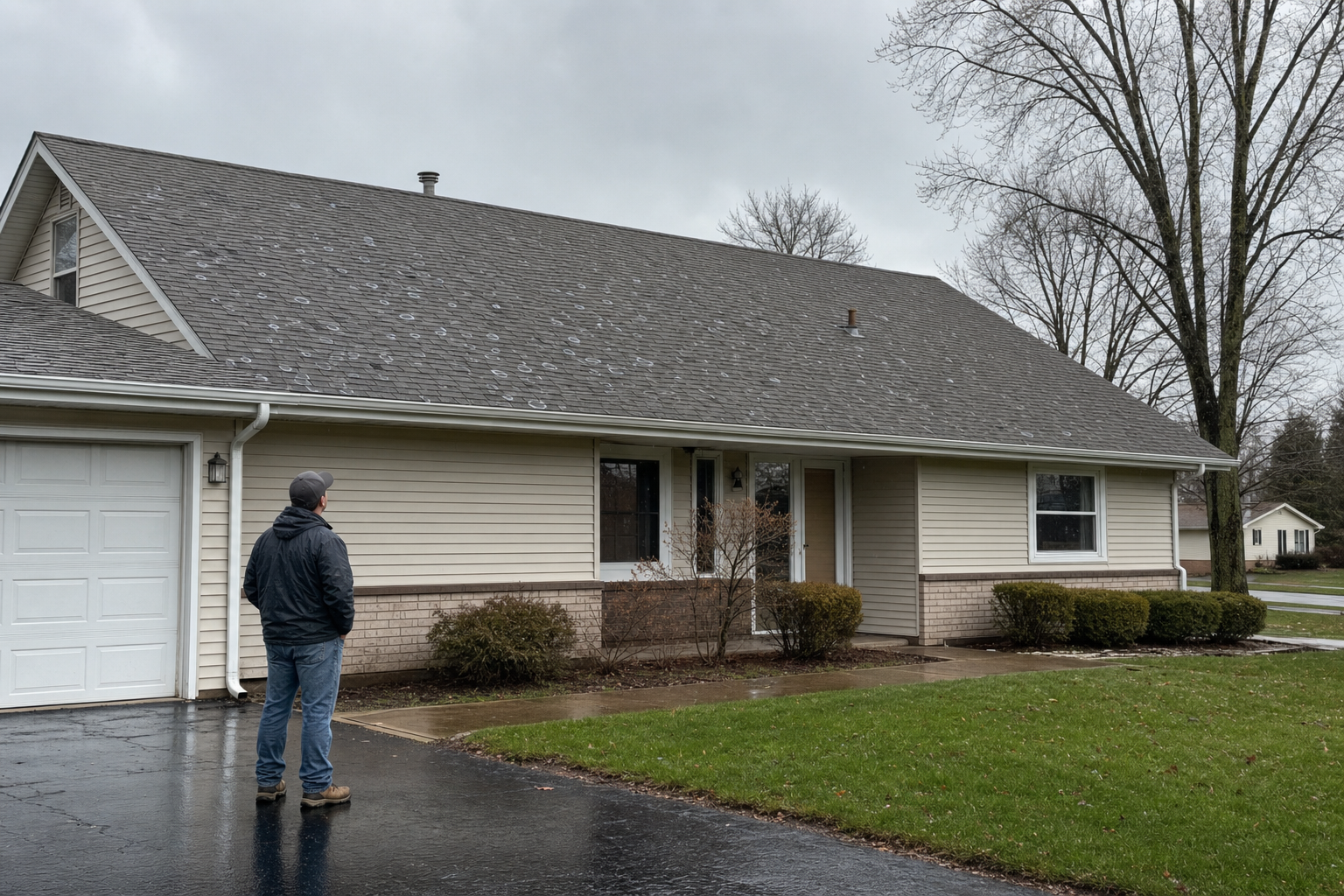
Start With Safety, Not the Ladder
Do not climb onto the roof after a storm. Wet shingles, loose granules, damaged gutters, and gusty post-storm conditions can make a roof dangerous even when it looks dry from the ground.
Start from places you can reach safely:
- The driveway
- The yard
- The porch
- A second-story interior room if it gives a safe roofline view
- Ground-level areas around downspouts and gutters
Use your phone’s zoom instead of stepping onto a ladder. Take wide photos first so the location is clear, then closer photos of any visible damage.
A severe thunderstorm includes hail at least 1 inch in diameter or wind gusts of 58 mph or greater. [1]
Photograph the Roof From More Than One Angle
For a Lake County home in Waukegan, Gurnee, Zion, Grayslake, Libertyville, Mundelein, or nearby communities, wind direction matters. One side of the roof may take most of the impact while another side looks untouched.
Take photos from all sides of the home if you can do it safely:
- Front roof slope
- Back roof slope
- Left and right side views
- Roof valleys
- Ridge lines
- Areas around vents, skylights, chimneys, and flashing
- Shingle edges that look lifted, creased, missing, or out of line
For hail, look for dark circular marks, fresh granule loss, exposed asphalt, or dents on soft metal pieces. Granule loss means the protective mineral surface on asphalt shingles has been knocked loose or washed away. Shingle bruising is a soft or damaged spot where hail impact may have affected the shingle mat. For wind, look for missing shingles, raised tabs, creases, torn edges, exposed fasteners, or debris patterns. Do not pry at shingles or try to lift anything for a better photo.
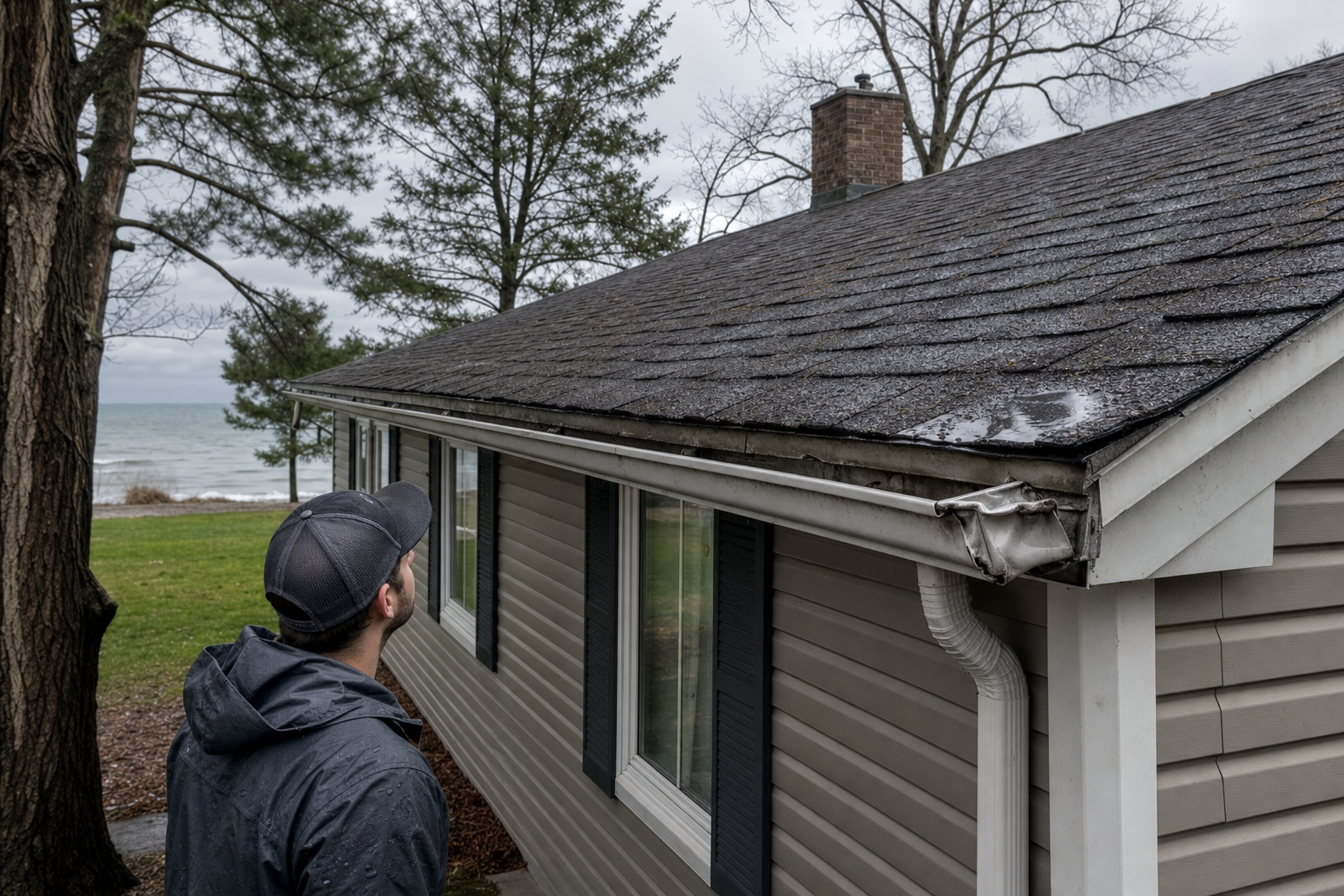
Document Exterior Clues Around the Roof
Roof damage often leaves signs around the rest of the exterior. These photos can help create a clearer picture of what happened during the storm.
Document:
- Dented gutters and downspouts
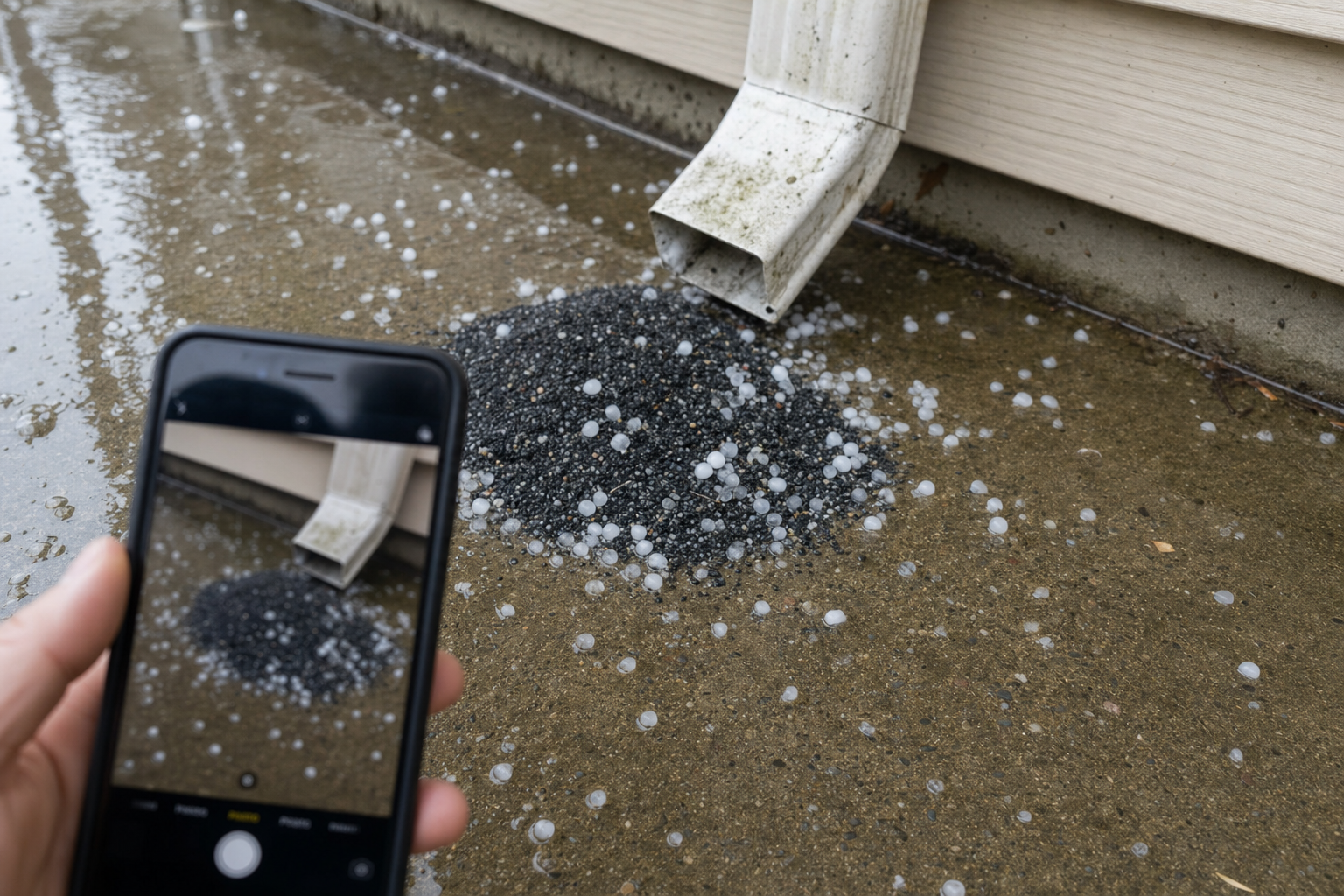
- Granules collected near downspout exits
- Damage to roof vents, metal flashing, fascia, or soffit
- Loose shingle pieces in the yard
- Impact marks on siding
- Fallen branches or wind-blown debris
- Interior ceiling stains if water has entered the home
Flashing is the metal or waterproofing material used around roof penetrations and edges to redirect water. Hail damage on asphalt shingles can include granule loss, exposed asphalt, bruising, fractured matting, or impact marks on nearby metal. Wind damage on shingles can include missing tabs, lifted edges, creases, tears, and exposed fasteners.
A close-up photo is useful, but only if someone can tell where it came from. Take one wide photo of the area first, then the close-up. For example: first photograph the whole gutter run, then photograph the dented section.
The National Weather Service says wind-driven hail can damage homes and other property, which is why impact direction and surrounding exterior clues matter when documenting a storm. [2]
Write Down the Storm Details While They Are Fresh
Photos are stronger when they are paired with basic notes. Keep it simple:
- Date of the storm
- Approximate time hail or high wind reached your home
- Largest hail size you personally saw
- Direction the storm appeared to come from
- How long the hail or strongest wind lasted
- Any immediate leaks, sounds, fallen branches, or visible exterior changes
If you saved a local weather alert or took a screenshot of radar, keep it with your photos. You do not need a perfect report. You just want a clean timeline that a roofing professional can understand later.
Roof storm damage documentation works best when photos, dates, locations, and storm notes are kept together. Original, unedited photos can also preserve useful time and location context. [3]
When to Schedule a Roof Inspection After Hail or Wind
Schedule a roof inspection after hail when you see missing shingles, dented gutters, granule piles, roof debris, ceiling stains, or siding impact marks. You should also call if neighbors in Waukegan, Gurnee, Zion, Grayslake, Libertyville, or Mundelein are reporting storm damage roof Waukegan issues from the same weather system.
Some damage is obvious right away. Other problems become easier to see after shingles dry, rain washes loose granules into gutters, or a small leak starts to show inside. That is why it helps to keep your notes and photos even if the roof looks mostly fine from the ground.
Before the contractor arrives, have your storm notes, photos, weather screenshots, and any leak photos ready. If you are also reviewing an insurance roof claim Illinois process, keep the documentation factual: what you saw, when you saw it, and where it appeared. A contractor inspection can document roof conditions, but insurance coverage decisions come from the carrier and policy.
Know What a Contractor Looks For During the Inspection
A professional hail damage roof inspection in Lake County should document both storm impact and non-storm conditions. On asphalt-shingle roofs, the inspector is looking for patterns: impact marks, bruising, fractured matting, lifted shingles, creased tabs, exposed fasteners, damaged vents, and whether the damage lines up with the storm direction.
They also look for non-storm conditions that can be confused with storm damage, such as normal aging, installation issues, manufacturer defects, foot traffic, or old repairs. That distinction matters because not every mark on a roof comes from hail or wind, and not every visible mark means the roof system has lost performance.
The Insurance Institute for Business & Home Safety studies asphalt shingle impact resistance because shingles can respond differently to hail depending on material, age, design, and impact conditions. [4]
For homes near Lake Michigan, freeze-thaw cycles, moisture, and seasonal storms can overlap. Clear documentation helps separate what happened during one storm from wear that may have been developing over time.
Keep Photos, Storm Notes, and Inspection Records Together
Put everything in one folder on your phone or computer:
- Exterior photos
- Interior leak photos, if any
- Storm notes
- Weather screenshots
- Inspection photos or videos from the contractor
- Estimates or repair recommendations
Do not edit the photos heavily. Cropping is fine, but keep originals when possible. A simple, dated folder is better than scattered screenshots in different apps.

Quick FAQ
How soon should I document roof damage after hail?
Document visible damage as soon as it is safe from the ground. Take wide photos, close-ups, storm notes, and screenshots of local weather alerts before conditions change.
Should I climb onto my roof to take hail damage photos?
No. Homeowners should document from the ground, windows, porches, or safe upper-floor views and leave roof-surface inspection to a trained professional.
What photos help during a Lake County roof inspection?
Helpful photos include each roof slope, gutters, downspouts, vents, flashing, granule piles, siding impact marks, fallen branches, and interior ceiling stains.
How soon should I schedule a hail damage roof inspection in Lake County?
Schedule an inspection once conditions are safe if you see missing shingles, dented gutters, granule piles, ceiling stains, or storm debris. A prompt roof inspection after hail can help document conditions before weather changes the visible evidence.
Can hail damage show up after the storm?
Yes. Some roof problems become easier to see later when granules wash down, shingles dry, or interior staining appears after water intrusion.
Does Lake Point Exteriors decide whether insurance covers roof damage?
No. Lake Point Exteriors can inspect and document roof conditions, but coverage decisions depend on the insurance carrier and the homeowner’s policy.
Closing CTA
Document the damage, keep your photos and notes together, and book a free Lake County roof inspection with Lake Point Exteriors. Our team checks roofs across Lake County, the North Shore, Kenosha County, and Racine County with calm, clear guidance so you know what your roof needs next.
References
- NOAA National Weather Service Glossary, Severe Thunderstorm Warning, https://forecast.weather.gov/glossary.php?word=Severe+Thunderstorm ↩
- NOAA National Severe Storms Laboratory, Severe Weather 101: Hail Basics, https://www.nssl.noaa.gov/education/svrwx101/hail/ ↩
- FEMA, What information do I need to file a home insurance claim?, https://www.fema.gov/node/what-information-do-i-need-file-home-insurance-claim ↩
- Insurance Institute for Business & Home Safety, Relative Impact Resistance of Asphalt Shingles, https://ibhs.org/hail/relative-impact-resistance-of-asphalt-shingles/ ↩