Commercial Flat Roof Maintenance in Lake County IL | TPO, EPDM & SBS
A commercial flat roof does not usually fail all at once. For many Lake County and North Shore businesses, the trouble starts quietly: ponding water near a drain, cracked sealant around a rooftop unit, loose flashing after a wind event, or membrane seams stressed by freeze-thaw cycles. By the time water shows up inside a store, warehouse, office, or multifamily building, the repair may already be more disruptive than it needed to be. For property managers, facility managers, and building owners comparing commercial flat roof maintenance Lake County IL options, the goal is early documentation before leaks disrupt operations. Commercial flat roof maintenance in Lake County IL and the surrounding Lake Michigan-shore market is about catching small issues early, documenting roof conditions clearly, and keeping your TPO, EPDM, modified bitumen, SBS, or built-up roof ready for Midwest weather.
Why Flat Roofs Need a Different Maintenance Plan
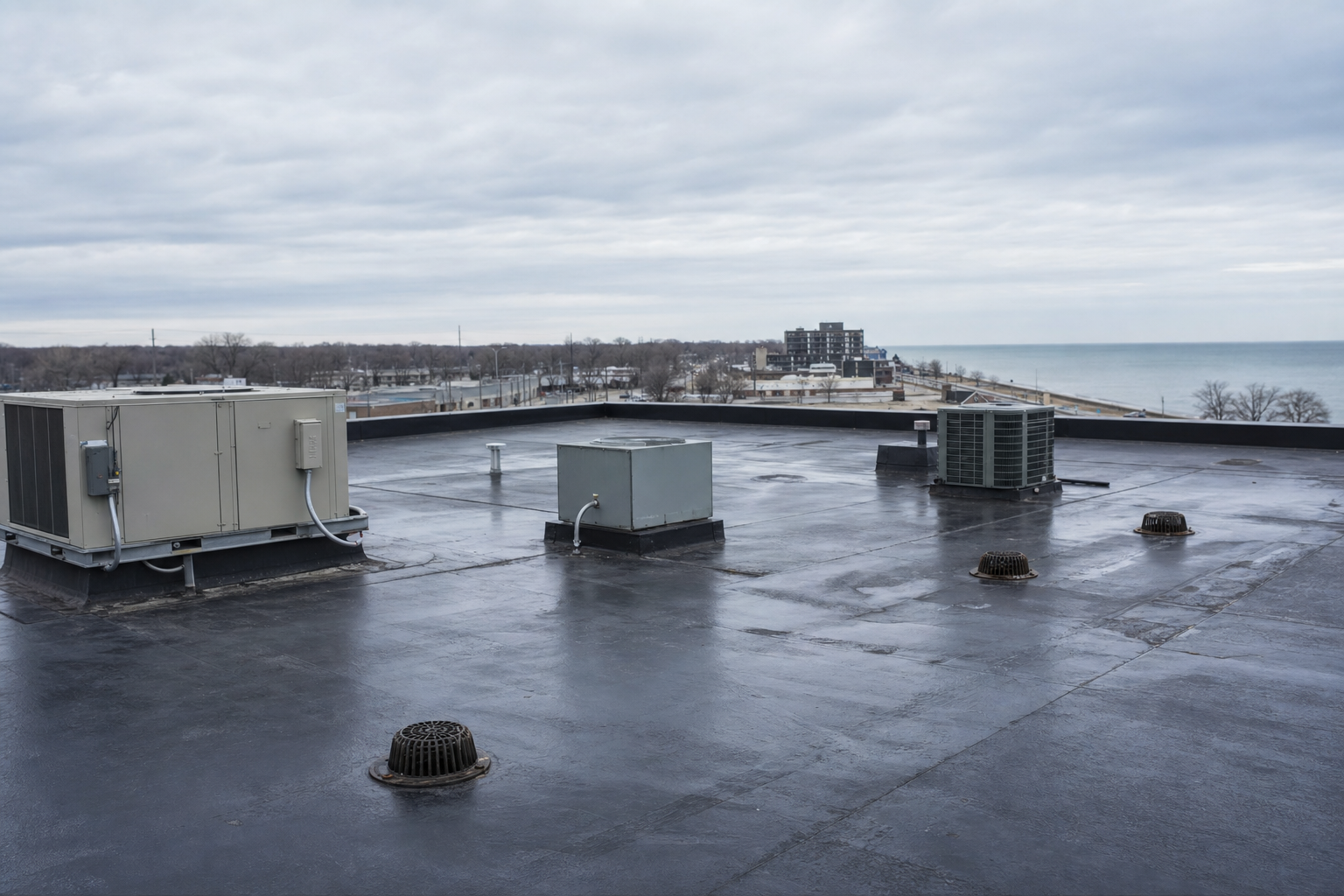
“Flat roof” is the common term, but most commercial systems are low-slope roofs designed to move water gradually toward drains, scuppers, or gutters. When that drainage path is blocked or the slope is not working correctly, water can sit on the membrane. Ponding water is water that remains on a roof after normal drying time instead of draining away. Over time, standing water adds weight, stresses seams, attracts debris, and makes small punctures harder to spot.
Commercial flat roof maintenance includes drainage checks, seam review, flashing inspection, puncture documentation, and post-storm photo records.
Lake County weather adds its own pressure. Lake Michigan moisture, spring storms, summer hail, high winds, and winter freeze-thaw cycles all work on roof membranes, flashings, fasteners, and edge metal. A severe thunderstorm produces hail at least 1 inch in diameter, wind gusts of at least 58 mph, or a tornado. [1]
A good maintenance plan does not treat the roof as “fine” until it leaks. It gives the building owner or property manager a routine way to check vulnerable areas before tenants, inventory, equipment, or operations are affected.
What to Check on TPO, EPDM, SBS, and Built-Up Roofs
Different commercial systems age differently, but many maintenance points are consistent. During a commercial flat roof inspection, the most important areas are usually:
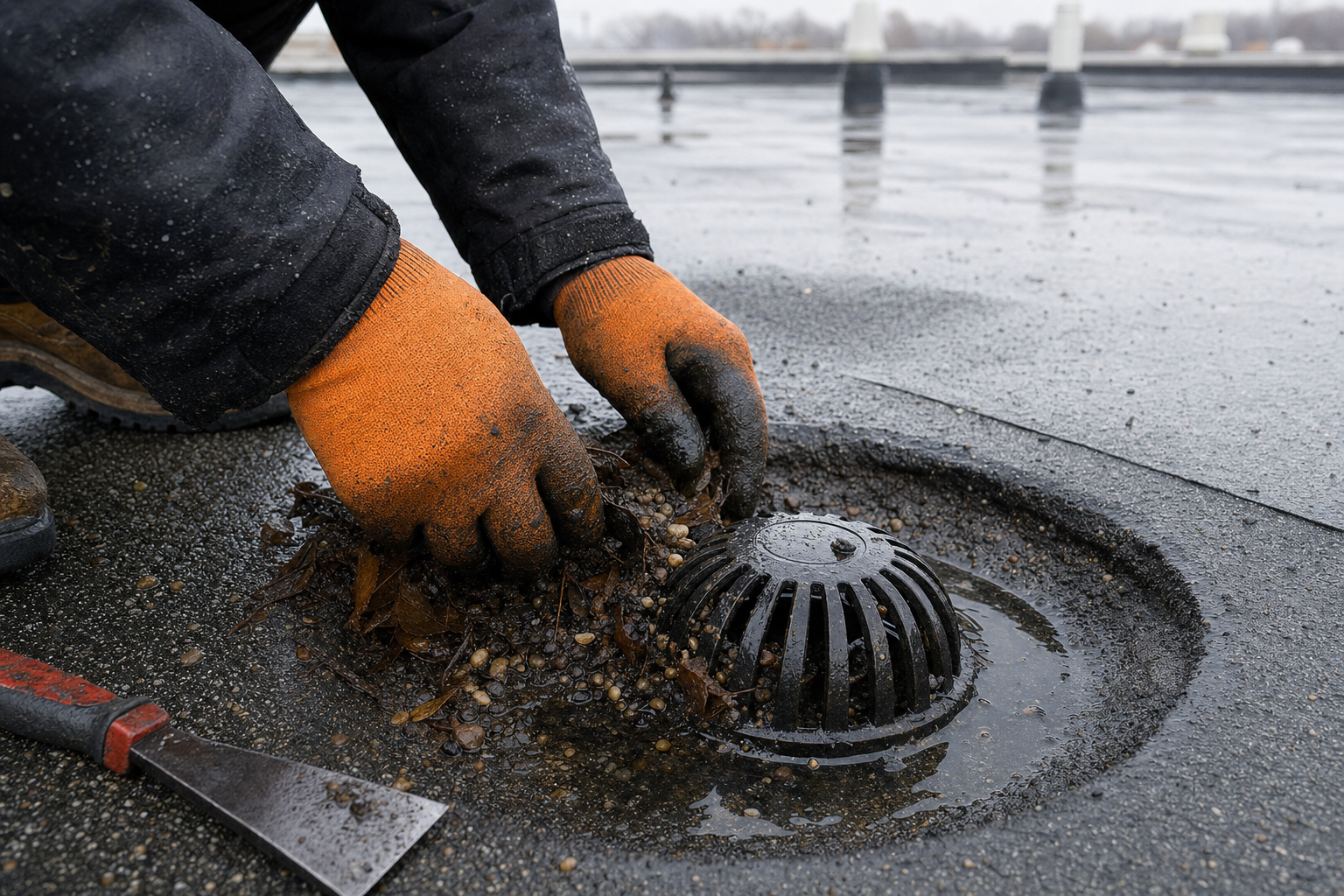
- Drains, scuppers, and gutters: clear leaves, gravel, trash, and windblown debris.
- Seams and laps: look for lifting, separation, fishmouths, or weak welds. A fishmouth is an opening or wrinkle at a roof membrane seam that can let water enter.
- Flashings: check curbs, parapet walls, skylight curbs, vents, pipes, and rooftop units.
- Edge metal: confirm it is secure after wind events. Edge metal is the metal trim around the roof perimeter that helps secure and protect the roof edge.
- Membrane surface: look for punctures, blisters, cracks, shrinking, splitting, or exposed reinforcement.
- Foot traffic paths: check where HVAC technicians, cable crews, or maintenance teams walk.
- Ponding areas: note where water remains after normal drying time.
TPO roof maintenance often focuses on welded seams, punctures, rooftop traffic, and drainage. TPO is a heat-welded single-ply membrane, commonly used because many white membranes can help reduce roof surface heat. ENERGY STAR notes that cool roof materials can lower roof surface temperature and reduce heat transferred into a commercial building. [2]
EPDM roof maintenance often centers on seams, flashing details, shrinkage, punctures, and membrane movement. EPDM is a synthetic rubber membrane known for flexibility, but it still needs seam, flashing, and puncture checks. Modified bitumen and SBS systems should be reviewed for surface wear, open laps, blisters, and granule loss. Built-up roofing needs attention around gravel displacement, exposed felts, cracks, and drainage.
Rooftop HVAC traffic matters because service crews may cross the same areas repeatedly, set tools on the membrane, or step near seams and curbs. Walk pads, protected paths, and clear access routes can reduce avoidable membrane damage.
How Often Should a Commercial Roof Be Inspected?
For most commercial buildings, spring and fall are the practical baseline. Spring inspections look for winter damage, freeze-thaw stress, open seams, and clogged drains. Fall inspections prepare the roof for snow, ice, and cold-weather drainage problems. Spring and fall inspections give property managers two baseline roof-condition records each year.
A commercial flat roof maintenance Lake County IL schedule should include spring, fall, and post-storm inspections. It is also smart to schedule a roof review after major hail, high wind, or heavy rain events. That does not mean every storm creates damage. It means the roof should be checked with clear photos and notes so you know what changed, what needs repair, and what can be monitored.
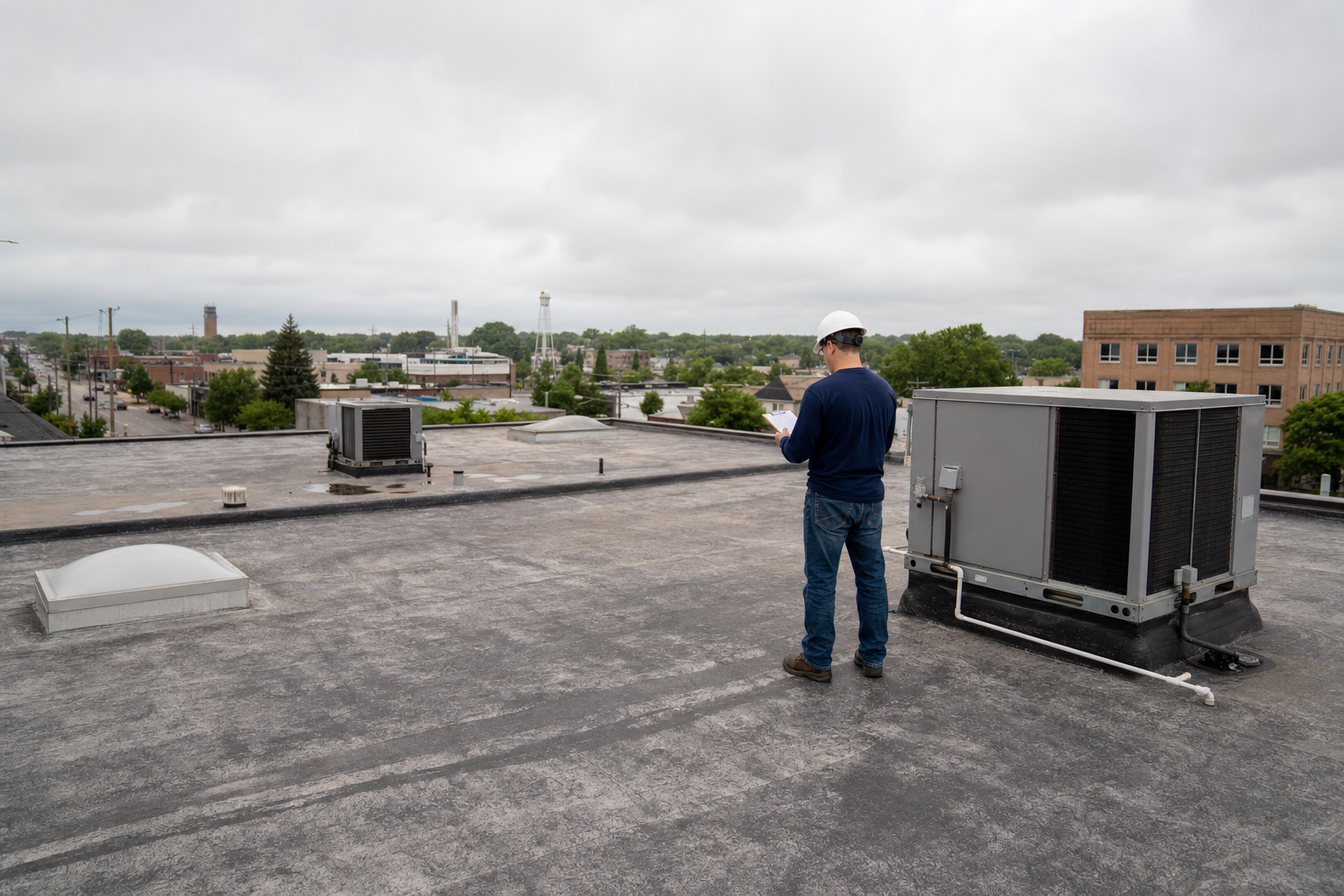
For safety, roof access should be handled carefully. Property managers can document visible issues from safe areas, but they should not inspect unsafe roofs themselves. OSHA construction fall protection rules apply at 6 feet or more above a lower level. [3]
Documentation That Helps Property Managers Make Better Decisions
Good maintenance records are boring in the best way. They make it easier to budget, compare conditions over time, and decide whether a roof needs repair, restoration, or replacement planning.
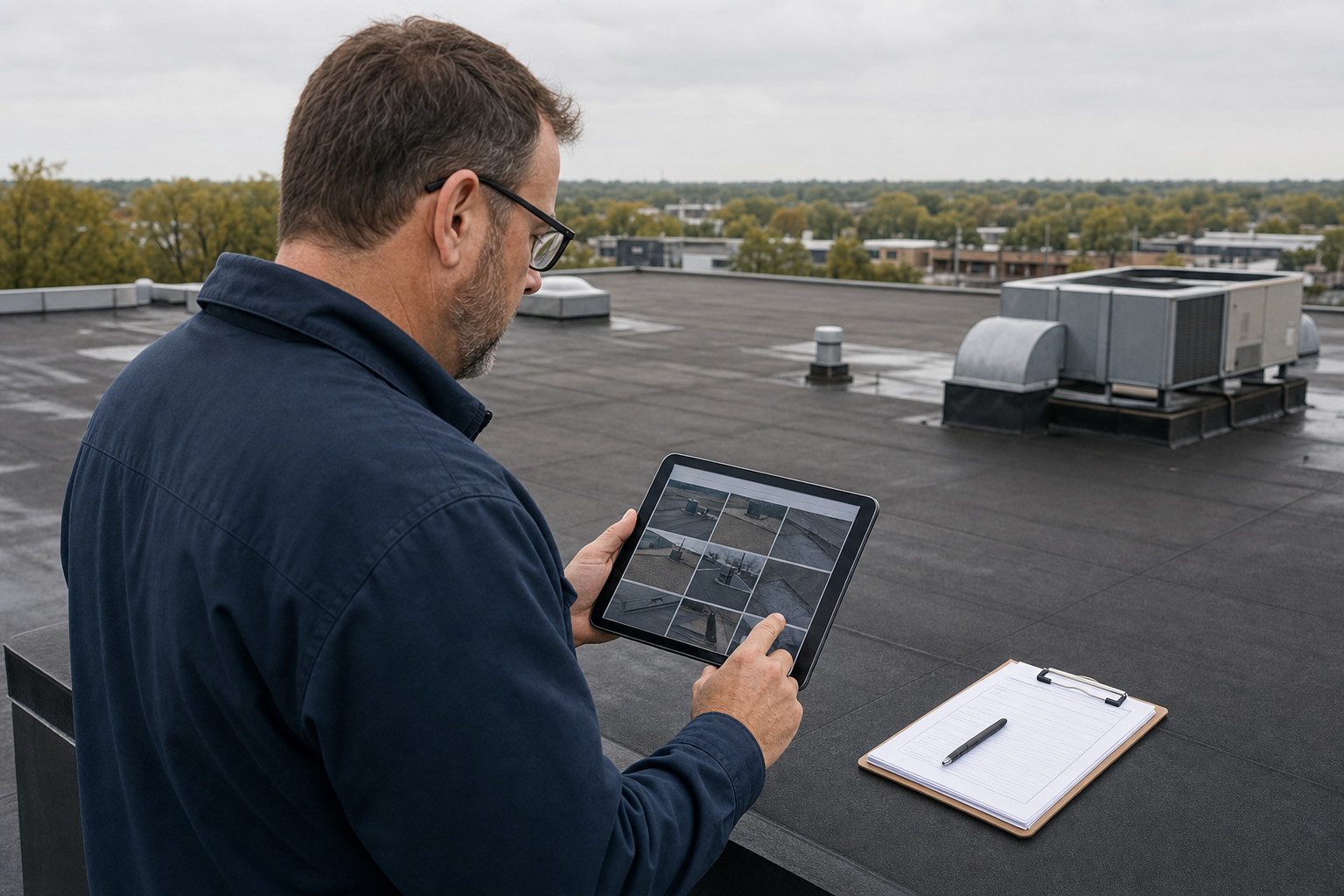
Strong commercial flat roof maintenance Lake County IL records make repair, restoration, and replacement decisions easier to defend. A useful commercial roof maintenance file should include:
- Roof type, approximate age, and known prior repairs.
- Drainage map or notes showing drains, scuppers, gutters, and ponding areas.
- Date-stamped photos of seams, flashings, curbs, edge metal, and problem areas.
- Notes after major storms or service visits from HVAC and other rooftop trades.
- Repair recommendations separated by urgent, near-term, and monitor-only items.
- Insurance-related photos and notes when storm damage roof inspections after hail or wind are needed.
This kind of record is especially helpful for buildings in Waukegan, Gurnee, Zion, North Chicago, Highland Park, Lake Forest, Libertyville, Mundelein, Vernon Hills, Kenosha County, and Racine County, where one building may see lake-effect moisture, hail, wind-driven rain, and winter ice stress in the same year.
Common Mistakes That Shorten a Flat Roof’s Service Life
The biggest mistake is waiting for interior water stains before taking action. By then, moisture may have traveled from the entry point, making the leak harder to trace.
Other common problems include letting debris collect around drains, allowing rooftop contractors to walk without pads or protection, ignoring small punctures, using incompatible repair materials, and skipping the parapet walls because the membrane field “looks fine.” Flat roofs are systems. A clean membrane still depends on secure terminations, sealed penetrations, working drainage, and stable edge details.
When Maintenance Turns Into Repair or Replacement Planning
Maintenance, repair, restoration, and replacement are not the same decision. Maintenance is routine inspection, cleaning, documentation, and minor prevention. Repair addresses a specific active problem, such as an open seam, puncture, loose flashing, or clogged drainage detail. Restoration may add a coating or recovery approach when the roof is still a candidate for service-life extension. Replacement becomes the discussion when age, trapped moisture, repeated leaks, widespread membrane failure, or structural concerns make smaller fixes less practical.
The right next step depends on roof type, age, moisture conditions, warranty status, drainage, prior repairs, and the building’s use. A flat roof inspection Lake County IL report should separate urgent repairs from items that can be monitored and larger capital planning conversations.
FAQ: Commercial Flat Roof Maintenance in Lake County IL
How often should a commercial flat roof in Lake County IL be inspected?
Most commercial flat roofs in Lake County IL should be inspected in spring and fall, with additional checks after hail, high wind, heavy rain, or rooftop service work.
What does commercial flat roof maintenance include?
Commercial flat roof maintenance usually includes checking drains, seams, flashings, rooftop units, edge metal, membrane damage, ponding water, and date-stamped documentation.
Can ponding water damage a flat roof?
Yes. Ponding water can add weight, stress seams, hide punctures, collect debris, and accelerate wear if drainage problems are not corrected.
Which flat roof systems need maintenance in Lake County IL?
TPO, EPDM, modified bitumen/SBS, and built-up roofing all need routine maintenance because each system has seams, flashings, drainage points, and penetrations that can age or fail.
Should property managers inspect commercial roofs themselves?
Property managers can document visible issues from safe areas, but roof access and close inspection should be handled by qualified professionals using proper fall protection.
Schedule Commercial Flat Roof Maintenance in Lake County IL
If your commercial roof has not been checked since winter, a hail event, a recent stretch of heavy rain, or rooftop service work, Lake Point Exteriors LLC can help you get a clear read on its condition. Schedule commercial flat roof maintenance in Lake County, the North Shore, Kenosha County, or Racine County. Lake Point Exteriors can provide a free commercial flat roof inspection and maintenance planning conversation, then document what we find in plain language.