Common Lake County Roof Repairs: Leaks, Shingles, Gutters & Flashing
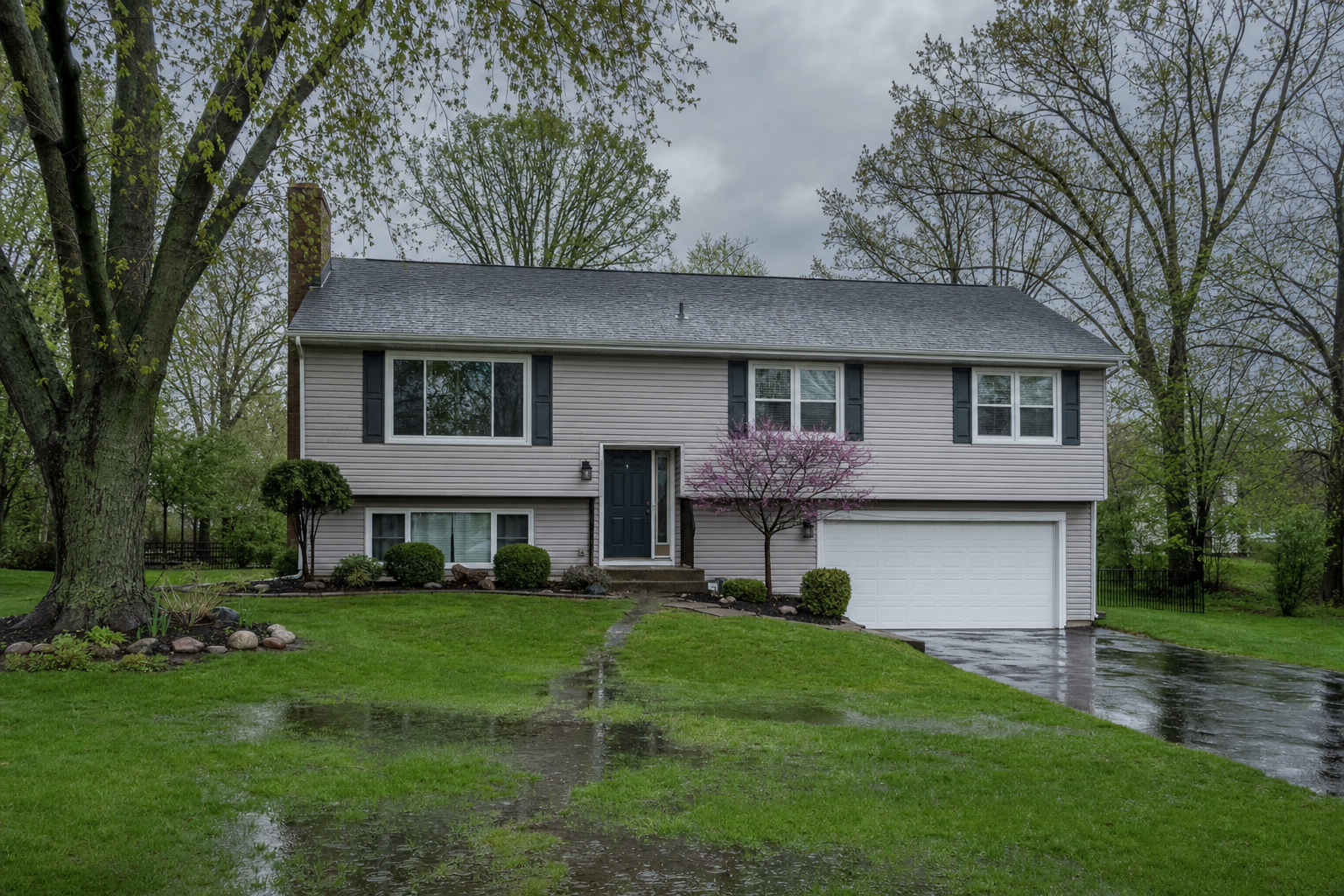
Lake County roof repairs usually start with one stressful sign: a drip, a loose shingle in the yard, a stained ceiling, or a gutter that pulled away after a storm. Around Waukegan, Gurnee, Zion, Lake Forest, Libertyville, and the North Shore, roofs take a steady beating from wind-driven rain, hail, freeze-thaw cycles, and Lake Michigan moisture.
The good news is that not every issue means a full replacement. Many problems can be traced to a specific leak point, damaged shingle area, gutter failure, or flashing detail, which protects roof transitions where shingles meet walls, chimneys, vents, skylights, and valleys. The key is knowing what to look for, documenting what you see safely from the ground, and getting a clear inspection before small damage spreads. For broader service information, see residential roofing repairs in Lake County.
Roof Leaks: Small Openings, Big Interior Problems
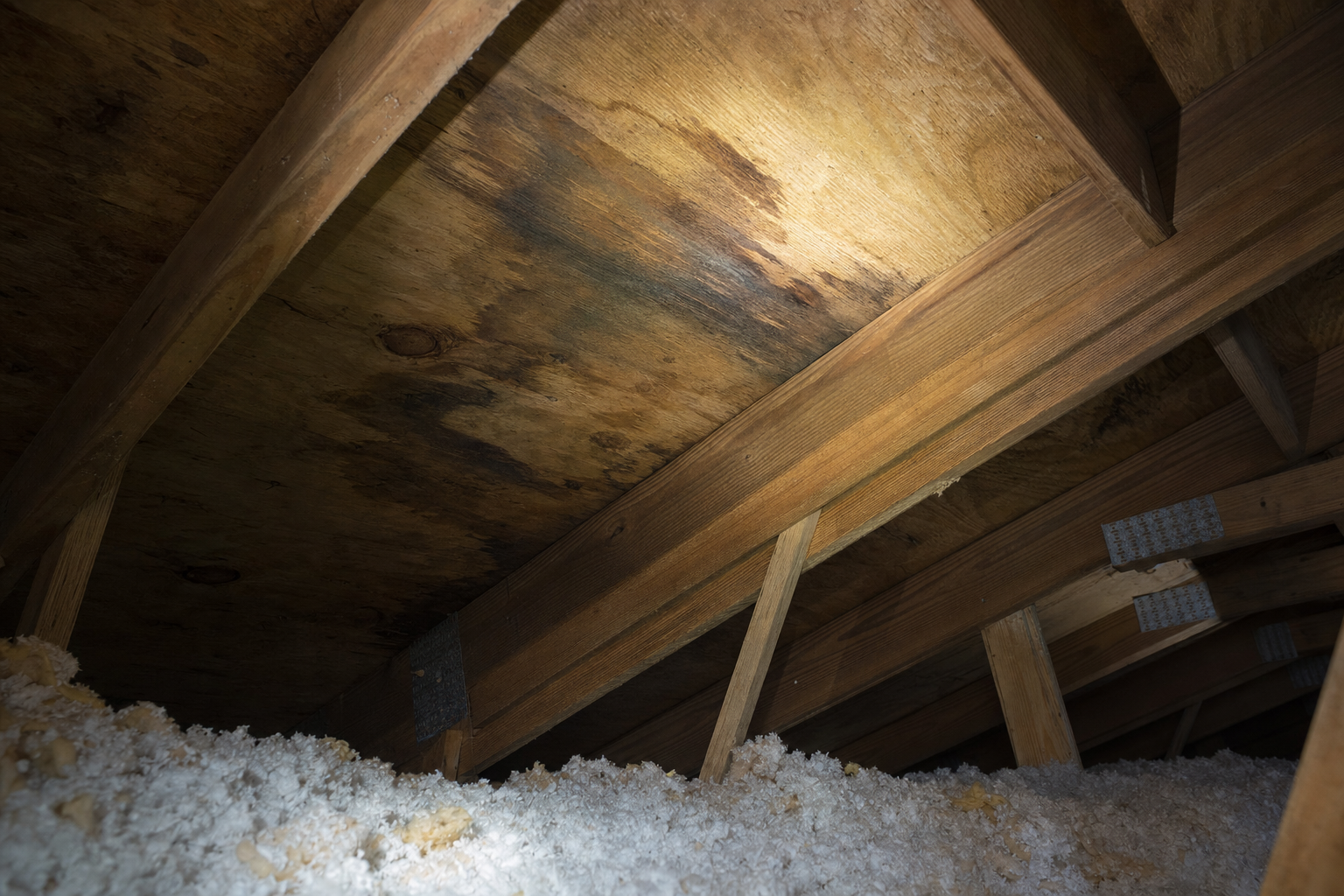
A roof leak is rarely just “a bad roof.” Water usually enters through a weak spot: a lifted shingle, cracked pipe boot, exposed nail, damaged vent, failed sealant, or loose flashing. A pipe boot is the rubber or metal seal around a plumbing vent pipe where it passes through the roof. A roof leak can travel along decking, rafters, insulation, and drywall before it appears inside the home.
Common leak signs include:
- Brown ceiling stains or bubbling paint
- Damp insulation in the attic
- Drips during wind-driven rain
- Musty smells after storms
- Water marks near chimneys, vents, or roof valleys
In Lake County homes, leak tracking can be tricky because freeze-thaw weather opens and closes small gaps. A spot that looks dry in October may leak again during a March thaw or a June storm. Ice dams form when melted roof snow refreezes near the eaves and blocks normal drainage, which can push water back under roof materials. [1]
For homeowners searching for ice dam roof leak repair, the first step is to stop active water entry where possible, avoid climbing onto icy roof surfaces, and have the roof edge, attic ventilation, insulation, and drainage path reviewed together.
Missing or Lifted Shingles After Wind and Hail
Missing shingles are one of the most visible Lake County roof repairs, especially after straight-line winds or fast-moving summer storms. One missing shingle may not look serious from the driveway, but it can expose the underlayment, which is the protective layer beneath shingles, and the fasteners below. Lifted shingles can be just as important, because the seal strip may be broken even when the shingle is still physically attached.
Look for:
- Shingles in the yard or driveway
- Uneven roof edges
- Tabs that look curled, raised, or shifted
- Granules collecting near downspouts
- Dark patches where the roof surface looks exposed
Hail can also bruise asphalt shingles, knock loose granules, and dent soft metals like gutters and vents. IBHS notes that hail impact risk depends on hail size, wind, roof material, and the condition of the building envelope. [2] The National Weather Service defines severe thunderstorms by hail of at least 1 inch, winds of at least 58 mph, or a tornado. [3]
That does not mean every hailstorm creates roof damage. It means a roof should be evaluated based on pattern, material age, roof slope, impact marks, and surrounding indicators such as gutters, downspouts, siding, vents, and fascia. If you need missing shingle repair after a storm, a focused inspection can help separate an isolated repair from a wider storm damage roof inspection. See storm damage roof inspections.
Gutter Damage Can Become Roof Damage
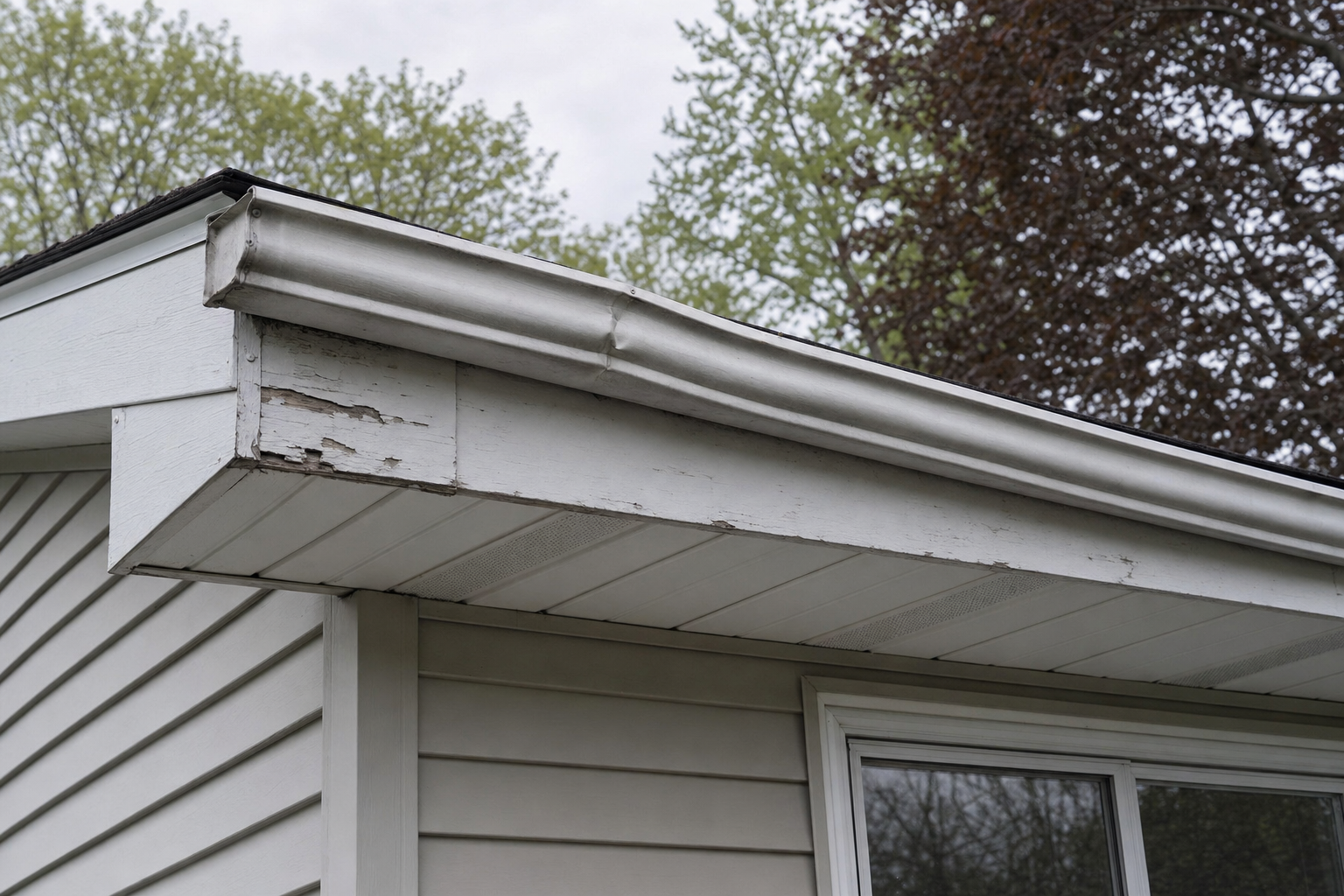
Gutters are part of the roof drainage system, not just trim. When they sag, clog, pull loose, or dent badly enough to interrupt water flow, runoff can spill toward fascia boards, soffit areas, foundation edges, and lower roof sections. Fascia is the board along the roof edge where gutters attach, and soffits are the underside areas near the roof overhang.
Common gutter-related repair issues include:
- Loose gutter spikes or hidden hangers
- Separated gutter seams
- Downspouts disconnected from elbows
- Hail dents that affect drainage
- Fascia rot behind an overflowing gutter
- Ice buildup that pulls gutters away from the roofline
A gutter repair may be simple, but the cause matters. If the gutter failed because of ice, poor slope, old fasteners, or repeated overflow, the inspection should look at the roof edge, drip edge, fascia, soffits, and attic ventilation too. Around Lake Michigan, repeated wet-dry and freeze-thaw cycles make edge details especially important. For related drainage work, see gutter repair and replacement.
Flashing Damage Around Chimneys, Walls, and Valleys
Flashing is the metal or waterproof transition detail that protects places where the roof meets something else. Flashing protects roof transitions where shingles meet walls, chimneys, vents, skylights, and valleys. When flashing fails, water can enter even if the shingles around it look fine.
Important terms:
- Step flashing: small metal pieces layered where a roof meets a wall
- Counterflashing: metal that covers the top edge of base flashing, often at masonry
- Valley flashing: protection where two roof slopes meet
- Pipe boot: rubber or metal seal around plumbing vent pipes
Flashing damage may come from age, storm movement, improper installation, rust, cracked sealant, or shifting masonry. A quick smear of caulk is rarely a long-term repair if the metal itself is loose, missing, or incorrectly layered. A proper flashing repair Lake County homeowners can rely on should restore the water path so rain moves down and off the roof instead of behind the roofing system.
What to Document Before a Roof Repair Visit
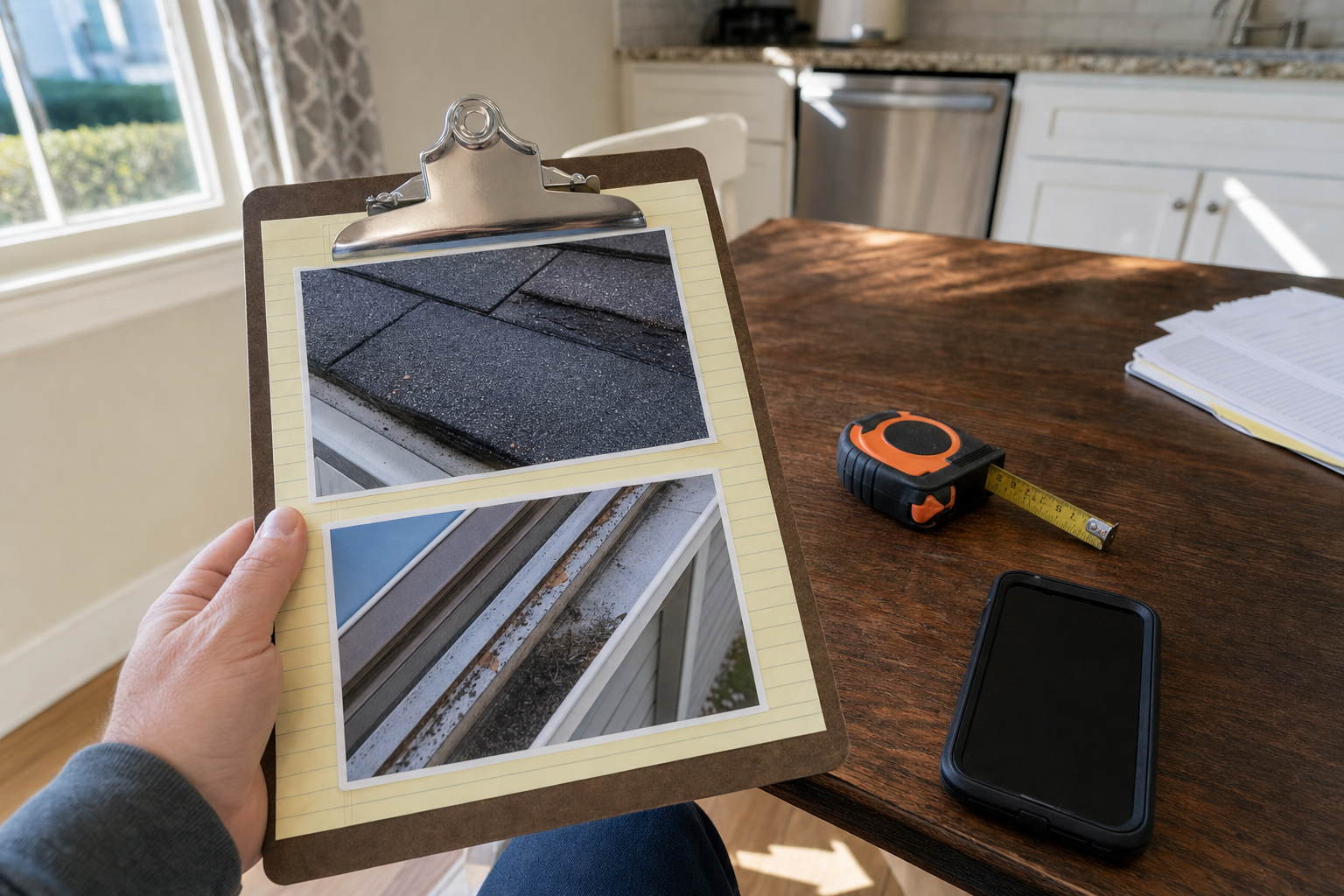
Stay on the ground. You do not need to climb the roof to be useful, and you should not climb onto the roof after storms, ice, or high winds. Clear photos and notes help your contractor understand what happened and where to start.
Helpful documentation includes:
- Photos of shingles, gutter pieces, or debris found on the ground
- A photo of the affected roof slope from the driveway or yard
- Interior stains, if water entered the home
- Date and approximate time you first noticed the issue
- Photos of dented gutters, vents, or damaged siding
- Notes on whether the leak appears only during wind-driven rain
For insurance-related documentation, keep the facts neutral: what you saw, when you saw it, and what areas appear affected. A contractor can inspect and explain roof conditions, materials, and visible damage patterns, but the homeowner remains in control of any policy decisions and timing. For claim-related organization, see roof damage documentation for insurance claims.
When a Repair Is Enough, and When Replacement Needs a Conversation
A repair may make sense when the damage is isolated, the roof is otherwise in good condition, and matching materials are available. Examples include a few missing shingles, a cracked pipe boot, a loose flashing detail, or a localized gutter section.
A larger conversation may be needed when:
- Multiple slopes show widespread shingle wear
- Granule loss is heavy across large areas
- Leaks are recurring in different spots
- Decking feels soft during inspection
- Previous repairs are failing
- Storm damage appears across roof, gutters, and siding
The right answer depends on roof age, material condition, ventilation, drainage, and the pattern of damage. A good inspection should show photos or video, explain the repair options plainly, and separate urgent water-entry issues from longer-term maintenance items.
When to Call for Lake County Roof Repair
Call quickly if you have active water entering the home, a ceiling stain that is spreading, shingles on the ground, a gutter pulling away from the fascia, or visible damage after hail or high wind. These are repair signs worth checking before the next round of rain.
Some issues are less urgent but still worth scheduling, including small stains after wind-driven rain, loose flashing around a chimney, granules collecting near downspouts, or a roof edge that looks uneven from the ground. Lake County roof repairs are often caused by wind-driven rain, hail, freeze-thaw cycles, clogged gutters, and failed flashing, so a good inspection should look beyond one visible spot.
A roof repair visit is different from a replacement estimate. A repair inspection should identify the leak path or damaged area, review adjacent materials, document photos, explain whether the issue is isolated, and give practical next steps. A replacement estimate becomes part of the conversation only when the roof condition, age, or damage pattern makes repairs less reliable.
Quick FAQ: Lake County Roof Repairs
What are the most common roof repairs in Lake County, IL?
The most common Lake County roof repairs include leak repair, missing shingle replacement, gutter edge repairs, flashing repair, pipe boot repair, and storm damage inspections.
How fast should I address a roof leak?
As soon as you notice active water or staining. Even a small leak can spread into insulation, decking, and drywall if it continues through multiple storms.
Should I call for roof repair after finding one missing shingle?
Yes. One missing shingle can expose underlayment or fasteners, especially after wind or hail. A contractor can check whether the damage is isolated or part of a larger pattern.
Can missing shingles be repaired without replacing the whole roof?
Often, yes. If the damage is isolated and the surrounding shingles are still in good condition, a targeted repair may be appropriate.
Can gutters cause roof leaks?
Yes. Sagging, clogged, or detached gutters can push water toward fascia, soffits, roof edges, and lower roof sections.
Are dented gutters a roof problem?
They can be. Dented or sagging gutters may affect drainage, and drainage problems can damage fascia, soffit areas, and roof edges.
What should I document before a roof repair inspection?
Take ground-level photos of visible roof areas, interior stains, fallen shingles, dented gutters, damaged siding, and the date you first noticed the issue.
Does Lake Point Exteriors repair roofs in Waukegan and Lake County?
Lake Point Exteriors serves Waukegan, IL and Lake County communities with roofing, siding, gutter, and storm damage services.
What areas does Lake Point Exteriors serve?
Lake Point Exteriors serves Lake County, IL communities including Waukegan, Gurnee, Zion, Beach Park, North Chicago, Highland Park, Lake Forest, Grayslake, Libertyville, Mundelein, Round Lake, Vernon Hills, Lake Villa, and Antioch, plus Kenosha County and Racine County in southern Wisconsin.
Schedule a Roof Repair Inspection
If you are seeing a leak, missing shingles, damaged gutters, or flashing concerns, Lake Point Exteriors can take a look and explain what is actually happening. Book a free roof inspection or repair quote in Lake County, IL or southern Wisconsin, and we will document the issue clearly, walk you through practical repair options, and help you protect the home before the next storm. schedule a roof repair inspection