Built-Up Roofing BUR Commercial Roofs for Midwest Buildings
For many Lake County and southern Wisconsin building owners, the roof problem is not dramatic at first. It starts as a stained ceiling tile, a damp storage room, ponding water near a drain, or a maintenance tech noticing soft spots during a rooftop equipment check. On a commercial flat or low-slope building, those small clues can point to a roof system that has lost redundancy. Built-up roofing BUR commercial systems are designed around the opposite idea: multiple layers of asphalt and reinforcing ply sheets that work together to resist water intrusion, foot traffic, and Midwest weather swings. Here is what hot asphalt built-up roofing is, how the system is assembled, and where it still makes sense for buildings in Waukegan, Gurnee, Lake Forest, Kenosha County, and nearby areas.
What Hot Asphalt Built-Up Roofing Means
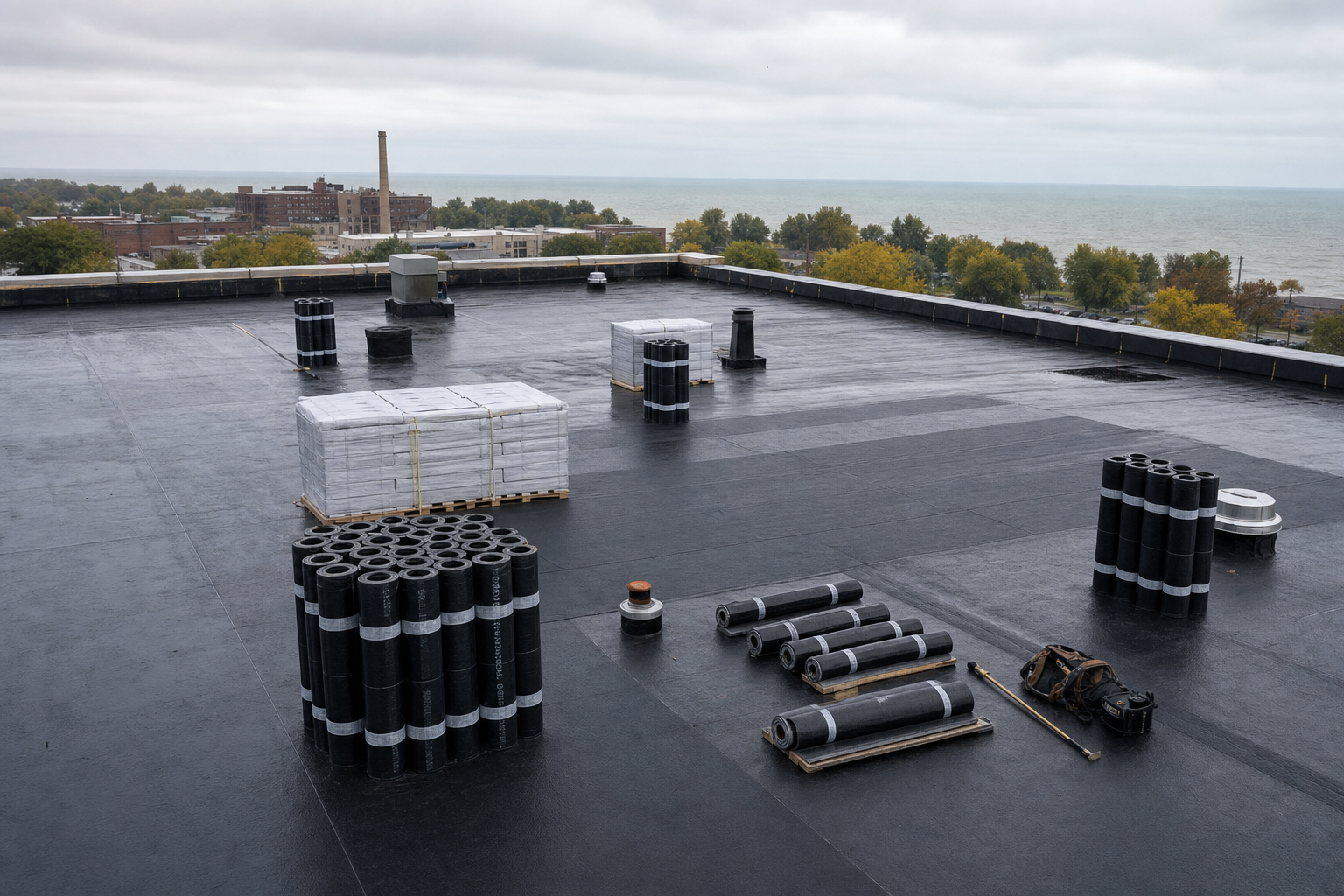
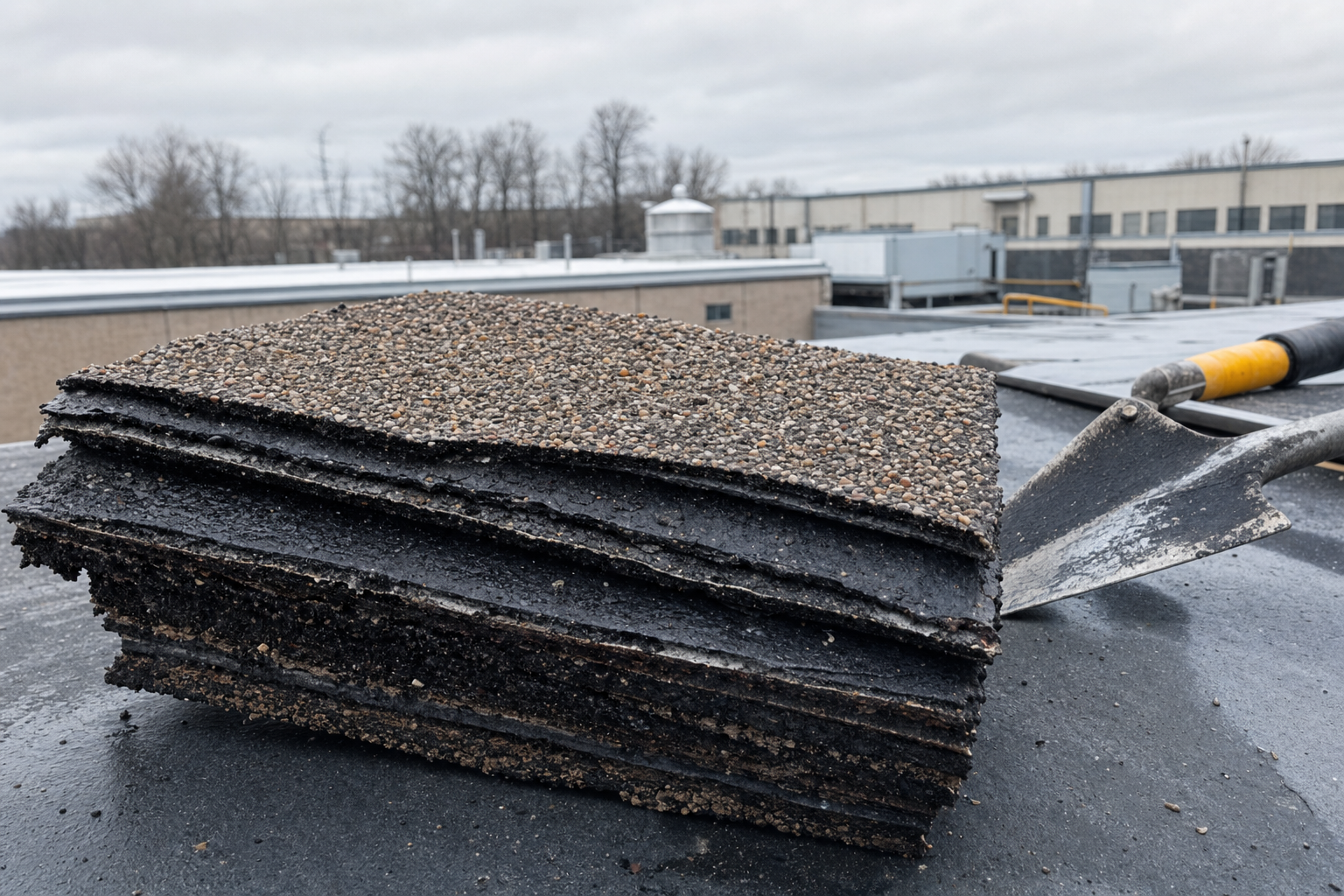
Built-up roofing BUR commercial systems are low-slope roof assemblies made from repeated layers of bitumen and reinforcing sheets. Bitumen is the asphalt-based waterproofing material in the system, and a ply sheet is the reinforcing fabric or felt embedded between asphalt layers. In hot asphalt BUR roofing, heated asphalt is applied between layers so the plies bond into one continuous roof membrane. GAF describes BUR as a system made from multiple ply sheets and asphalt, typically finished with either a cap sheet or a flood coat of asphalt and gravel. [1]
The simple version: BUR is not one sheet. It is a stack.
A typical assembly may include:
- Roof deck
- Vapor retarder where specified
- Insulation
- Cover board
- Base sheet
- Hot asphalt
- Multiple reinforcing ply sheets
- Surfacing, such as gravel, slag, mineral cap sheet, or coating
That layered design is why BUR is often called a redundant system. Built-up roofing uses multiple asphalt-bonded plies to create redundancy on low-slope commercial roofs. If the top surface is scuffed, aged, or punctured in one area, the plies below still provide additional protection compared with a single exposed layer.
Why Multi-Ply Redundancy Matters in the Midwest
Commercial roofs in Lake County, the North Shore, Kenosha County, and Racine County deal with a rough mix of conditions. Spring and summer storms can bring wind-driven rain and hail. Winter brings freeze-thaw cycles, snow loads, ice, and rooftop service traffic when HVAC units need attention.
The National Weather Service defines severe thunderstorms by hail at least 1 inch in diameter, wind gusts of at least 58 mph, or tornado activity. [2] That does not mean every storm damages a commercial roof, but it does explain why low-slope systems in the region need more than basic waterproofing. They need a roof assembly that handles weather exposure, roof access, and drainage stress over time.
BUR’s multi-ply structure is especially useful on buildings where technicians regularly walk the roof to service HVAC units, vents, exhaust fans, or mechanical equipment. The surface still needs maintenance, but the system is built with more layers between the weather and the interior. For property teams comparing commercial roofing services in Lake County, that extra redundancy can be part of the long-term value discussion.
The Layers of a Hot Asphalt BUR System
A good BUR installation is less about one product and more about the whole assembly. Each layer has a job.
The insulation helps manage thermal performance and creates a stable substrate. A cover board can add durability and a better bonding surface. The base sheet starts the membrane assembly. Hot asphalt is then mopped or applied between reinforcing plies. The reinforcing sheets give the membrane strength, while the asphalt provides waterproofing.
The top surface matters, too. Gravel or slag surfacing helps shield asphalt from ultraviolet exposure and routine traffic. A mineral-surfaced cap sheet can provide a cleaner finished surface. Some assemblies may use reflective surfacing when heat management is part of the roof plan. The difference between a gravel-surfaced BUR roof and a cap-sheet BUR roof is not cosmetic only; it affects maintenance access, inspection visibility, surfacing wear, and how repairs may be approached later.
NRCA’s roofing manual covers built-up roof membranes along with modified bitumen, EPDM, thermoplastic, and other membrane roof systems, which reflects how BUR remains part of the commercial low-slope roofing category rather than an outdated specialty. [3]
When a Commercial BUR Roof Needs Inspection
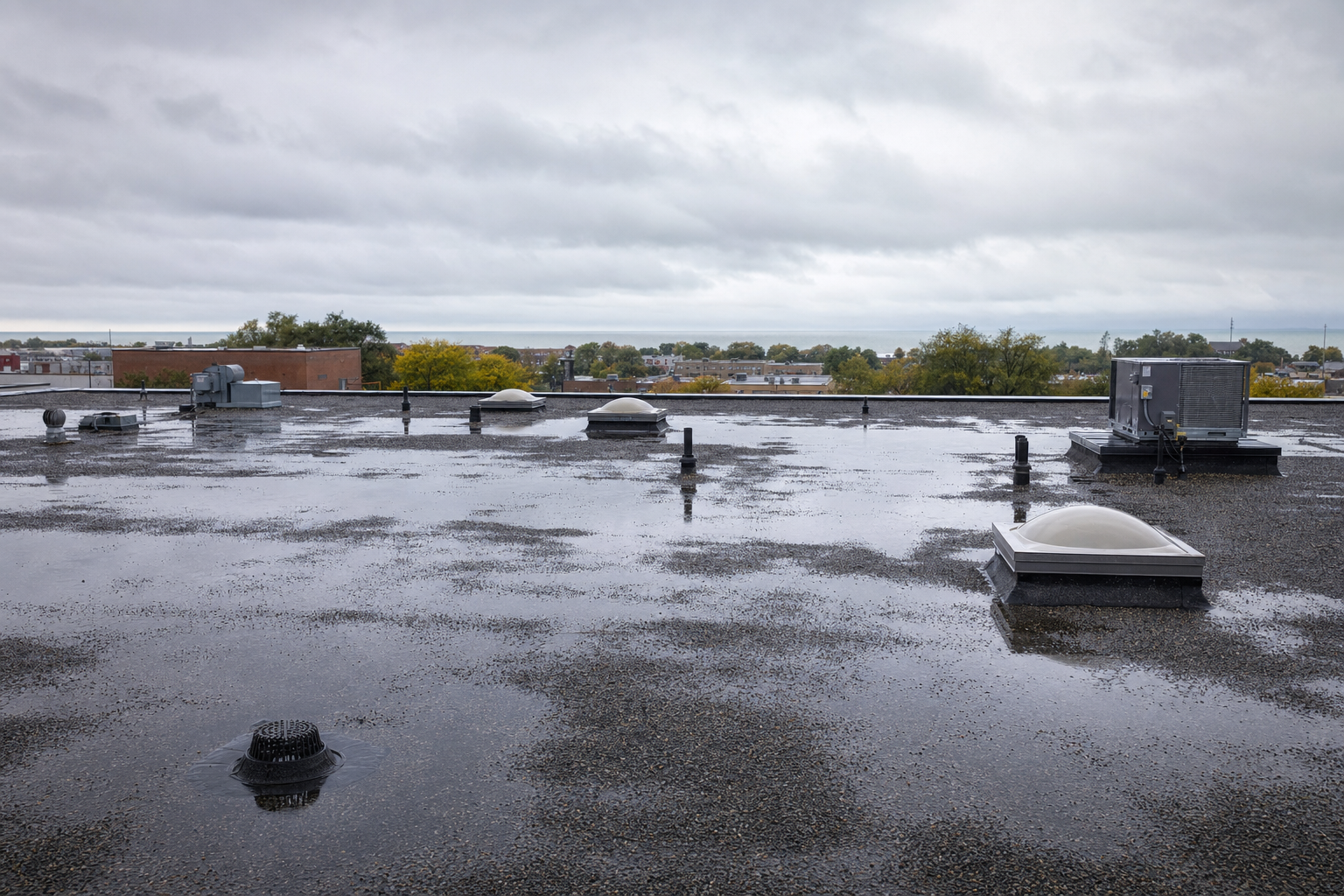
A low-slope commercial roof is designed to drain water slowly through slope, drains, scuppers, or gutters rather than shed water like a steep residential roof. Ponding water means water remains on the roof after drainage should have occurred. Ponding water on a low-slope commercial roof can signal drainage problems, insulation settlement, or membrane aging.
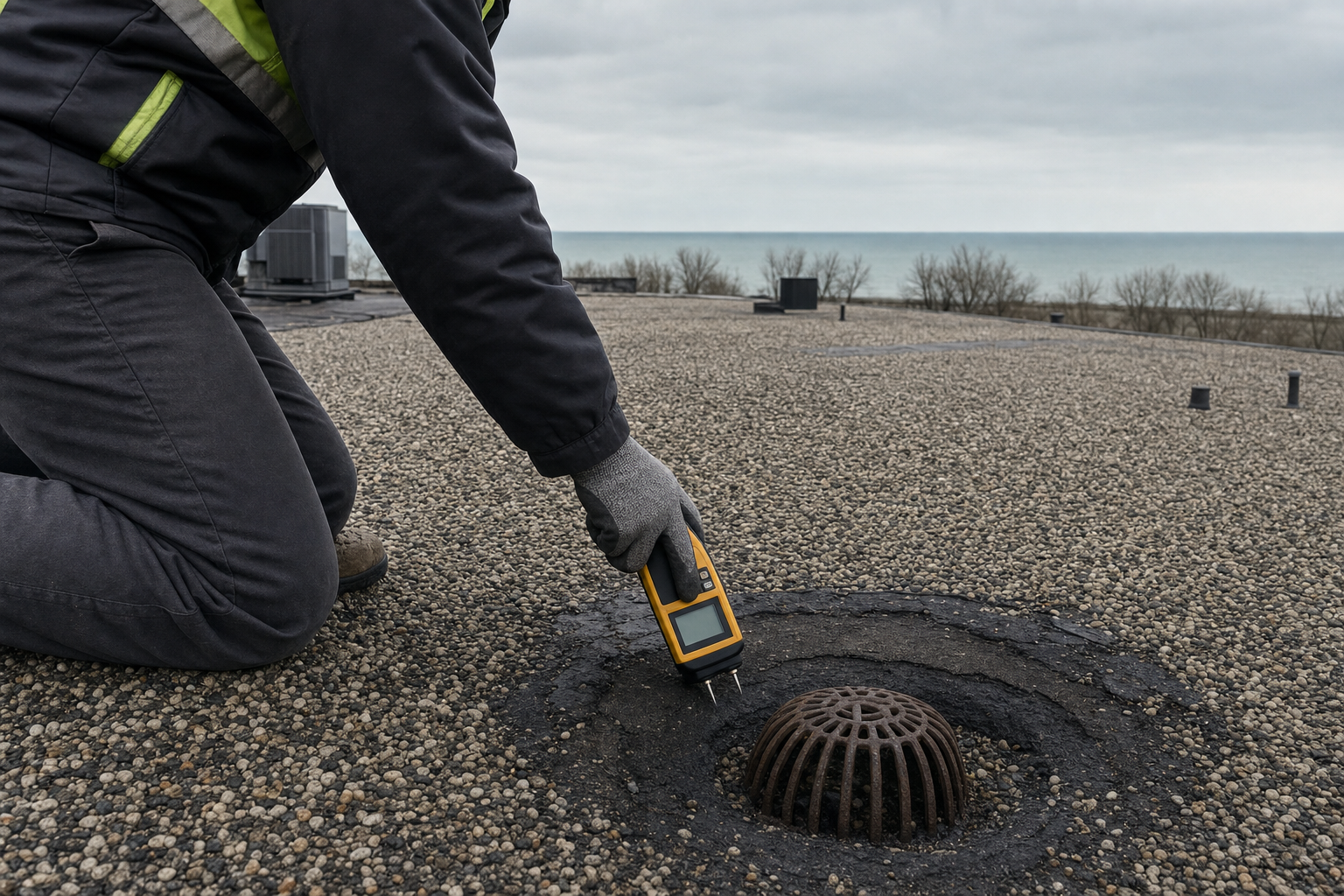
A BUR roof inspection should evaluate surfacing, flashing, drains, penetrations, moisture, and roof-edge conditions. On older buildings, moisture scans or core samples may be needed before reroofing so the contractor can understand whether water has reached the insulation or deck. That matters because a surface repair can miss a deeper wet-insulation problem.
Building owners should also think about timing. After a major wind or hail event, a commercial storm damage roof inspection can help document visible conditions before small issues spread. When insurance may be involved, keep the language factual: photos, dates, leak locations, and inspection findings support roof damage documentation for insurance claims without assuming coverage or outcome.
Where BUR Fits Compared With TPO, EPDM, and Modified Bitumen
BUR is not the right answer for every commercial building. TPO, EPDM, SBS modified bitumen, and hybrid roof assemblies all have strong use cases. For many Midwest buildings, built-up roofing BUR commercial systems are best evaluated against the building’s slope, drainage, rooftop traffic, budget, existing roof conditions, and how the building is used.
BUR may be a fit when:
- The building has a low-slope roof with regular maintenance access
- The owner wants a durable, multi-ply asphaltic system
- The roof has complicated penetrations or mechanical areas
- Long-term serviceability matters more than the fastest installation
- A gravel or cap-sheet surface fits the building’s maintenance plan
BUR may be less attractive when odor, staging space, installation logistics, or business disruption make hot asphalt difficult. For some occupied buildings, a cold-applied system, modified bitumen, EPDM, or TPO may be a better conversation.
A practical contractor should not push one system before looking at the roof. Lake Point Exteriors evaluates the existing membrane, deck condition, insulation, drainage, penetrations, edge metal, and repair history before recommending BUR or an alternative. For many commercial flat roofing projects, the right answer is the system that fits the building’s use, access needs, moisture condition, and maintenance plan.
BUR Roof Inspection Signs for Building Owners
BUR systems often give warning signs before a major leak develops. Walk the interior after heavy rain and keep a simple record of stains, odors, or damp areas. On the roof, a qualified inspector will look for blisters, splits, open seams, exposed felts, bare asphalt, displaced gravel, clogged drains, deteriorated flashing, and damage around rooftop equipment.
Do not climb onto a commercial roof without proper access and fall protection. A low-slope roof can still have unsafe edges, slick surfaces, weak decking, or hidden openings. The safer move is to document what you can from inside the building and schedule a BUR roof inspection.
For Lake County and southern Wisconsin buildings, timing matters. Spring inspections can catch winter freeze-thaw damage. Mid-summer inspections help after hail and high-wind events. Fall inspections help prepare drains, seams, and flashings before snow and ice arrive. Drainage also deserves attention beyond the membrane itself, including drainage and gutter systems around commercial buildings.
Repair versus replacement usually depends on how widespread the damage is, whether moisture has entered the insulation, how much service life remains, and whether recurring leaks are tied to drainage or flashing failures. A localized split or flashing issue may be repairable. Saturated insulation, repeated leak paths, widespread surfacing loss, or deck concerns may point toward a larger reroofing conversation.
FAQ: Hot Asphalt BUR for Commercial Roofs
What is built-up roofing BUR commercial roofing?
Built-up roofing BUR commercial roofing is a low-slope roof system made from multiple layers of asphalt and reinforcing ply sheets, usually finished with gravel, slag, a cap sheet, or coating.
Is BUR only for old buildings?
No. BUR has a long history, but it is still used on low-slope commercial roofs where multi-ply redundancy, durability, and serviceability are priorities.
Is BUR better than TPO or EPDM?
BUR is not automatically better than TPO or EPDM. It may be a better fit when multi-ply redundancy, rooftop traffic durability, and asphaltic serviceability matter more than speed or low-odor installation.
How many plies does a BUR roof need?
It depends on the specification, building use, manufacturer requirements, and roof design. A contractor should match the ply count and surfacing to the project instead of treating every flat roof the same.
How long does a commercial BUR roof last?
BUR roof life depends on installation quality, drainage, surfacing, maintenance, weather exposure, and whether moisture has entered the insulation or deck. A commercial building with regular inspections and clear drainage is in a better position than one where leaks, ponding, or displaced surfacing go unchecked.
Can BUR be repaired?
Many BUR systems can be repaired, especially when issues are localized. The right repair depends on the age of the system, moisture levels, surfacing, and whether damage extends into insulation or decking.
Can ponding water damage a BUR roof?
Ponding water can accelerate roof wear and may point to clogged drains, slope problems, saturated insulation, or low areas that need inspection.
When should a Midwest commercial building owner inspect a BUR roof?
Schedule inspections after major hail or wind events, after winter freeze-thaw cycles, before snow season, and whenever interior stains, odors, ponding, or soft roof areas appear.
Closing CTA
If your commercial roof in Waukegan, Gurnee, Zion, Lake Forest, Kenosha County, Racine County, or the surrounding area is showing leaks, ponding, worn surfacing, or storm-related wear, Lake Point Exteriors can take a closer look. Building owners, facility managers, and property managers can book a free commercial roof inspection and get a clear recommendation for BUR, TPO, EPDM, modified bitumen, repair, or replacement based on what the building actually needs.
References
- GAF, “What Is Built-Up Roofing?”, https://www.gaf.com/en-us/blog/commercial-roofing/what-is-built-up-roofing-8232c4a2-29ed-4741-b9ef-20d29708050d ↩
- NOAA/National Weather Service Glossary, “Severe Thunderstorm”, https://forecast.weather.gov/glossary.php?word=Severe+Thunderstorm ↩
- National Roofing Contractors Association, “The NRCA Roofing Manual: Membrane Roof Systems-2023”, https://industry.nrca.net/eWeb/DynamicPage.aspx?webcode=NRCAStorePrdDetails&prd_key=081cdc33-3000-48cc-953e-6e22a3c7071f ↩