Illinois Hail and Wind Roof Damage Documentation Guide for Lake County Homeowners
After an Illinois hail or wind event, storm documentation should start with safe photos, clear notes, and a calm look at the whole exterior. The damage is not always obvious from the driveway. One shingle may show a dark bruise where granules were knocked loose. Another may be lifted by wind but still lying flat. Gutters, siding, soffit, and fascia may show clues before the roof does. For homeowners in Waukegan, Gurnee, Zion, Beach Park, Libertyville, Lake Forest, and nearby Lake County communities, the goal is simple: document what you can see safely, understand what an adjuster may review, and get a clear exterior inspection without pressure or promises.
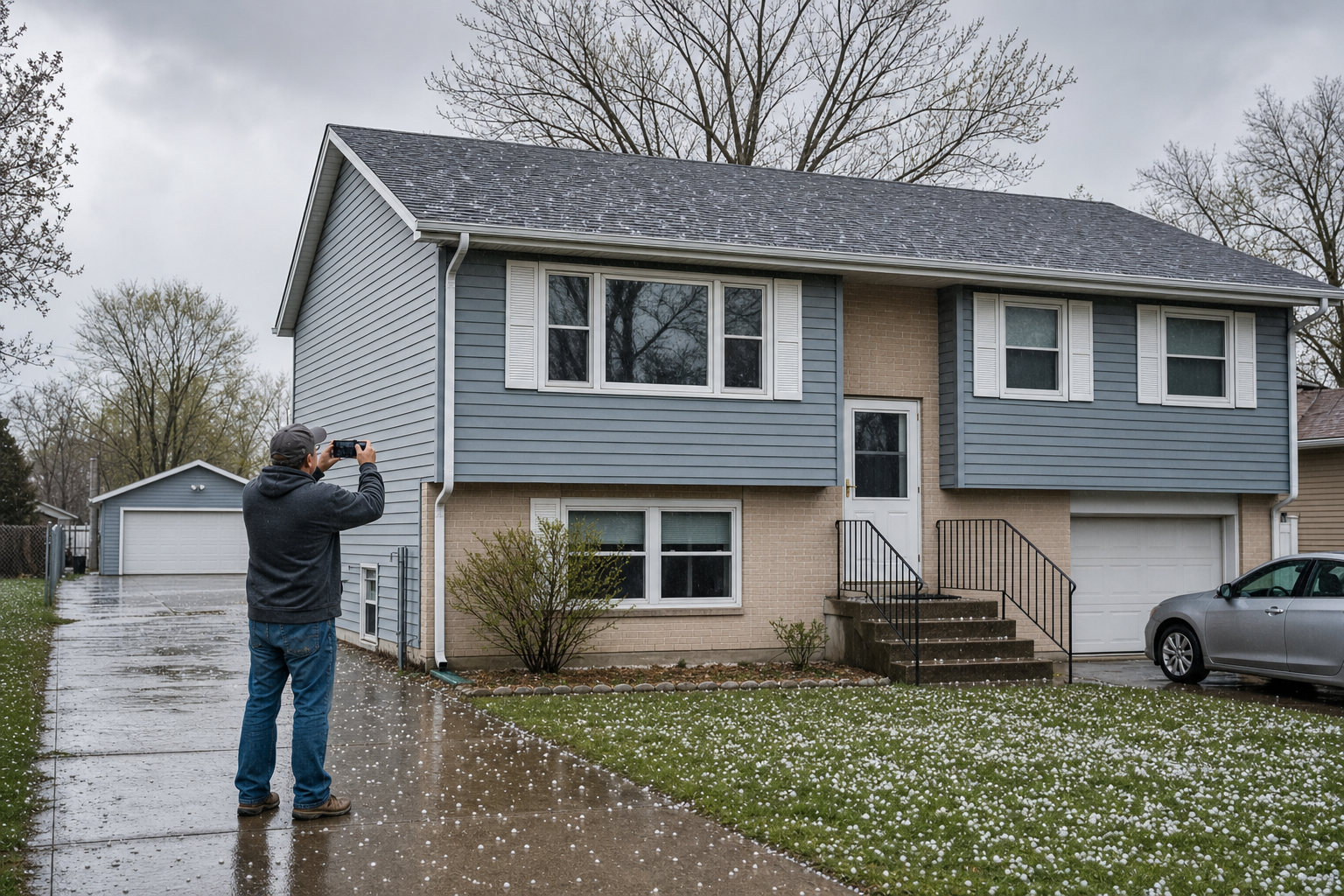
What Hail and Wind Damage Can Look Like
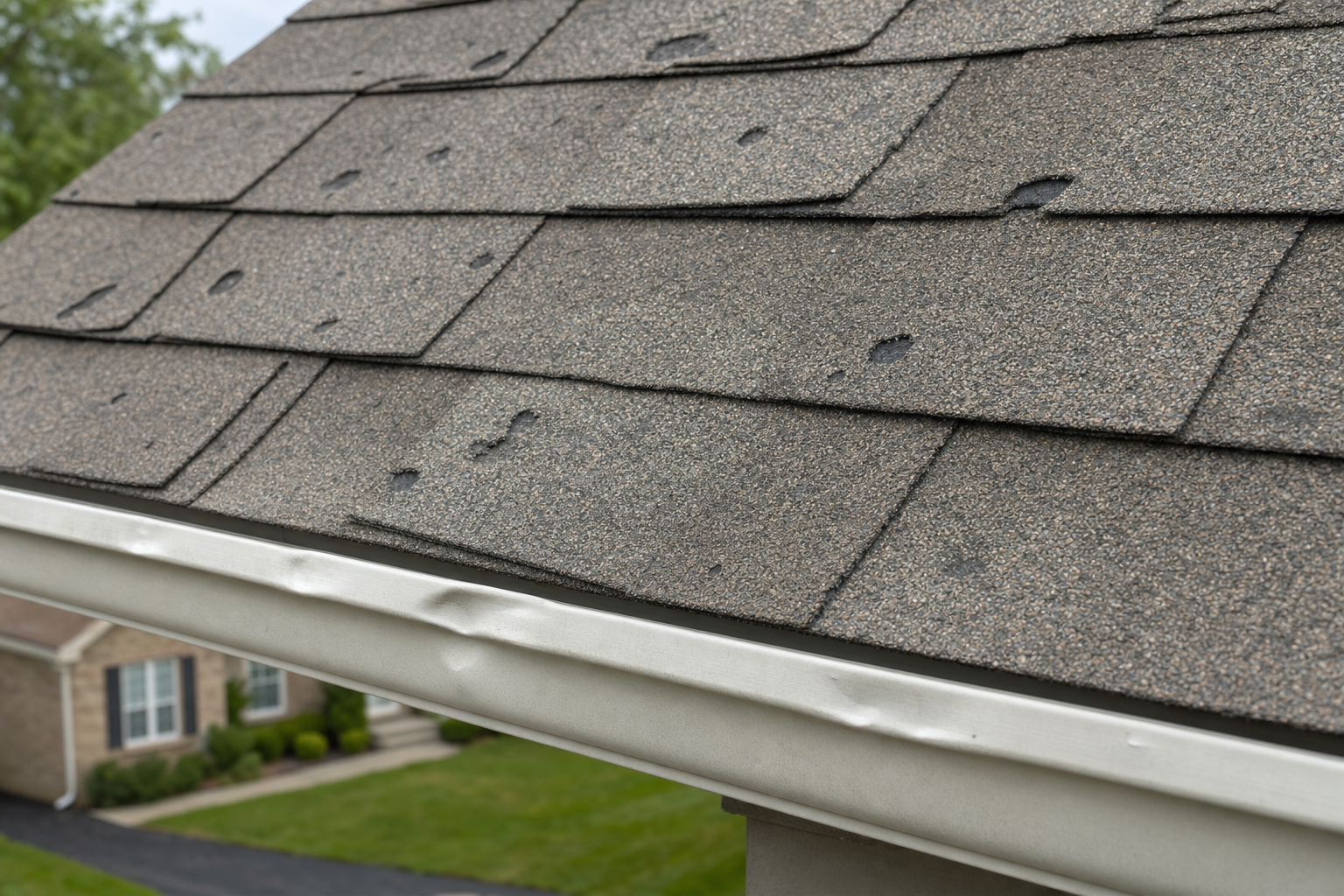
Hail damage on asphalt shingles often shows up as circular bruising, missing granules, exposed mat, or dark spots that feel softer than the surrounding shingle. Granule loss means the protective mineral surface on an asphalt shingle has been knocked loose or worn away. Wind damage may look different: lifted shingles, creased tabs, missing shingles, torn edges, or gaps where wind-driven rain can work underneath. Wind lift means a shingle has been raised or loosened by wind, even if it has not fully detached.
A severe thunderstorm is defined by the National Weather Service as producing hail at least 1 inch in diameter or wind gusts over 58 mph, which is why quarter-size hail and strong straight-line winds deserve careful attention after a Lake County storm. [1]
Do not climb onto the roof to check. From the ground, look for:
- Granules collecting near downspouts
- Dented gutters, fascia, vents, or soft metal
- Shingles that look raised, creased, or missing
- Fresh debris impact marks on siding
- Ceiling stains or attic moisture after wind-driven rain
Soft-metal dents on gutters, vents, and flashing can help support a hail inspection record because they show where hard impacts may have hit surrounding exterior components. A contractor inspection can identify visible exterior conditions; the insurance carrier determines policy coverage, deductible rules, depreciation, and claim payment decisions.
Build a Clean Storm Documentation File
Good documentation is not about making the damage sound worse. It is about creating a simple record of what happened and what you observed.
For Illinois hail and wind roof damage documentation, keep the storm date, location, photos, and contractor inspection notes together. Start with the date and approximate time of the storm. Add the city or neighborhood, such as Waukegan, Gurnee, Grayslake, Highland Park, Lake Villa, Antioch, Kenosha County, or Racine County. Save screenshots of any weather alerts you already received. Then take wide photos and close photos from safe ground-level positions.
Useful photos include:
- Full front, back, and side views of the home
- Roof slopes visible from the yard or driveway
- Gutters and downspouts
- Siding, soffit, and fascia
- Granules near downspouts or splash blocks
- Interior ceiling stains if water appeared after the storm
Ground-level photos, storm date, location, and affected exterior areas form the core of a roof damage documentation file. The National Association of Insurance Commissioners recommends documenting storm damage with photos or video and making a list of damaged property for insurance records. [2]
Keep receipts for any temporary materials used to prevent further damage, such as a tarp installed by a qualified professional. Temporary protection is different from permanent repair work, and your policy language controls how those costs are treated. Take photos before and after temporary mitigation so the file shows what changed and why.
What Belongs in an Illinois Roof Insurance Claim Hail File
A clean claim file should be easy for you to understand later. It should not depend on memory, guesses, or scattered text messages.
Include:
- Storm date and approximate time
- Property address or city
- Photos of each affected exterior area
- Notes about visible roof, siding, soffit, fascia, gutter, and downspout conditions
- Weather alert screenshots if you have them
- Interior leak photos, if water appeared after the storm
- Receipts for temporary protection or emergency mitigation
- Contractor inspection photos or estimate, if you requested one
A deductible is the amount the homeowner is responsible for under policy terms. Depreciation is the reduction an insurer may apply for age or wear, depending on policy terms. Those details come from the policy and carrier review, not from a contractor inspection.
How Adjusters Separate Storm Damage From Age or Defects
Adjusters usually look for patterns. Hail damage tends to show directional or slope-specific impact marks, especially when paired with dents on gutters, vents, or other soft metals. Wind damage may show creasing, lifted adhesive strips, torn shingles, or missing sections in exposed areas.
They may also look for signs that are not storm-related, including:
- Normal granule aging
- Blistering from heat or ventilation issues
- Manufacturer defects
- Old mechanical scuffs
- Poor prior installation
- Long-term moisture wear
That distinction matters. A roof can be old and still have storm damage, or it can look rough without having covered storm damage. Cosmetic hail marks, functional shingle damage, and interior leak evidence are not the same thing. A calm inspection should separate visible conditions from assumptions. Lake Point Exteriors can document what is present on the roof, gutters, siding, soffit, and fascia, then provide photos and a repair or replacement estimate when appropriate. The homeowner remains in control of all insurance communication and claim decisions.

What to Have Ready for a Roof Insurance Claim in Illinois
If you choose to open a homeowners insurance claim, organized information can make the conversation clearer. Most homeowners will want the policy number, storm date, photos, notes about affected exterior areas, and any contractor inspection photos or estimate.
Avoid guessing about cause, scope, or cost. Use plain descriptions instead:
- “Missing shingles on the rear slope”
- “Granules collected below the north downspout”
- “Dents visible on the front gutter”
- “Water stain appeared after the storm”
- “Contractor photo set available”
Your policy is the controlling document. The Illinois Department of Insurance identifies a home inventory as a detailed list of personal possessions with pictures or videos that can help identify lost or destroyed items. [3]
FAQ: Illinois Hail and Wind Roof Claims
What should I document for Illinois hail roof damage?
Document the storm date, city, roof slopes visible from the ground, gutters, downspouts, siding, fascia, interior stains, and any temporary protection receipts.
Should I climb on my roof after hail in Lake County?
No. Take photos from the ground and schedule a qualified exterior inspection if you see granules, dents, lifted shingles, missing shingles, or leaks.
Can Lake Point Exteriors decide if my insurance claim is covered?
No. Lake Point can document visible roof and exterior conditions, but the insurance company decides coverage, deductible, depreciation, and payment.
Does hail always mean the roof needs replacement?
No. Some hail leaves cosmetic marks or minor exterior evidence, while larger or repeated impacts can shorten shingle life or expose the mat. A roof inspection should identify the condition of each affected slope without assuming the outcome.
Can wind damage exist without missing shingles?
Yes. Wind can lift, crease, or loosen shingles without removing them completely. That is one reason close inspection matters after straight-line winds or tornado-season storms in northern Illinois.
What photos help with a hail roof inspection?
Wide home photos, visible roof slopes, gutters, downspouts, vents, siding, granules near splash blocks, and interior water stains are useful for a hail damage roof inspection in Lake County.
What does Lake Point Exteriors do during an inspection?
Lake Point checks the roof, shingles, gutters, siding, soffit, and fascia for visible storm-related conditions. The team can provide photos, explain what they found in plain English, and prepare an exterior repair or replacement estimate when the condition warrants it.
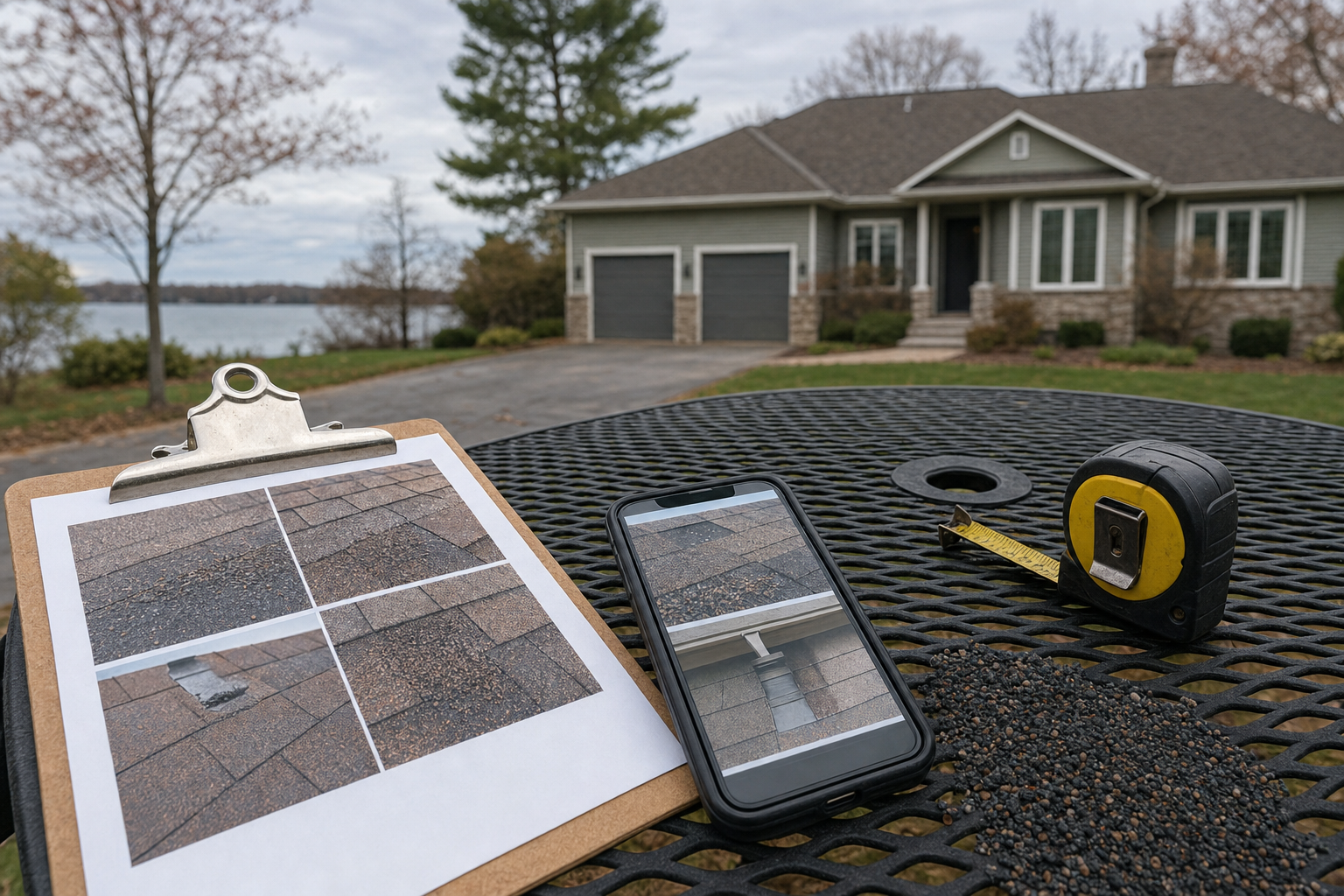
Schedule a Lake County Roof Inspection
Document the damage you can see safely, keep your notes organized, and book a free exterior inspection with Lake Point Exteriors. We serve Waukegan, Lake County, the North Shore, Kenosha County, and Racine County with calm, no-pressure roof, siding, gutter, and exterior storm inspections.
References
- National Weather Service, Severe Thunderstorm Safety, https://www.weather.gov/safety/thunderstorm ↩
- National Association of Insurance Commissioners, After the Storm, Read the Fine Print to Avoid Signing Away Your Insurance Benefits, https://content.naic.org/article/consumer-insight-after-storm-read-fine-print-avoid-signing-away-your-insurance-benefits ↩
- Illinois Department of Insurance, Homeowners & Renters Definitions, https://idoi.illinois.gov/consumers/consumerinsurance/homeownerrenter/homeowners-and-renters-definitions.html ↩