Lake County Hail Roof Damage: Signs and Next Steps
A severe storm can cross Lake County in minutes and leave a difficult question behind: did the roof take real damage, or does it only look weathered? Start by checking from the ground for missing or lifted shingles, scattered impact marks, fresh dents on metal, and signs of water indoors. Lake County hail roof damage is not always visible from the ground, even at a Waukegan home directly in the storm’s path. Hail can disturb protective granules or fracture an asphalt shingle, while straight-line wind can lift, crease, or remove shingles. The safest response is calm and practical: record what you can see, note the storm date, and have the roof evaluated by a qualified contractor. A clear condition report can separate storm damage from ordinary aging and show whether the roof needs monitoring, a focused repair, or residential roof repair and replacement.
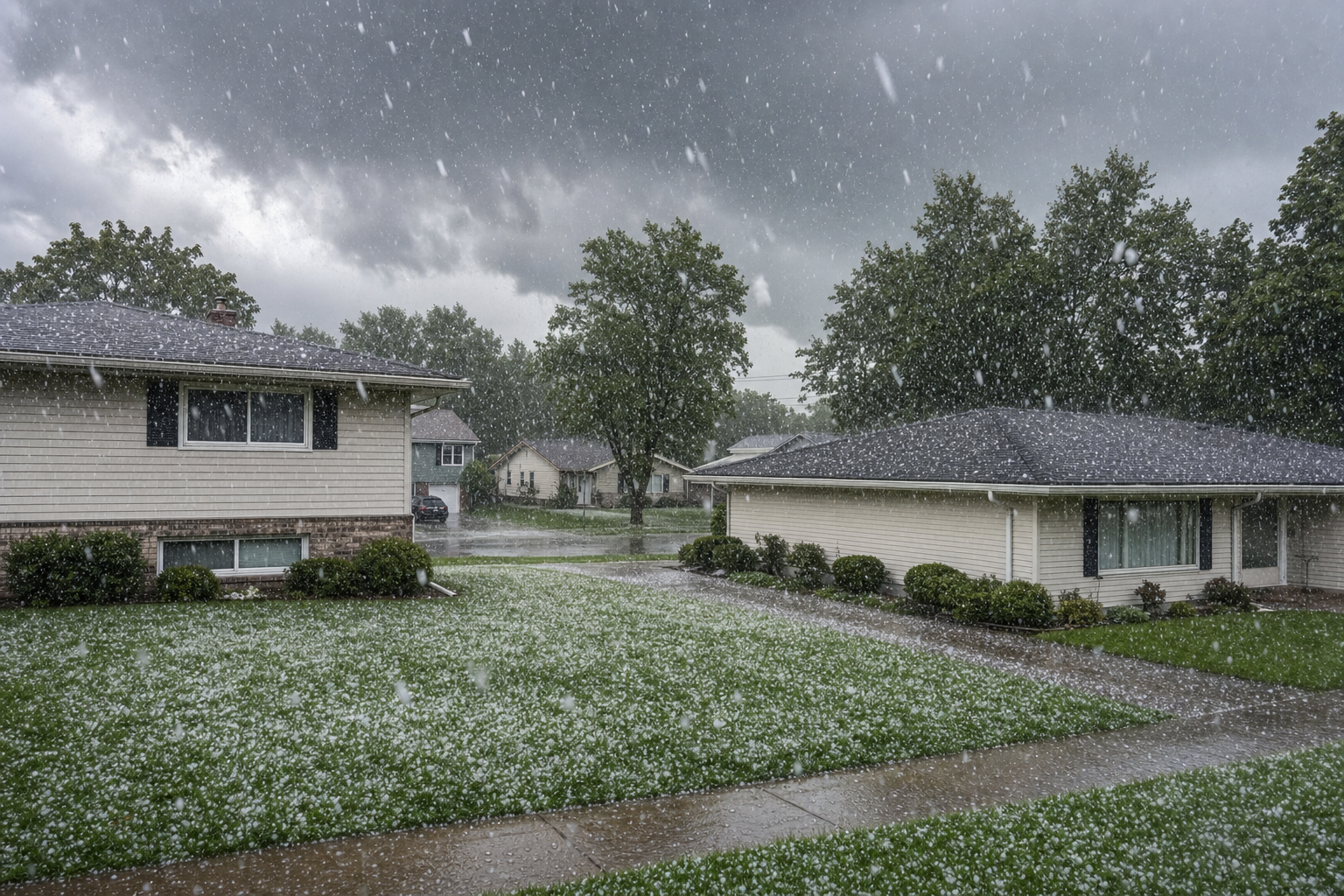
How Hail and Wind Damage Lake County Roofs
Hail and wind do not affect a roof in the same way. Hail creates scattered impact points across a slope. Wind pressure works along edges, corners, ridges, shingle tabs, and flashing details it can lift. Wind-driven rain can then reach vulnerable areas. A storm-facing slope—the roof plane exposed most directly to incoming wind and hail—may show a different pattern from a more sheltered slope.
NOAA’s National Weather Service defines severe thunderstorms as storms capable of producing hail at least 1 inch in diameter or wind gusts of 58 mph or greater; both hazards can damage roofs and other property. [1] In the NWS Chicago forecast area, damaging hail is most frequent in May and June, averaging two to three days per month with at least one hail report, while damaging winds are most frequent in June and July, averaging five to six reported days per month. [2]
Comparing slopes and exterior components helps establish a pattern before any hail and wind storm-damage restoration is recommended.
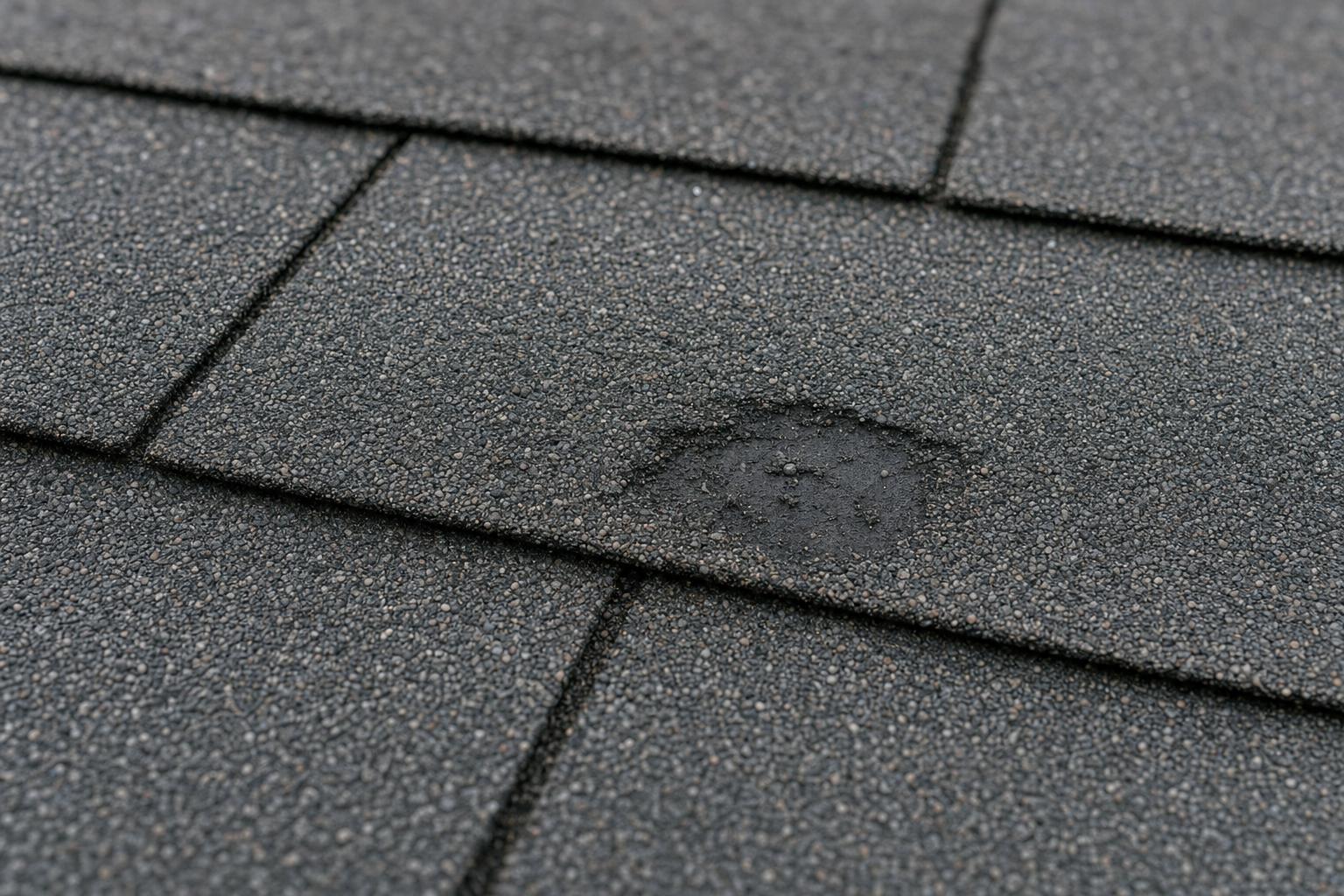
What Hail, Wind, and Normal Aging Look Like
One loose granule or dark spot does not establish storm damage. The pattern matters.
- Possible hail damage: random round or irregular impact marks, displaced granules, bruises, cracks, or exposed asphalt or fiberglass mat.
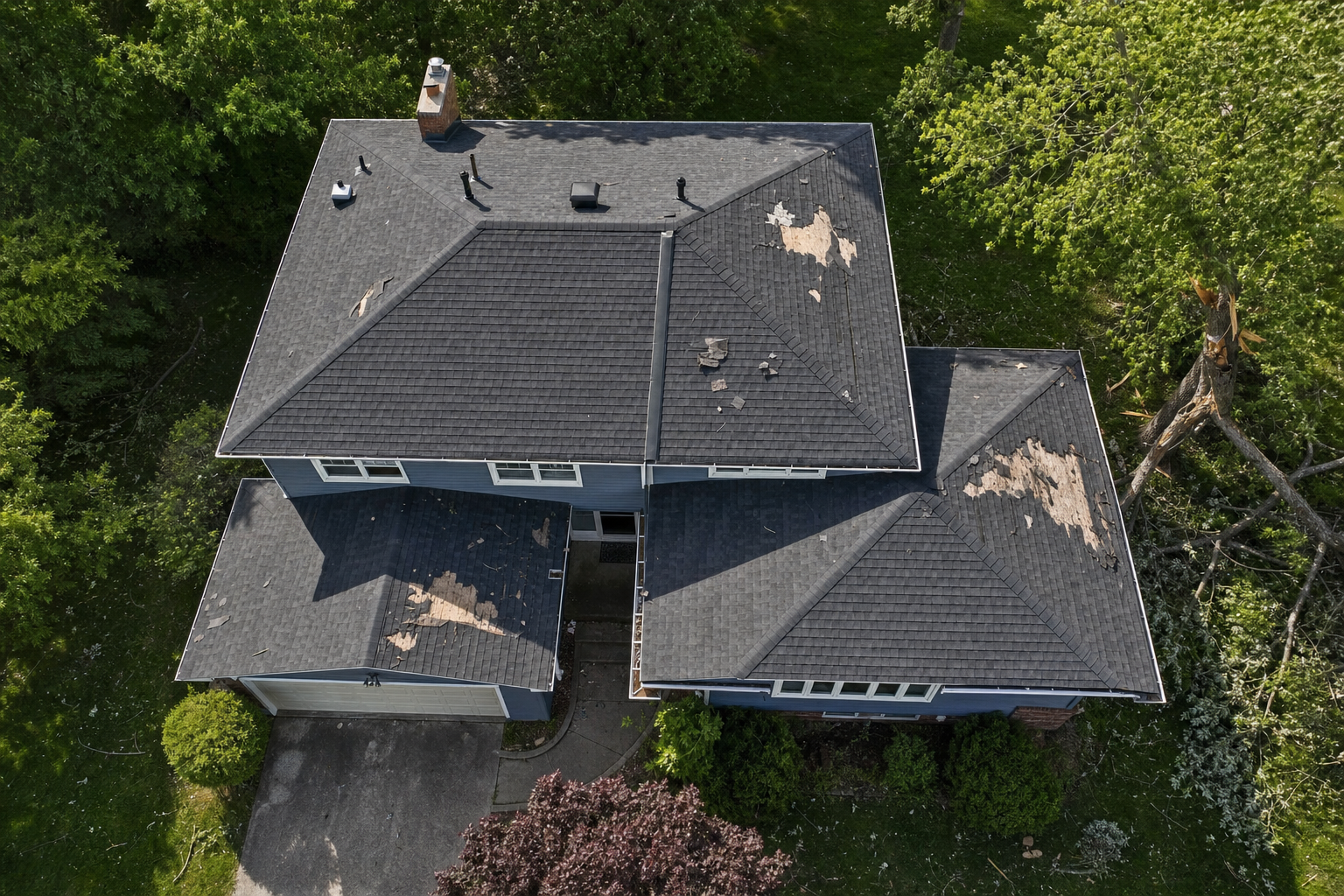
- Possible wind damage: missing tabs, lifted edges, creases, broken seals, or loosened flashing near roof transitions.
- Normal aging: gradual, relatively even granule loss, fading, brittle edges, or cracking across similar roof areas.
- Possible installation or material issue: repeating marks at fastener lines, seams, or the same detail across multiple slopes.
The Insurance Institute for Business & Home Safety evaluates asphalt-shingle hail impacts for three damage modes: deformation, meaning a change in shingle shape; granule loss, meaning the loss of one or more surface granules; and a breach, meaning a tear, crack, or rupture. [3] Flashing is the material that directs water away from roof joints, edges, and penetrations.
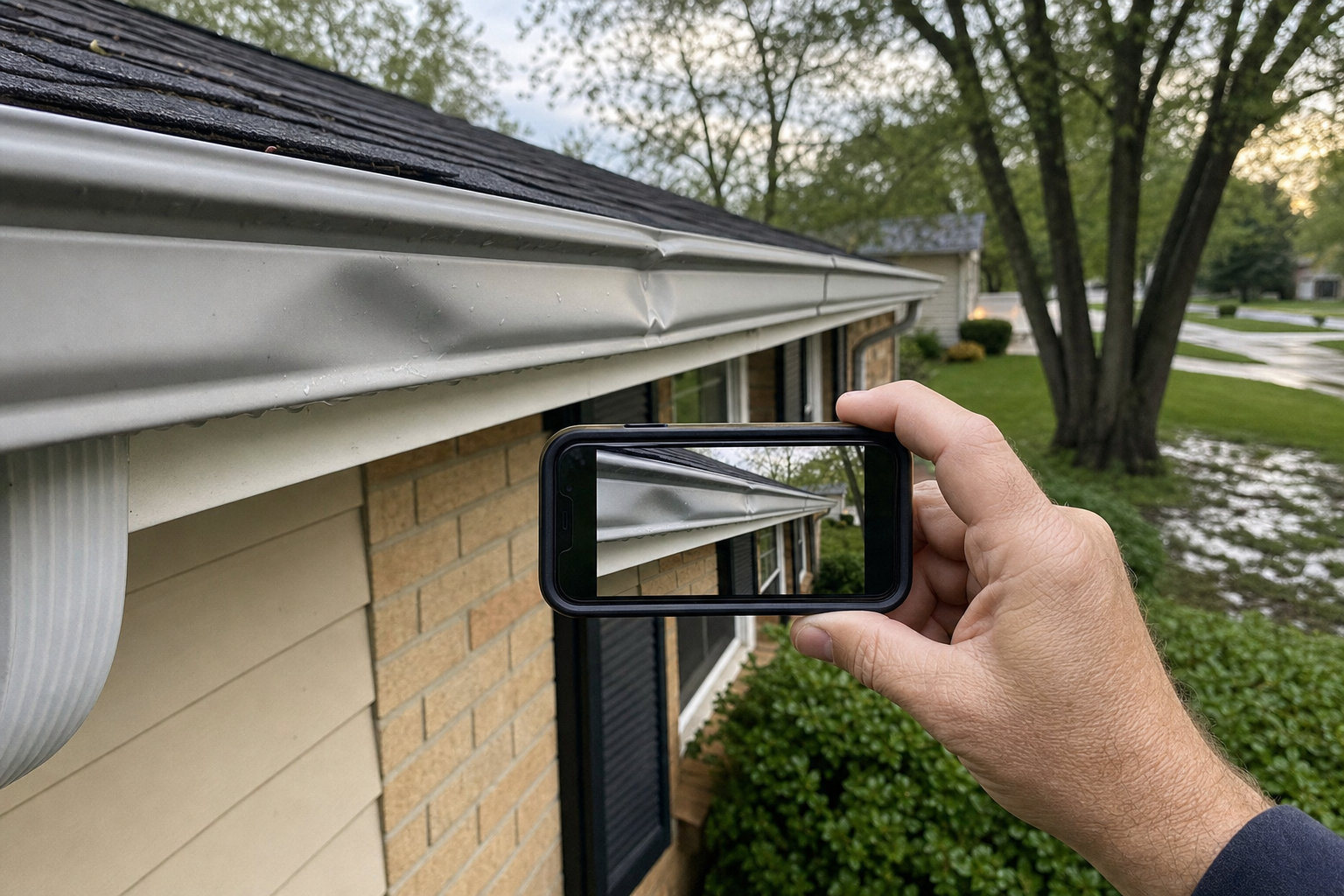
An inspection should also distinguish a surface mark from damage that affects the roofing system’s water-shedding or attachment. Fresh dents on gutters or vents can be collateral indicators, but they do not confirm the condition of the asphalt shingles by themselves. Roof age, pre-existing wear, and differences between storm-facing and sheltered slopes all provide context.
How to Document Roof Damage Safely From the Ground
Do not climb onto a wet, steep, or damaged roof. Start with safe observations:
- Note the storm date and approximate time, and save the NWS alert for your location.
- Take wide photos of every roof slope you can see from the ground.
- Photograph roofing pieces where you find them.
- Capture fresh dents or loosened sections on gutters, siding, soffit, and fascia.
- Check the attic and ceilings for damp areas, drips, or new staining.
- Record where each photo was taken.
Homeowners in Waukegan and nearby Lake County communities can use the NWS Chicago storm record to document the date and reported hazards associated with a storm. Keep those records with your roof-damage documentation for insurance, but remember that storm records do not prove damage to a specific home.
When Roof Damage Needs Prompt Attention
Arrange prompt help when you see an active leak, missing shingles, exposed underlayment or roof decking, displaced flashing or vents, or new moisture on a ceiling or wall. Keep clear of sagging wet materials and water near electrical fixtures. These conditions call for timely evaluation, but they do not automatically mean the entire roof needs replacement.
Scattered marks without an active leak may still justify an inspection, especially when the roof is older or the storm-facing slope looks different from sheltered areas. Monitoring may be appropriate when materials remain intact and no active water entry is present.
What a Professional Roof Inspection Should Answer
A professional assessment of Lake County hail roof damage should document patterns across the roof and related exterior components. A useful inspection should produce more than “damage” or “no damage.” The contractor should examine accessible slopes, ridges, valleys, flashing, vents, gutters, and roof penetrations; photograph representative findings; and explain the pattern plainly.
The homeowner’s report should include representative photos, findings organized by component or slope, the observed damage pattern, and a written repair or replacement scope. The assessment should answer:
1. Is the condition consistent with hail, wind, aging, workmanship, or a material issue? 2. Does the roof need monitoring, a localized repair, or broader replacement? 3. Are the gutters, siding, soffit, or fascia also affected?
Repair-versus-replacement guidance should consider how widespread the damage is, which slopes and components are affected, the roof’s age and pre-existing condition, and whether a durable localized repair is practical.
The homeowner decides whether to file a claim, choose a contractor, and authorize work. The insurer determines coverage under the specific policy. A contractor documents physical conditions and prepares a repair or replacement scope; the contractor does not determine coverage or promise an outcome.
Frequently Asked Questions
What Are the First Signs of Hail Damage on a Roof?
Possible roof hail damage signs include random impact marks, displaced granules, shingle deformation, cracks, and fresh dents on gutters or roof vents. Ground-level clues do not confirm the roof’s overall condition.
Can Hail Damage a Roof Without Causing an Immediate Leak?
Yes. An impact can displace granules or damage the shingle beneath the surface without producing an indoor leak that day. The location, shape, and distribution of marks matter.
How Is Hail Damage Different From Normal Roof Aging?
Hail usually creates scattered impact patterns, while aging more often produces gradual and relatively even wear across comparable roof areas.
Does Every Hailstorm Mean the Roof Needs Replacement?
No. The appropriate next step depends on the damage pattern, roof age, material condition, affected slopes, and whether a localized repair is practical. Some roofs need no work; others need a focused repair or replacement.
Can I Confirm Hail Damage From the Ground, and What Should I Document?
You can document clues, but a ground view cannot confirm every slope or roof detail. Record the storm date and time, save the local NWS alert, and photograph visible roof slopes, gutters, siding, fallen roofing pieces, and interior moisture from safe locations. A qualified inspection can connect those clues to an overall pattern and recommend a proportionate next step.
Schedule a Lake County Roof Inspection
If a recent storm affected your home in Waukegan or elsewhere in Lake County, document what you can see and review Lake Point Exteriors’ roofing services in Waukegan. Lake Point Exteriors also serves Gurnee, Zion, and Grayslake, as well as Libertyville, Highland Park, Lake Forest, and other North Shore communities. Service extends into southern Wisconsin, including Kenosha and Racine counties.
When you are ready, book a complimentary roof inspection. You will receive a clear explanation of the roof’s condition and a straightforward quote for recommended work, while you remain fully in control of every decision.
References
- National Weather Service, “Severe Thunderstorm Safety,” https://www.weather.gov/safety/thunderstorm ↩
- National Weather Service Chicago, “Severe Weather Climatology,” https://www.weather.gov/lot/SevereWeatherClimatologyNew ↩
- Insurance Institute for Business & Home Safety, “Roof 101,” https://ibhs.org/roof-101/ ↩