SBS Modified Bitumen Roofing for Illinois Low-Slope Roofs
If you own a low-slope roof in Lake County, northern Illinois, or southern Wisconsin, winter is not a small detail. Cold snaps, freeze-thaw cycles, snow, ice, and Lake Michigan moisture all test the roof in ways a standard steep-slope shingle system is not built to handle. That is where SBS modified bitumen roofing earns a serious look. For Lake County building owners, SBS modified bitumen roofing is mainly a low-slope system decision, not a shingle alternative.
A low-slope roof is a roof where water moves slowly enough that membrane selection and drainage details become critical. SBS modified bitumen roofing is a flexible asphalt-based membrane system designed for low-slope roof areas on commercial buildings, additions, garages, and certain residential sections where water moves more slowly and cold-weather movement matters.
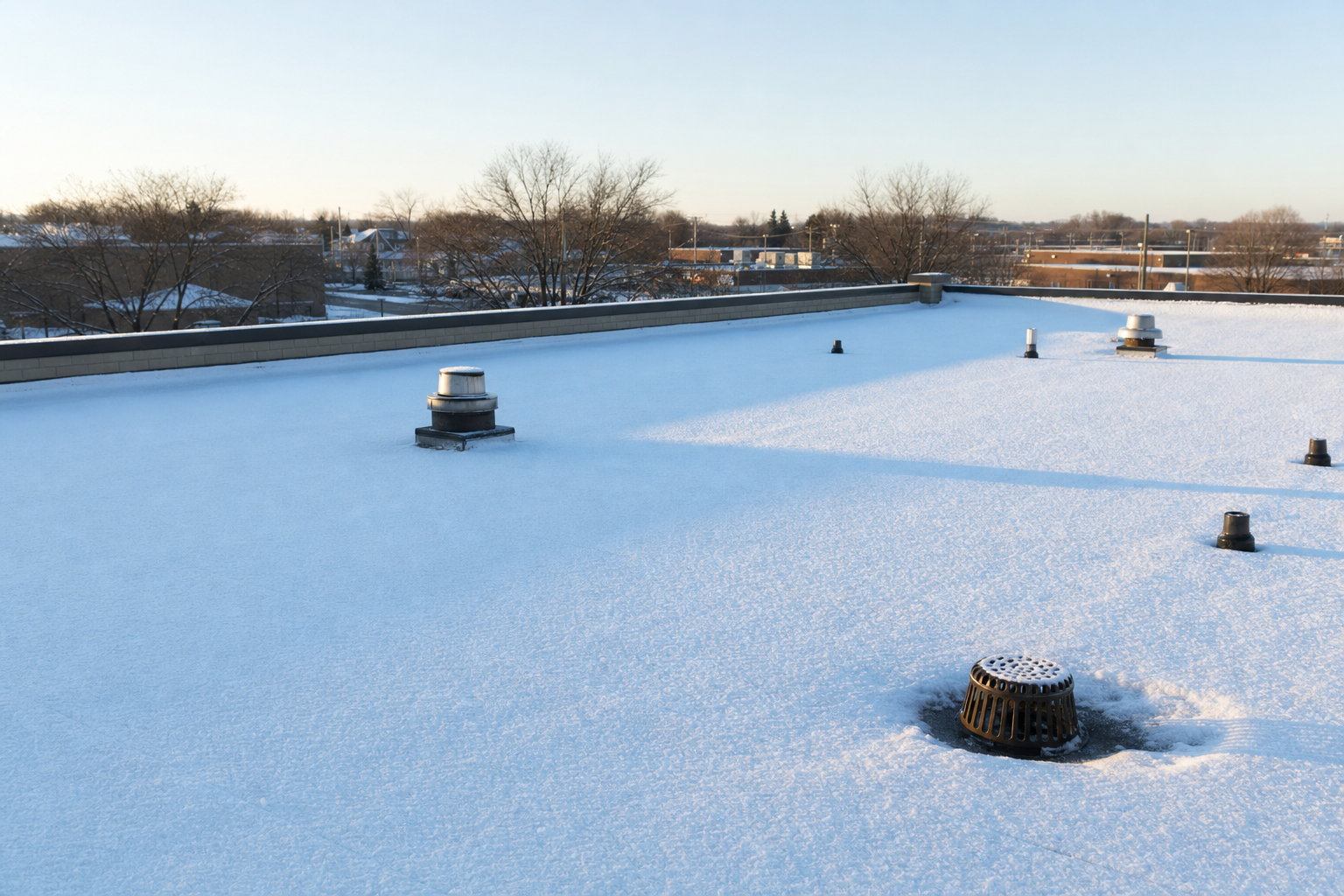
What SBS Modified Bitumen Roofing Means
SBS stands for styrene-butadiene-styrene, a rubber-like polymer added to asphalt for flexibility. SBS modified bitumen roofing uses rubber-modified asphalt to improve membrane flexibility on low-slope roofs. That flexibility matters because roofs expand and contract as temperatures change. SBS modified bitumen membranes are known for cold-temperature flexibility and elongation, which helps the roof move with the building instead of becoming brittle too quickly. [1]
A modified bitumen roof system is usually installed in layers. Depending on the building and product line, the system may include insulation, cover board, base sheet, cap sheet, flashing details, adhesives, fasteners, drains, scuppers, penetrations, and surfacing. A cap sheet is the top layer of a modified bitumen roof system. Flashing is the waterproofing detail installed where the roof meets walls, curbs, penetrations, or edges. NRCA’s membrane roofing guidance covers polymer-modified bitumen as one of the major low-slope membrane roof system categories. [2]
Modified bitumen is not one single product. SBS and APP are both modified asphalt membranes, but they are modified differently. SBS is usually discussed for flexibility and elastic movement, while APP is often discussed for plastic-like modification and heat resistance. The right low-slope roof membrane depends on the building, the climate, the existing roof, the installation method, and the manufacturer’s system requirements.
Why Cold Weather Changes the Roofing Conversation
In Waukegan, Gurnee, Zion, Lake Forest, Libertyville, Highland Park, Kenosha County, and Racine County, a roof can see snow load, meltwater, refreeze, wind-driven rain, and sharp temperature swings within the same season. On a low-slope roof, those stresses collect around seams, drains, scuppers, penetrations, curbs, edges, and flashing transitions.
Fresh snow can range from about 3 to 21 pounds per square foot per foot of depth. One inch of ice weighs a little less than 5 pounds per square foot. [3]
A good cold-weather flat roof system needs to do three things well:
- Stay flexible when temperatures drop
- Resist splitting around movement points
- Move water off the roof through proper drainage and detailing
SBS does not make a poor roof design magically perform. Slope, drainage, insulation, flashing, and installation quality still decide whether the system works. Low-slope roof performance depends on membrane selection, drainage design, flashing quality, and installation conditions. But for many Midwest low-slope roofs, SBS modified bitumen roofing is a strong fit because the membrane itself is built around flexibility.
Ponding is water that remains on a low-slope roof after rainfall because drainage is blocked, undersized, or poorly sloped. Ponding water can stress seams, accelerate surface wear, and expose weak details around drains, scuppers, curbs, and penetrations. Flat roof drainage should be checked before winter, not after the first leak.
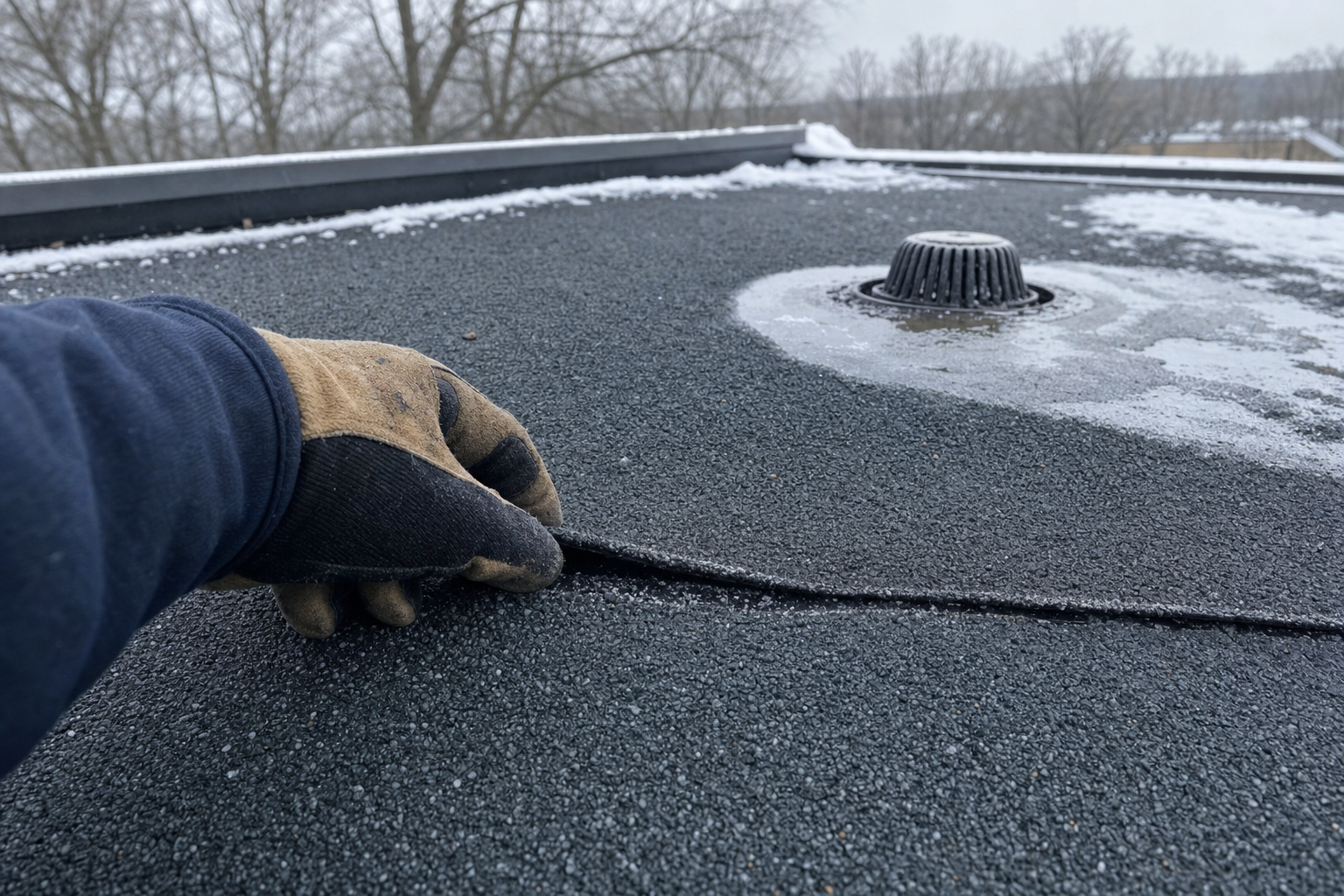
Where SBS Makes Sense on Illinois Buildings
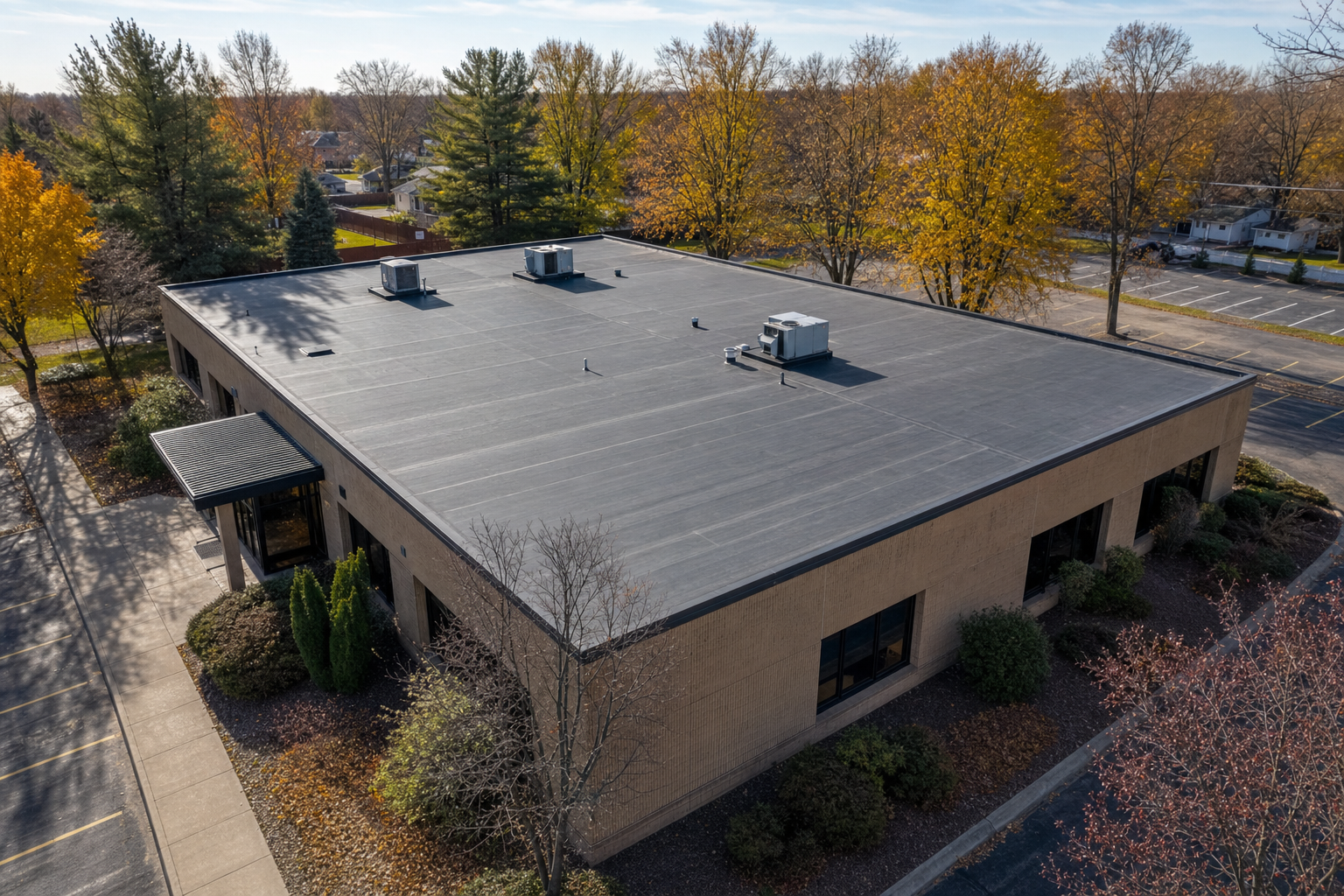
SBS modified bitumen roofing is most often used on commercial low-slope roofs, but it can also be appropriate for certain residential roof sections that are not steep enough for standard shingles. GAF notes that asphalt shingles are not intended for low-slope roof areas because slow drainage can increase the risk of leaks and water damage. [4]
Common SBS applications include:
- Small commercial buildings
- Apartment and mixed-use flat roof sections
- Low-slope garage or porch roof areas
- Additions with minimal pitch
- Roof sections with HVAC units or regular maintenance access
SBS modified bitumen roofing is strongest when the roof design, drainage, insulation, and flashing details all match the building. For Lake County properties, the best answer is not always “replace it with the same thing.” A proper inspection should identify the slope, drainage path, membrane age, insulation condition, seam performance, and flashing details before recommending SBS, TPO, EPDM, built-up roofing, or repair.
SBS Modified Bitumen Roofing Installation Options
SBS systems can be installed in different ways, including self-adhered, cold-applied, hot asphalt, mechanically attached, or heat-welded assemblies, depending on the product and job conditions. Elevate describes SBS modified bitumen systems as available in several installation methods, including self-adhered technology, hot asphalt, cold adhesive, heat welding, and mechanical fastening. [5]
That choice matters in occupied buildings. A restaurant, office, school, rental building, or medical office may need a lower-disruption roofing plan. A self-adhered or cold-applied SBS roofing system may reduce some job-site concerns compared with torch or hot-asphalt methods, but the right option depends on roof condition, weather, manufacturer requirements, and project timing.
Installation planning should also account for rooftop traffic. HVAC service, restaurant exhaust work, snow access, and recurring maintenance can all change how a low-slope roof should be detailed. IBHS and RICOWI roofing guidance emphasizes the value of strong roof detailing, drainage, maintenance, and installation practices for better roof performance. [6]
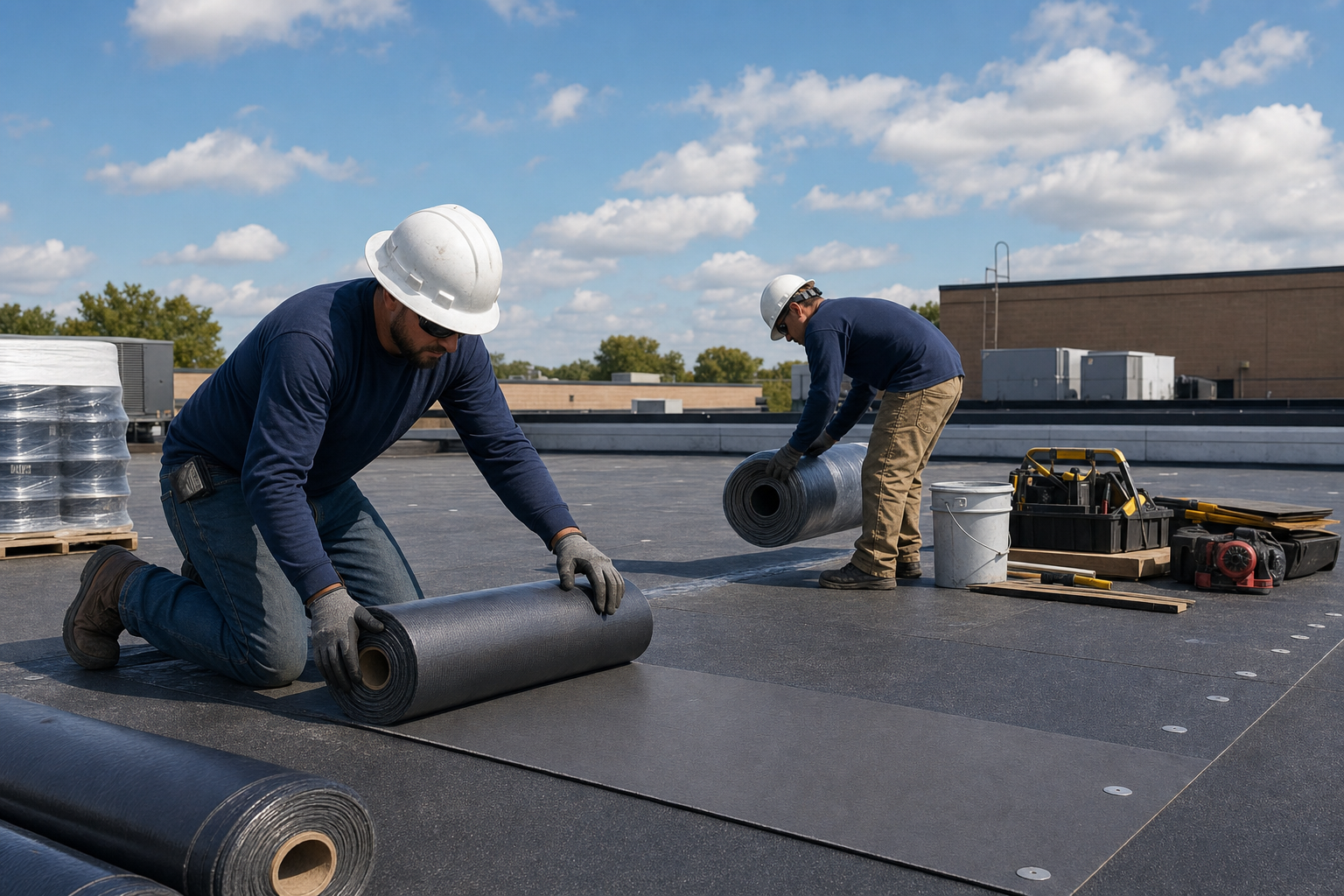
SBS vs TPO, EPDM, and Built-Up Roofing
SBS modified bitumen roofing is one option in the Illinois low-slope roofing conversation. TPO, EPDM, and built-up roofing can also make sense. The better choice depends on the existing roof, drainage, budget, roof traffic, building use, manufacturer requirements, and whether the project is a repair, recover, or full replacement.
| Roof system | Cold flexibility | Traffic tolerance | Installation considerations | Best-fit building | | — | — | — | — | — | | SBS modified bitumen | Strong cold-weather flexibility when installed as a complete system | Good fit where granule-surfaced membranes and detailing are useful | Self-adhered, cold-applied, hot asphalt, heat-welded, or mechanically attached options | Commercial and residential low-slope sections with complex details | | TPO | Flexible single-ply membrane, often selected for reflective commercial roofs | Needs walkway pads in service areas | Heat-welded seams and clean substrate conditions matter | Larger commercial roofs where reflectivity and welded seams are priorities | | EPDM | Rubber membrane with a long track record in low-slope roofing | Needs protection at service paths and high-traffic areas | Adhesive, seam tape, and flashing details are critical | Low-slope buildings where black rubber membrane is acceptable | | Built-up roofing | Multi-layer asphalt system with proven durability | Can handle service conditions when properly surfaced | Hot asphalt, odor, weight, and project logistics matter | Larger or older commercial roofs designed for multi-ply asphalt assemblies |
This is why commercial roofing in Lake County IL should start with a roof inspection, not a product preference. The membrane is only one part of the system.
What to Check Before Winter
If your low-slope roof is already aging, fall is the right time to document its condition. Small defects can turn into active leaks after snow, ice, and repeated thawing. The National Weather Service’s winter safety guidance treats winter storms, ice, and extreme cold as serious property and safety hazards, which is why roof access and winter maintenance should be handled carefully. [7]
Look for:
- Open seams or lifted laps
- Soft spots underfoot
- Ponding water after rain
- Cracked or loose flashing
- Blisters, splits, or punctures
- Clogged drains or scuppers
- Deteriorated sealant around penetrations
- New stains, ceiling leaks, or interior moisture after storms
Do not climb onto an unsafe roof. Photos from the ground, maintenance records, and a professional inspection are enough to start the conversation. A roof inspection should document seams, drains, scuppers, penetrations, flashing, ponding, and membrane surface condition. Lake Point can inspect the roof surface, take photos or drone documentation when appropriate, and explain what is repairable versus what may need a larger system plan.
Repair, Recover, or Replace: What an Inspection Should Decide
A low-slope roof does not always need a full tear-off. Some SBS modified bitumen roofing issues can be repaired when the damage is isolated, the insulation is dry, and the seams and flashing are still generally sound.
A larger plan may be needed when the roof has widespread seam failure, wet insulation, recurring ponding, aging flashing, repeated leak history, heavy rooftop traffic damage, or a membrane that is near the end of its useful service life. A recover may be possible on some buildings, but only if the existing assembly, moisture condition, code requirements, and manufacturer rules support it.
For a Waukegan roofing contractor or Kenosha roofing contractor, the useful inspection question is not just “Can this be patched?” It is “Will a patch hold through freeze-thaw, snow, ice, and the next heavy rain?”
FAQ: SBS Modified Bitumen Roofing
What is SBS modified bitumen roofing?
SBS modified bitumen roofing is a low-slope membrane system made with asphalt modified by styrene-butadiene-styrene, a rubber-like polymer that improves flexibility.
What is sbs modified bitumen roofing best used for?
SBS modified bitumen roofing is best used on flat and low-slope roof sections where slow drainage, roof movement, flashing details, and cold-weather flexibility matter more than shingle-style installation.
Is SBS modified bitumen good for cold climates?
Yes, SBS is commonly selected for cold-weather low-slope roofing because the rubber-modified asphalt is designed for flexibility and movement in lower temperatures. It still needs correct installation, drainage, and maintenance to perform well.
Is SBS only for commercial roofs?
No. SBS is common on commercial flat and low-slope roofs, but it can also be used on certain residential low-slope sections where shingles are not the right material.
Is SBS better than TPO or EPDM?
Not always. SBS, TPO, and EPDM solve different roof conditions, so the better choice depends on slope, drainage, roof traffic, existing membrane, budget, and manufacturer requirements.
Can SBS modified bitumen be repaired?
Some SBS roof issues can be repaired when damage is localized, but wet insulation, widespread seam failure, recurring ponding, or aging flashing may point toward a larger replacement plan.
How long does an SBS roof last?
Service life depends on the system, installation, exposure, maintenance, and whether roof traffic or drainage issues are present. Product warranties vary by manufacturer and assembly, so the useful question is not just “how many years?” It is “which full system fits this building?”
When should a Lake County building owner schedule an inspection?
Schedule an inspection before winter if the roof shows ponding, open seams, soft spots, damaged flashing, active leaks, clogged drains, previous storm damage, or interior leak stains.
Closing CTA
If your low-slope roof in Waukegan, Gurnee, Zion, Highland Park, Lake Forest, Libertyville, Kenosha County, or Racine County is showing seams, ponding, leaks, or winter wear, schedule a free Lake Point Exteriors inspection. We will document what we find, explain the roof system options clearly, and provide a straightforward quote for repair or replacement.
References
- GAF, “What Is SBS Roofing,” https://www.gaf.com/en-us/blog/commercial-roofing/what-is-sbs-roofing-11da08f9-29d8-4fee-acea-ebda8c1ed8c8 ↩
- National Roofing Contractors Association, “The NRCA Roofing Manual: Membrane Roof Systems—2023,” https://industry.nrca.net/eweb/DynamicPage.aspx?webcode=NRCAStorePrdDetails&prd_key=C9DB3983-3CEF-4D1B-B51C-F19A02902980 ↩
- FEMA, “Snow Load Safety Guide,” https://www.wbdg.org/dhs/fema/femap957 ↩
- GAF, “The Benefits of Self-Adhered Roofing Systems for Low-Slope Roofs,” https://www.gaf.com/en-us/blog/residential-roofing/the-benefits-of-self-adhered-roofing-systems-for-low-slope-roofs-82049576-6718-4c7a-b9ac-fe38d0c2cc42 ↩
- Elevate Commercial Roofing, “SBS Roofing Systems,” https://www.elevatecommercialbp.com/ca-en/roofing/asphalt-roofing-systems/sbs-roofing-systems ↩
- IBHS / RICOWI, “Best Practices Guide for Roofing,” https://ibhs.org/guidance/ricowi-roof-guide/ ↩
- National Weather Service, “Winter Weather Safety,” https://www.weather.gov/safety/winter ↩