SBS Modified Bitumen Roofing for Illinois Low-Slope Roofs
Low-slope roofs in northern Illinois have a tough job. They sit through wet lake-effect weather, winter cold, rooftop foot traffic, standing slush, and spring temperature swings that can move a roof assembly more than most property owners realize. For commercial buildings, additions, garages, and other low-slope areas around Waukegan, Gurnee, Libertyville, Lake Forest, Kenosha County, and Racine County, SBS modified bitumen roofing has to be selected for the climate, not just the square footage. That is where SBS modified bitumen roofing earns a serious look: it is built to stay flexible, layered, and repairable in cold Midwest conditions.
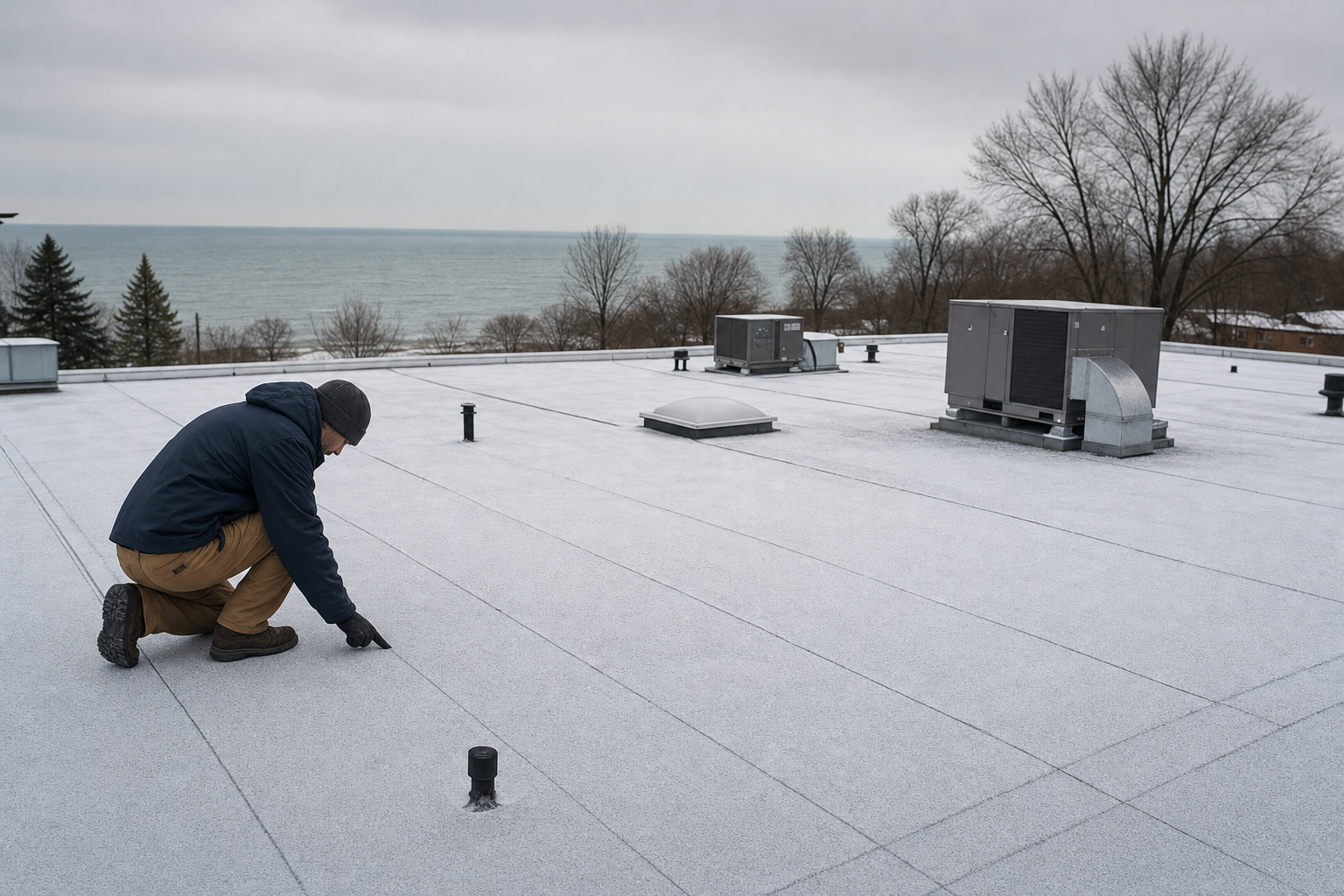
What SBS Modified Bitumen Roofing Is
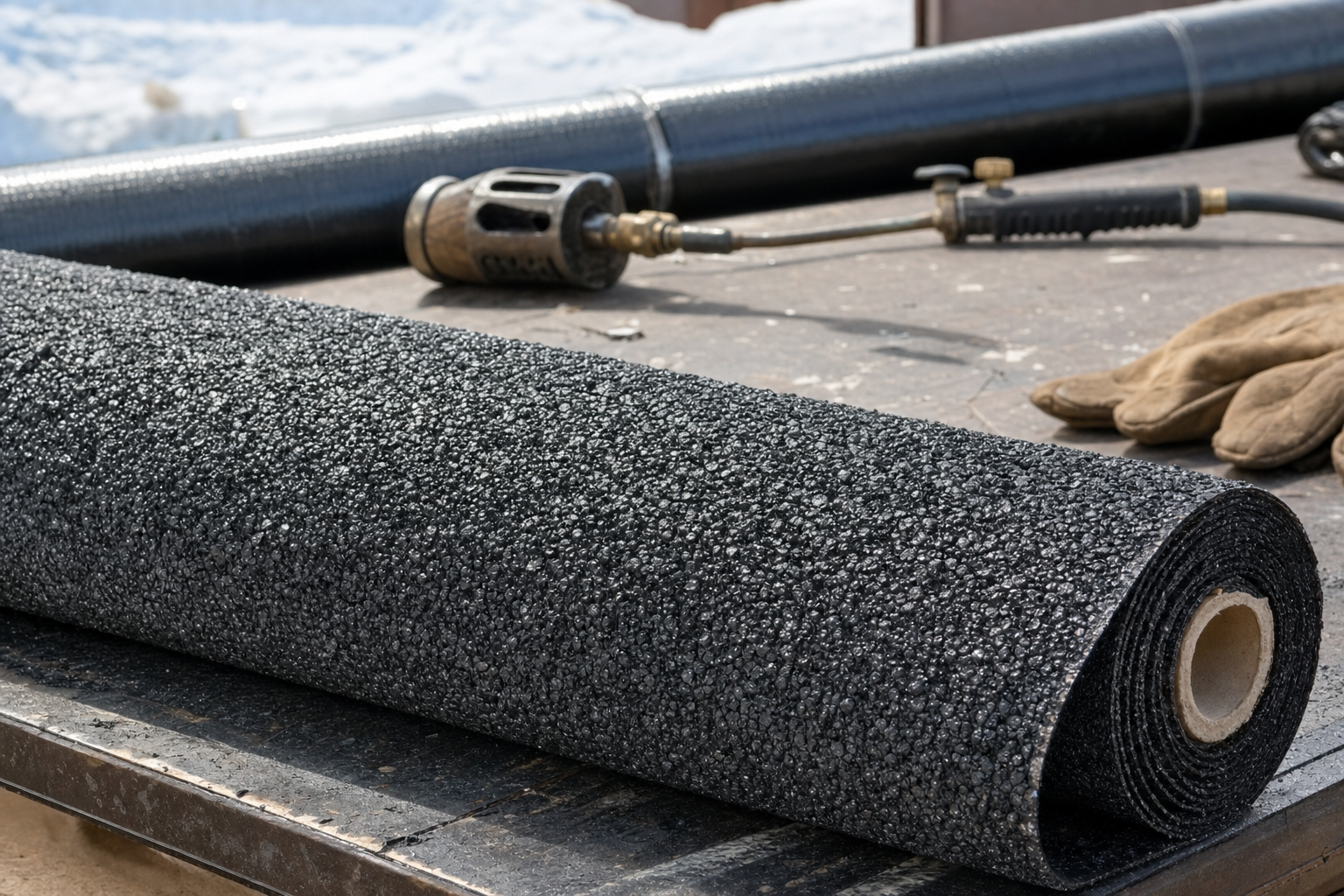
SBS stands for styrene-butadiene-styrene, a synthetic rubber polymer blended into asphalt to make the roofing membrane more elastic than standard asphalt materials. SBS modified bitumen roofing uses rubber-modified asphalt to improve flexibility on low-slope roofs. GAF describes SBS modified bitumen as asphalt enhanced with synthetic rubber, giving the membrane cold-temperature flexibility and strong elongation properties for commercial low-slope roofs. [1]
In plain English: SBS helps the roof move without becoming brittle as quickly when temperatures drop. That matters in Lake County because a low-slope roof, meaning a roof surface that needs a membrane system instead of standard shingles, may warm under sun during the day, cool hard overnight, then collect moisture from snow, ice, or rain. A rigid roof surface can crack, split, or fatigue faster under that kind of movement.
Most SBS systems are installed as multi-layer assemblies. A typical setup may include a base sheet, which is the lower membrane layer that helps anchor the system; a reinforced membrane layer; and a cap sheet, which is the exposed top layer that protects the roof from weather and wear. Flashing is the material and detailing used at edges, walls, drains, curbs, vents, and other transitions where leaks often start. The exact assembly depends on the building, slope, drainage, manufacturer requirements, warranty terms, and whether the project is a repair, recover, or full replacement.
SBS is different from APP modified bitumen, another asphalt-based membrane type. SBS is typically valued for rubber-like flexibility, while APP is often associated with plastic-modified asphalt and heat-welded application methods. Both can be legitimate systems when the manufacturer assembly, installer training, and roof conditions fit the project.
Why Cold-Weather Flexibility Matters Here
Illinois low-slope roofs do not fail only because of one big storm. Often, the problem is repeated movement.
In the Chicago region, January’s 1991–2020 normal average temperature is 25.2°F, with normal lows averaging 18.8°F, so winter roof materials regularly sit below freezing. [2] SBS modified bitumen roofing is useful in that kind of cold weather roofing environment because the membrane is designed to stretch and recover better than conventional asphaltic roofing.
That cold is only part of the story. Along the Lake Michigan shore, moisture can linger. NOAA explains that lake-effect snow develops when cold air moves across relatively warmer lake water, picking up moisture that can later fall as snow downwind. [3] Snow melts and refreezes. Water can work into weak seams, old flashing, drain areas, and transitions where the low-slope roof meets siding, masonry, metal edge, or a steeper shingle roof.
SBS modified bitumen roofing is useful because it is designed to stretch and recover better than conventional asphaltic roofing. That flexibility can help reduce stress at seams, corners, and penetrations when the roof assembly expands and contracts.
Where SBS Makes Sense on Lake County Buildings
SBS modified bitumen roofing is not the answer for every roof. It is usually considered for low-slope sections where asphalt shingles are not the right fit.
Good candidates may include:
- Commercial low-slope roofs
- Apartment or mixed-use building roof sections
- Porch or addition roofs with limited pitch
- Detached garage or shop roofs
- Low-slope tie-ins on larger exterior projects
- Buildings where owners need practical SBS roof repair Illinois guidance before deciding on replacement
GAF notes that self-adhered SBS systems are intended for low-slope areas and can be applied without torches, open flames, or hot asphalt when the correct system is selected. [4] Self-adhered SBS systems can avoid open-flame installation when the selected manufacturer assembly allows it.
For property owners, the practical question is not “What is the newest roof product?” It is “What system fits this roof’s slope, drainage, use, and weather exposure?” A roof over a small rear addition in Waukegan may need a different detail than a commercial roof in North Chicago with HVAC units and regular service traffic. For local help, Lake Point Exteriors can serve as a roofing contractor in Waukegan, help with low-slope roof inspections in Gurnee, and evaluate commercial roofing in North Chicago.
What We Look at Before Recommending SBS Modified Bitumen Roofing
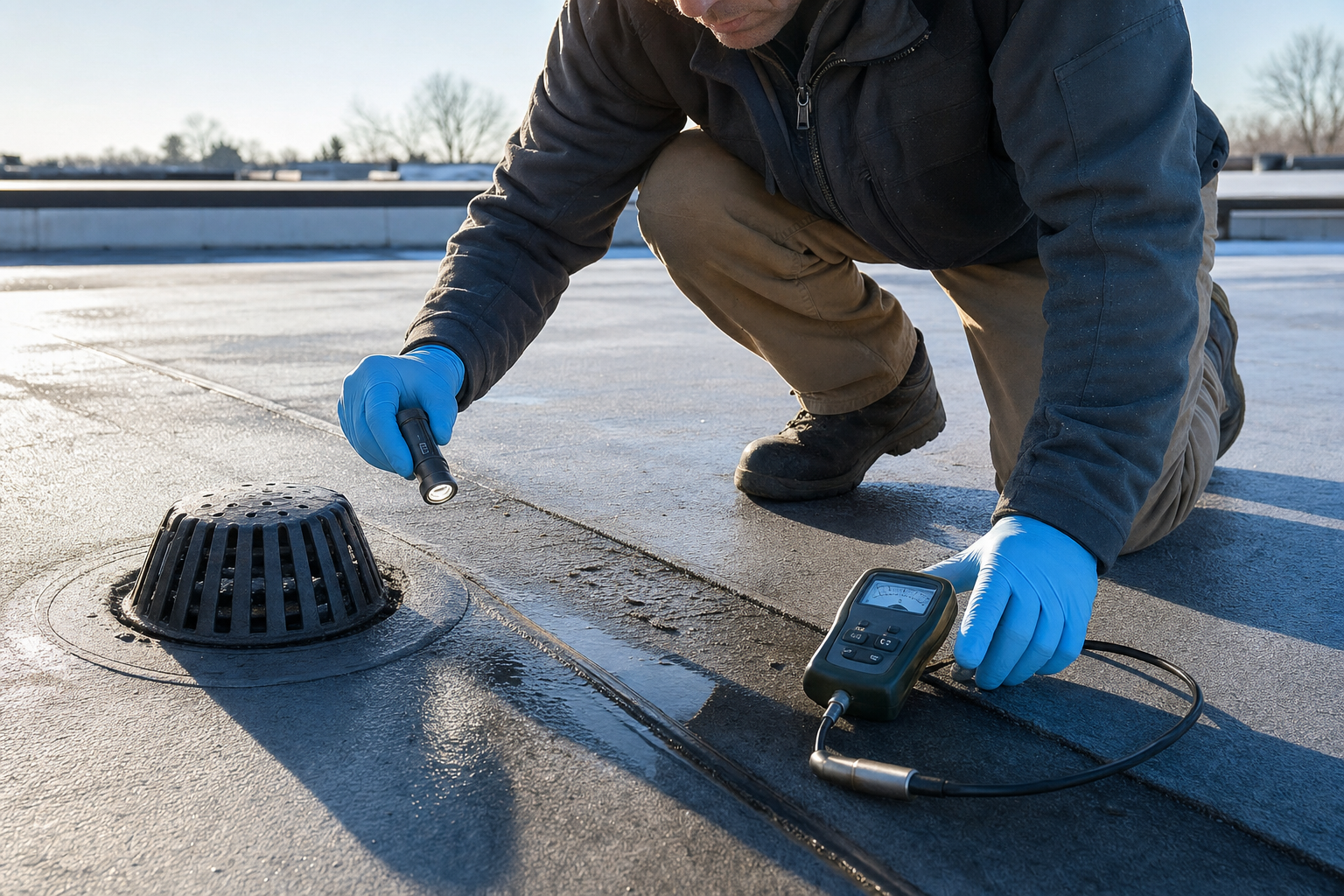
A good low-slope roof inspection starts with the basics. The membrane matters, but so do the details around it.
Low-slope roof performance depends on drainage, seam integrity, flashing details, and membrane condition. Ponding water means water that remains on the roof after rainfall or snowmelt instead of draining away. It should be taken seriously because standing water can accelerate surface wear, stress seams, and point to slope or drain problems that a new membrane alone may not solve.
Key areas to review include:
- Drainage: Water should move off the roof instead of sitting in broad low spots.
- Seams: Open laps, fishmouths, splits, and wrinkles can let water in.
- Flashing: Edges, walls, curbs, vents, and rooftop equipment need tight transitions.
- Surface wear: Granule loss, exposed reinforcement, cracking, and blistering tell a roof’s age story.
- Deck condition: Soft areas can point to trapped moisture below the membrane.
- Prior repairs: Patchwork may hide older leaks or incompatible materials.
- Warranty requirements: Manufacturer coverage may depend on approved products, correct installation methods, ventilation or insulation details, and documented maintenance.
- Roof traffic: HVAC service, footpaths, and maintenance access can change the best system choice.
The National Roofing Contractors Association has long treated modified bitumen as a recognized low-slope roof category, and its installer certification focuses on hands-on skills such as cap sheets, wall flashing details, and drain assemblies. [5]
Repair or Replacement: How the Decision Usually Starts
A modified bitumen roof Illinois property owner may not need a full replacement just because one leak appears. The decision starts with the size of the damaged area, the age of the roof, the condition of the surrounding membrane, and whether water has reached the deck or insulation.
Repair may make sense when the issue is localized, the membrane is still generally sound, and the flashing or seam problem can be corrected with compatible materials. Replacement becomes more likely when cracks, open seams, widespread blistering, saturated insulation, soft decking, repeated ponding, or multiple past repairs show that the roof is no longer performing as a system.
For storm-related or winter-related concerns, document visible damage from the ground when possible, keep notes on leak locations and dates, and save repair records. That documentation can help with Illinois roof damage documentation without assuming what an insurance carrier will or will not cover.
SBS vs. TPO or EPDM
SBS, TPO, and EPDM can all be legitimate low-slope roofing options. The right choice depends on the building.
SBS modified bitumen roofing often makes sense when the owner wants a tough, layered asphalt-based system with strong cold-weather flexibility and familiar repair methods. TPO may be preferred for reflective single-ply performance on some commercial buildings. EPDM can be a strong fit where a rubber membrane system is appropriate and detailing is handled correctly.
The important part is matching the roof system to the roof, not forcing one product onto every building. Around Lake County and southern Wisconsin, that means thinking through cold, moisture, drainage, wind exposure, rooftop equipment, warranty requirements, and how the building is actually used.
When to Choose SBS Modified Bitumen Roofing Over TPO or EPDM
A comparison should start with the roof’s condition, not a favorite product. Commercial flat roof systems perform best when the membrane, insulation, fastening or adhesion method, flashing, drainage, and maintenance plan all work together.
| Roof factor | SBS modified bitumen | TPO | EPDM | | — | — | — | — | | Cold-weather movement | Strong flexibility from rubber-modified asphalt | Can perform well when detailed correctly | Rubber membrane can handle movement well | | Roof traffic | Layered system can be practical where service access is common | Walk pads may be important around equipment | Walk pads and careful detailing matter | | Repair approach | Familiar asphalt-based repair methods | Heat-welded repairs often require trained handling | Adhesive or seam repairs depend on system type | | Reflectivity | Depends on cap sheet or coating | Often selected for reflective white membranes | Usually black unless specified otherwise | | Best-fit question | Do you need a layered, repairable low-slope system? | Is reflective single-ply performance a priority? | Is a rubber single-ply membrane the better fit? |
For a property owner comparing flat roof repair Waukegan options, the table is only a starting point. A field inspection still needs to confirm slope, drain performance, seam condition, flashing, trapped moisture, and manufacturer requirements before Lake Point Exteriors recommends a system.
FAQ: SBS Modified Bitumen Roofing
What is SBS modified bitumen roofing?
SBS modified bitumen roofing is an asphalt-based low-slope roof membrane modified with synthetic rubber for added flexibility.
Is SBS modified bitumen roofing good for Illinois winters?
Yes, it can be a strong option because it stays more flexible than conventional asphaltic roofing during freeze-thaw movement. Installation quality, drainage, insulation, flashing, and the full roof assembly still matter.
How long does an SBS modified bitumen roof last?
Service life depends on installation, drainage, maintenance, foot traffic, roof exposure, and manufacturer system requirements. A roof with chronic ponding, open seams, or neglected flashing can age faster than a similar roof that drains well and receives regular maintenance.
Is SBS better than TPO or EPDM?
Not always. SBS, TPO, and EPDM can all work, but the best choice depends on slope, drainage, rooftop traffic, budget, repair needs, warranty requirements, and how the building is used.
Can SBS modified bitumen be repaired?
Often, yes. Many SBS issues can be repaired when the damage is localized and the surrounding membrane is still in good condition. A contractor should inspect seams, flashing, drainage, and the roof deck before recommending repair or replacement.
Is SBS only for commercial roofs?
No. SBS is common on commercial low-slope roofs, but it can also be used on certain residential low-slope sections such as additions, garages, and porch roofs when the slope and manufacturer requirements fit.
Can Lake Point Exteriors inspect an SBS roof in Lake County?
Yes, Lake Point Exteriors can inspect low-slope roof conditions in Waukegan, Lake County, and nearby service areas, including roof repair in Libertyville.
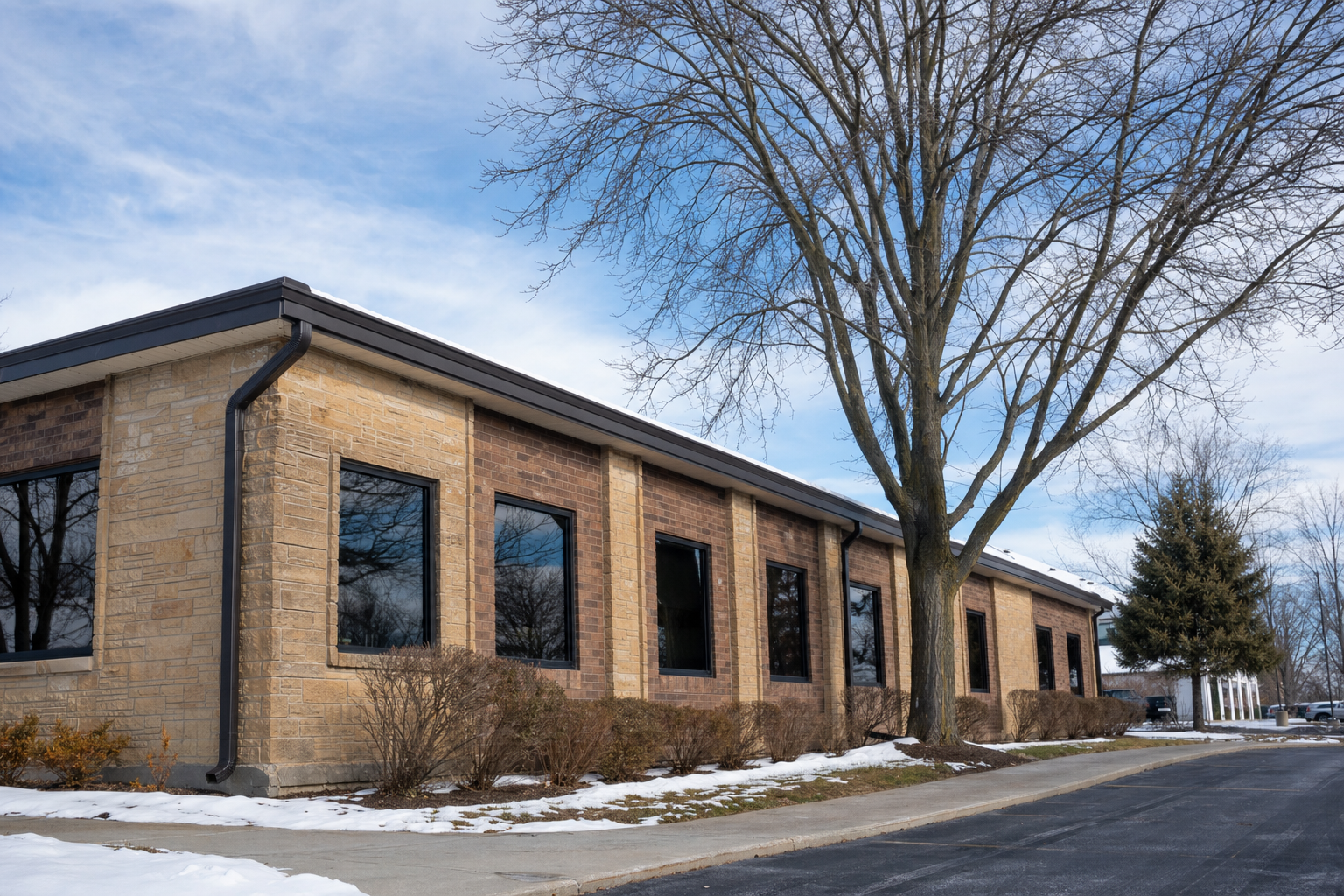
Signs Your Low-Slope Roof Needs an SBS Inspection
A low-slope roof does not always show trouble from the ground. If the roof is safe to view from an accessible point, or if you are noticing interior symptoms, these signs are worth documenting and discussing during an inspection:
- Water stains on ceilings or upper walls after snowmelt or rain
- Cracks, splits, bubbles, or bare spots in the roof surface
- Open seams or loose membrane edges
- Ponding water that stays after weather clears
- Leaks near drains, parapet walls, skylights, vents, or rooftop units
- Repeated patching in the same area
- Soft or uneven roof sections underfoot, when inspected by a qualified professional
- Winter leaks that appear during thaw cycles rather than only during rain
These clues do not automatically mean the roof needs replacement. They do mean the system deserves a closer look, especially on Lake County commercial roofing properties where foot traffic, drains, and rooftop equipment can hide small problems until they become expensive.
Closing CTA
If your low-slope roof in Waukegan, Gurnee, Zion, Libertyville, Lake Forest, Kenosha County, or Racine County is showing cracks, seam wear, ponding, or winter leak signs, Lake Point Exteriors can take a careful look and explain your options in plain language. Document what you see, keep safety first, and request a roof inspection or quote with our team.
References
- GAF, “What Is SBS Roofing?” https://www.gaf.com/en-us/blog/commercial-roofing/what-is-sbs-roofing-11da08f9-29d8-4fee-acea-ebda8c1ed8c8 ↩
- National Weather Service Chicago, “Chicago O’Hare 1991–2020 Climate Normals” https://www.weather.gov/lot/chicago_normals ↩
- NOAA / NESDIS, “Lake-Effect Snow” https://www.nesdis.noaa.gov/our-environment/ice-snow/lake-effect-snow ↩
- GAF, “LIBERTY SBS Self-Adhering Base/Ply Sheet” https://www.gaf.com/en-us/roofing-materials/residential-roofing-materials/residential-roll-roofing/liberty-sbs-self-adhering-base-ply-sheet ↩
- NRCA ProCertification, “Modified Bitumen Systems Installer” https://www.nrca.net/procertification/certifications/modified-bitumen-systems-installer ↩