Tapered Insulation Flat Roof Drainage for Lake County Commercial Roofs
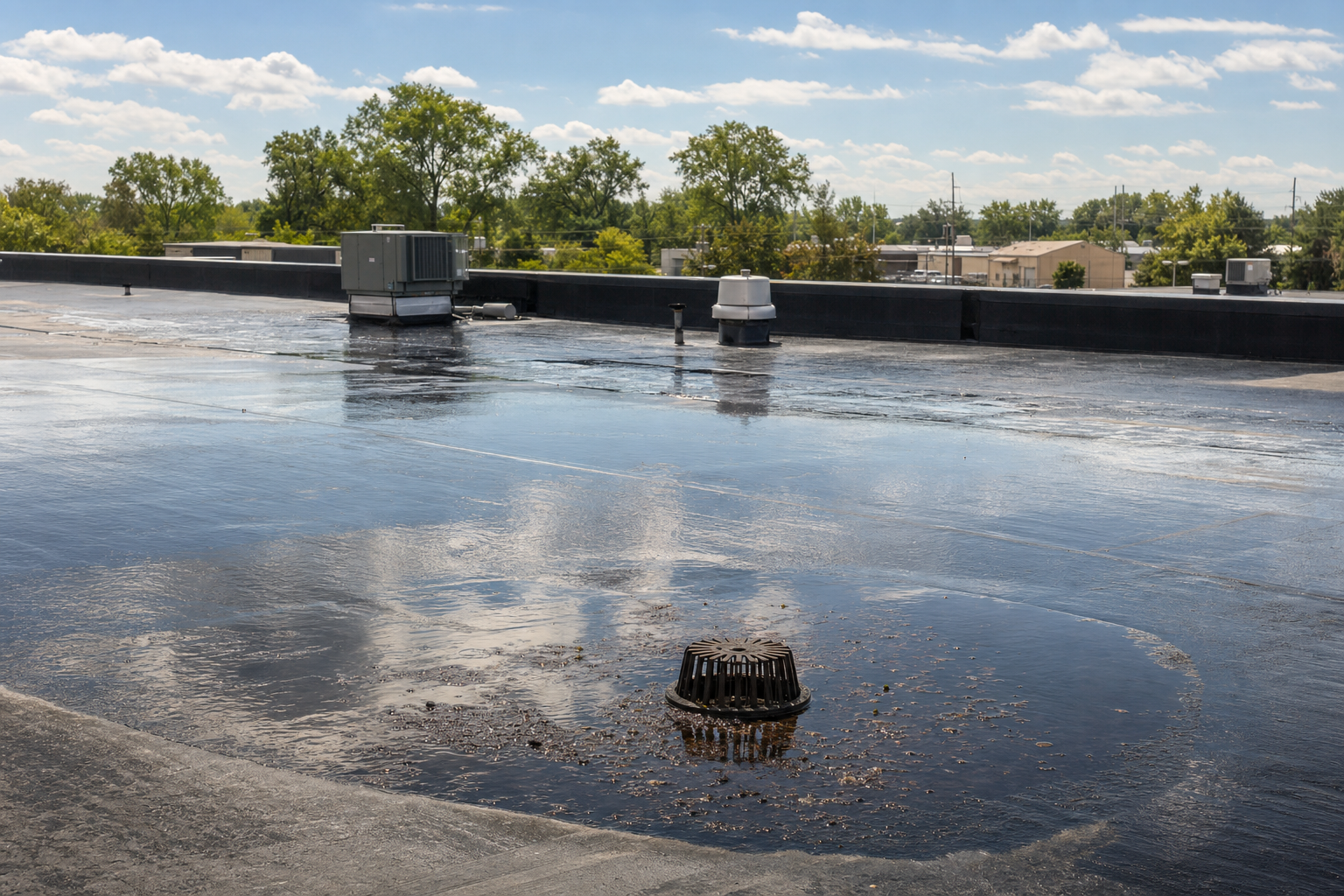
Ponding water on a flat commercial roof is easy to ignore until it starts causing expensive problems. After a hard rain in Waukegan, Gurnee, Zion, Kenosha, or Racine, water that sits around drains, rooftop units, seams, or low spots can stress the roof membrane and shorten the life of the system. Tapered insulation flat roof drainage is one of the cleanest ways to correct that problem during a roof replacement or major repair. Instead of relying on a perfectly sloped roof deck, tapered insulation builds slope into the roof assembly so water moves toward drains, scuppers, or gutters more consistently.
What Tapered Insulation Does
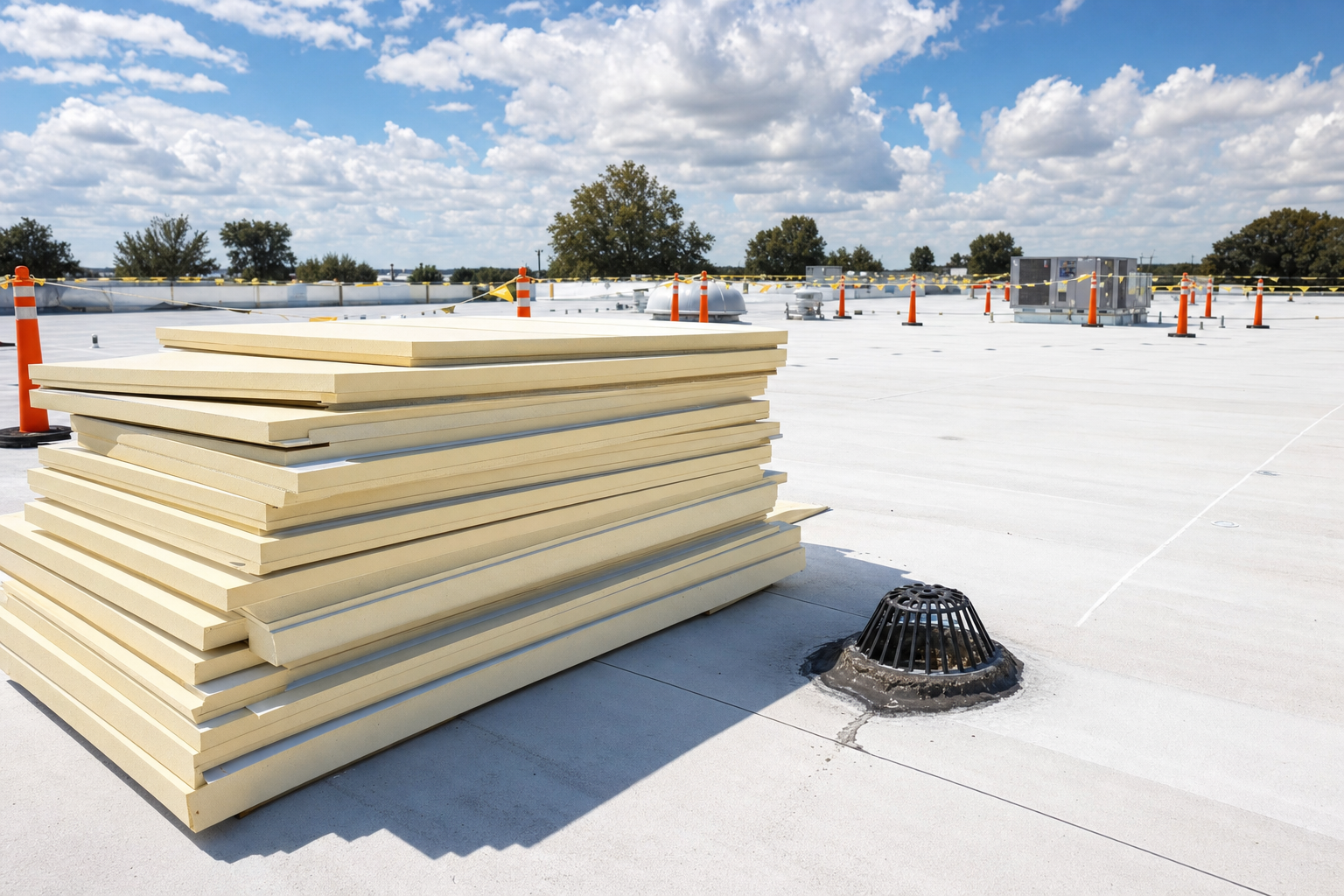
Tapered insulation flat roof drainage starts with rigid roof insulation installed in a planned pattern of different thicknesses. The thicker pieces and thinner pieces work together to create slope across a low-slope roof.
On commercial roofs, tapered polyiso insulation is commonly used under TPO, EPDM, modified bitumen, SBS, and built-up roofing systems. The goal is simple: move water away from the field of the roof and toward the drainage points that were designed for the building. That movement is called positive drainage: water traveling toward drains, scuppers, or gutters instead of sitting in low areas.
A low-slope roof does not shed water like a steep residential roof. GAF describes low-slope roofs as roofs with a slope of 2:12 or less, where rain and melting snow drain more slowly and can collect more easily. [1]
For building owners comparing commercial roofing services in Lake County, tapered insulation is usually part of a larger roof design conversation, not a standalone add-on.
Why Ponding Water Is a Real Roof Problem
A small puddle right after a storm is not always a crisis. The concern is water that keeps returning to the same area or sits long enough to expose weak points in the roof system.
Ponding water is standing water that repeatedly remains on the roof after the roof should have drained. Many roofing references use the 48-hour mark after rainfall, under drying conditions, as the practical threshold for identifying ponding water. [2]
Ponding water can contribute to:
- Premature membrane wear
- Dirt, debris, and organic buildup
- Added weight on low areas of the roof
- Stress around seams and penetrations
- Freeze-thaw pressure during northern Illinois and southern Wisconsin winters
- Leaks that are difficult to trace from inside the building
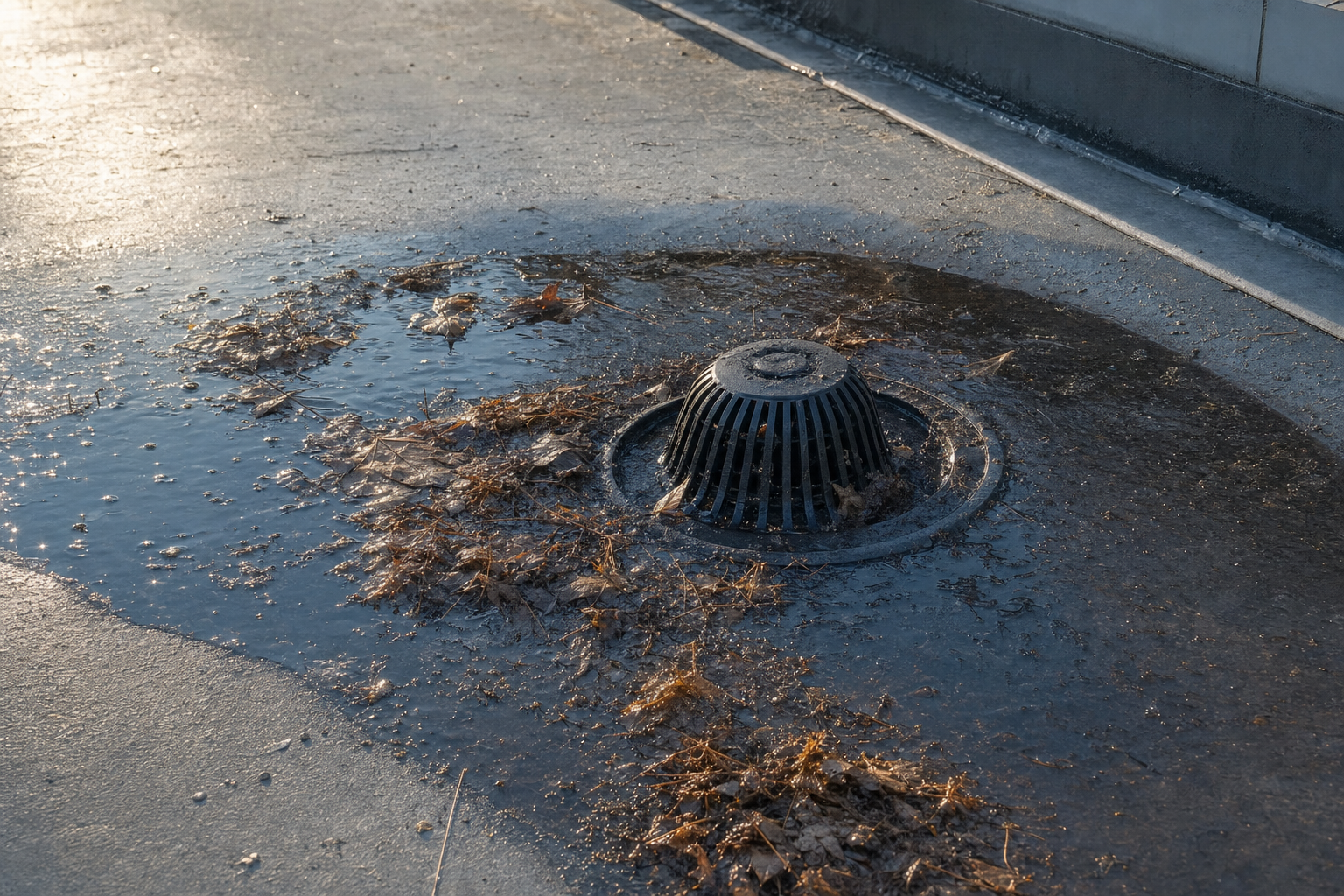
For businesses near Lake Michigan, freeze-thaw cycles make commercial roof drainage even more important. Water that sits during the day can freeze overnight, then expand at seams, flashing details, and small defects. NOAA Climate Data Online provides historical precipitation, snow, and temperature records that can help building owners and contractors understand local weather patterns when evaluating roof performance. [3]
How Tapered Insulation Flat Roof Drainage Works
A good tapered system is not just “add more insulation.” It is a drainage plan.
The roof is measured, existing drains and scuppers are located, and the low areas are mapped. Then the tapered insulation is laid out so the roof surface guides water in the right direction. Depending on the building, the design may use:
- One-way slope toward a gutter edge or scupper
- Two-way slope toward a drain line
- Four-way slope into an internal drain
- Crickets that move water around curbs, HVAC units, or wide obstructions
- Drain sumps that lower the area immediately around a roof drain
A scupper is an opening through a parapet or roof edge that lets water drain off the roof. A cricket is a small sloped area that redirects water around curbs, HVAC units, skylights, and other rooftop obstructions. A roof drain sump lowers the roof area around an internal drain so water can enter the drainage system more easily.
The 2024 International Building Code lists a minimum drainage slope of 1/4 inch per foot for single-ply membrane roof systems. [4] GAF also notes that tapered insulation can help create positive slope to internal drains, scuppers, gutters, and other drainage elements when the structure itself does not provide enough slope. [1]
If gutters or edge drainage are part of the problem, the roof plan should coordinate with gutter and drainage support instead of treating the membrane in isolation.
When Tapered Insulation Makes Sense
Tapered insulation is especially useful when a commercial roof already needs a larger repair, recover, or replacement. It is often considered when a building has:
- Repeated ponding in the same areas
- Drains that sit higher than the surrounding roof surface
- Structural slope that is too flat for reliable drainage
- Long roof runs with water moving too slowly
- Rooftop equipment that traps water behind curbs
- A history of leaks after heavy rain or snowmelt
It can also improve the roof’s thermal performance because it is still insulation, not just a drainage accessory. The exact R-value depends on the insulation type, thickness, and roof design, so that should be calculated for the building instead of guessed.
That calculation matters on real buildings. Added insulation thickness can affect roof height at edges, curbs, rooftop doors, parapet transitions, and equipment clearances. A good low-slope roof repair plan accounts for drainage, energy performance, flashing height, and code requirements at the same time.
What the Inspection Should Check First
Before recommending tapered insulation, a contractor should look at the whole drainage system. Adding slope will not solve every drainage issue if the drains are clogged, the scuppers are undersized, or the roof deck is moving.
A proper commercial roof inspection should review:
- Current ponding areas after rain
- Drain and scupper locations
- Debris buildup around drainage points
- Membrane seams and flashing
- Parapet walls and edge metal
- Rooftop HVAC curbs and penetrations
- Signs of deck deflection or trapped moisture
The inspection sequence should start with the simplest failure points first: drains and scuppers, then deck deflection, then moisture scan or core cuts where needed, and finally the tapered layout. The IBHS and RICOWI roof best-practices guide emphasizes evaluating roof condition, maintenance, repair, and replacement options before assuming a full replacement is the only path. [5]
For Lake County, Kenosha County, and Racine County buildings, the inspection should also account for winter ice, spring rain, and Lake Michigan moisture. FEMA’s snow load safety guidance is a useful reminder that snow, ice, and roof drainage issues should be treated as part of the same winter-risk picture for commercial buildings. [6] The best roof design is not just what works on a dry drawing. It is what drains on the actual building.
A flat roof inspection Lake County building owners can trust should document the drainage issue clearly, explain whether the membrane is still serviceable, and separate urgent leak risks from longer-term design improvements.
Tapered Insulation vs. Drain Repair: Which Fix Comes First?
Not every ponding water flat roof issue needs the same fix. If the drain is clogged, the first step may be cleaning and maintenance. If a scupper is blocked or undersized, the solution may involve edge drainage work. If the roof deck has sagged, the building may need structural review before any roof assembly changes are made.
Tapered insulation creates slope in a low-slope roof assembly when the roof deck does not drain consistently. That makes it a strong option when the roof surface itself is sending water to the wrong place, or when the existing slope is too weak to move water after rain and snowmelt.
For commercial flat roof repair Lake County projects, the practical question is usually this: is the roof failing because water cannot leave, because the membrane has aged out, or because both are happening at the same time? A targeted roof drain sump or cricket may solve a localized drainage problem. Widespread ponding across an older roof may point toward a larger replacement plan that includes tapered insulation, new membrane, better flashing, and updated drainage details.
If the roof started leaking after hail, heavy wind, or fast snowmelt, a storm damage roof inspection should come before any final repair decision. If the roof has recurring leaks in the same low areas, Lake County roof repair should include drainage mapping so the same problem does not return after the membrane is patched.
Tapered Insulation Flat Roof Drainage FAQ
What is tapered insulation on a flat roof?
Tapered insulation is rigid roof insulation installed in different thicknesses to create slope and guide water toward drains, scuppers, or gutters.
Does tapered insulation stop ponding water?
It can reduce ponding when poor slope is the cause, but drains, scuppers, deck movement, and trapped moisture must be inspected first.
Is tapered polyiso insulation used under TPO and EPDM?
Yes. Tapered polyiso insulation is commonly installed under commercial TPO, EPDM, modified bitumen, SBS, and built-up roofing systems.
When should a Lake County building owner ask about tapered insulation?
Ask during a commercial flat roof inspection if the same roof areas hold water after rain, snowmelt, or freeze-thaw cycles.
Can tapered insulation be added without replacing the whole roof?
Sometimes. Localized tapered repairs may work, but widespread ponding, wet insulation, or an aging membrane may require a larger roof plan.
Closing CTA
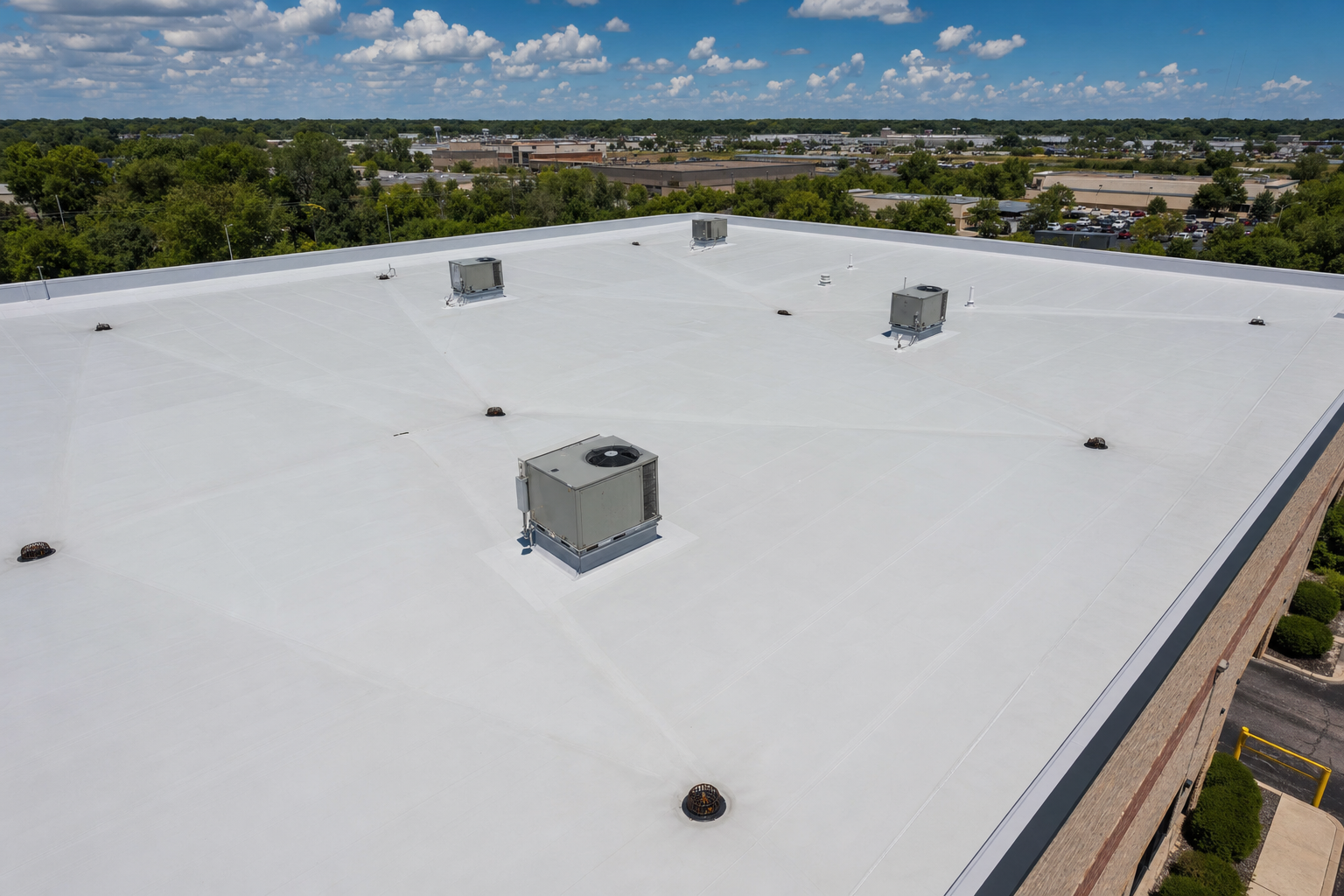
If your commercial roof in Waukegan, Gurnee, Zion, Highland Park, Lake Forest, Lake County, Kenosha County, or Racine County keeps holding water after storms, Lake Point Exteriors can take a closer look. Book a free commercial flat roof inspection and quote, and we’ll document what we see, explain the drainage issue in plain English, and recommend the right repair or replacement path for your building.
References
- GAF, “Mitigating Water on Roofs,” https://www.gaf.com/en-us/blog/building-science/mitigating-water-on-roofs-9e57965a-6f6c-42dc-a1a0-6d60a2b3156a ↩
- NRCA, “Avoiding ponding water by achieving positive drainage,” https://www.nrca.net/roofingguidelines/Library/Detail?id=_r8zKxD3L_A%3D ↩
- NOAA Climate Data Online, https://www.ncdc.noaa.gov/cdo-web/ ↩
- 2024 International Building Code, Section 1507.12.1, https://codes.iccsafe.org/content/IBC2024P1/chapter-15-roof-assemblies-and-rooftop-structures ↩
- IBHS / RICOWI, “Best Practices Guide for Roofing,” https://ibhs.org/guidance/ricowi-roof-guide/ ↩
- FEMA P-957, Snow Load Safety Guide, https://www.wbdg.org/dhs/fema/femap957 ↩