Ice Dam Prevention in Chicago: Winter Roof Prep for Lake County Homes
Ice dam prevention in Chicago-area homes usually starts with a simple warning sign: a homeowner notices heavy icicles, water stains, or frozen gutters after a hard Lake County cold snap. An ice dam forms when meltwater refreezes at the colder roof edge and blocks drainage. Around Waukegan, Gurnee, Zion, Beach Park, Grayslake, Lake Forest, Libertyville, North Chicago, Kenosha County, Pleasant Prairie, and Racine County, winter roof trouble is rarely about one snowfall. It is usually the freeze-thaw cycle: repeated melting and refreezing during winter temperature swings. Snow melts on a warm roof surface, runs toward the colder eave, which is the lower roof edge, then freezes again. The good news is that Chicago-area roof winter prep can lower the risk before the worst December-through-February weather settles in.
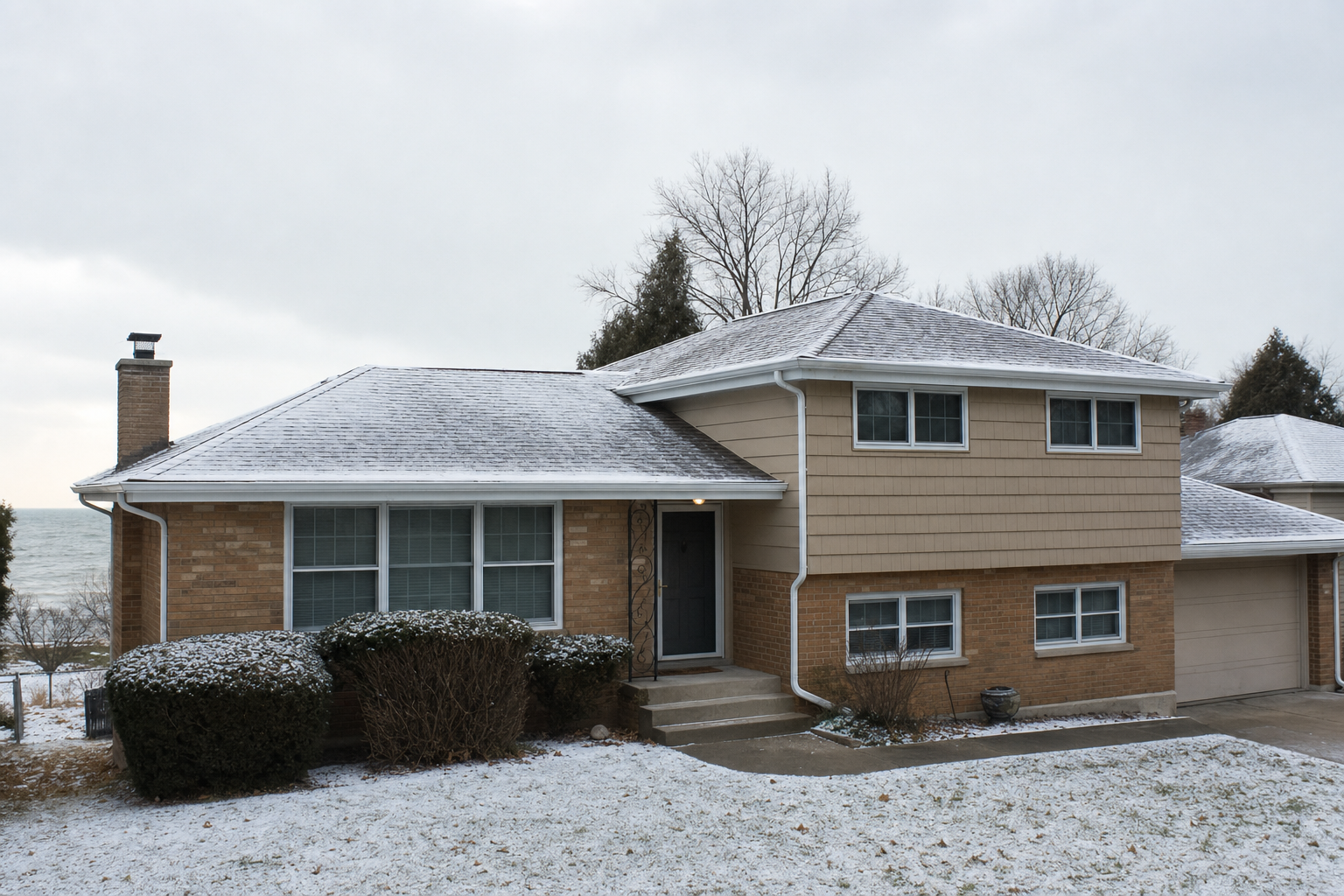
Why Ice Dams Form on Chicago-Area Roofs
An ice dam is a ridge of ice near the roof edge that blocks melting snow from draining off the roof; the trapped meltwater can work back under shingles and into roof assemblies. [1]
The root problem is usually heat movement. Warm air escapes from the living space into the attic, warms the roof deck, melts the underside of the snow, and sends water downhill. At the eave, where the roof stays colder, that water freezes.
For ice dam prevention, Chicago homeowners should focus on roof temperature, attic air leaks, and drainage together. Lake Michigan moisture makes this more frustrating because roofs can see wet snow, wind-driven snow, deep cold, and quick thaws in the same season. National Weather Service Chicago winter guidance also treats snow, ice, wind, and cold as serious regional hazards that can affect homes and travel during the same storm system. [2]
Homes with architectural asphalt shingles, older attic insulation, clogged gutters, or complex rooflines can be more vulnerable. That is why ice dam prevention in Lake County is not only a roofing issue. It is a roof, attic, ventilation, insulation, and drainage issue.
Start With the Attic, Not the Icicles
It is tempting to focus on the ice you can see. But strong ice dam prevention starts under the roof.
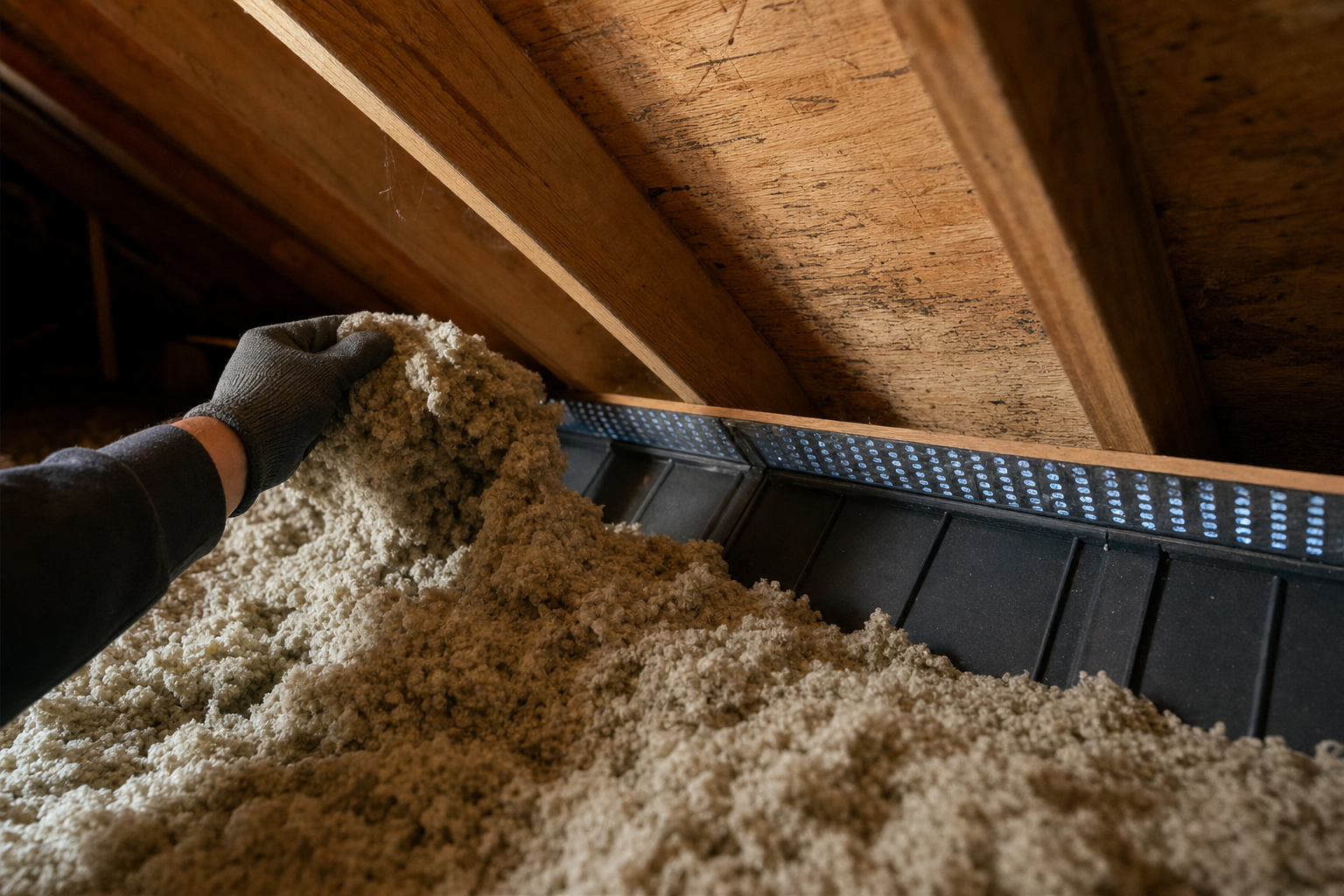
A winter-ready attic should support a colder, more even roof surface. That usually means:
- Sealing air leaks around attic penetrations, top plates, ducts, bath fans, and recessed lighting
- Checking whether insulation is even, dry, and deep enough
- Keeping soffit and ridge ventilation paths open
- Making sure bathroom and kitchen exhaust vents terminate outside, not into the attic
- Looking for dark staining, damp insulation, frost, or musty odors after cold nights
Soffit ventilation means intake airflow under the roof edge, and it needs a clear path toward the upper roof ventilation so attic air can move. When soffit vents are blocked by insulation, paint, debris, or storage, attic ventilation ice dams become more likely because warm air and moisture have fewer ways to escape.
The U.S. Department of Energy notes that uncontrolled air leakage can affect comfort, moisture, durability, and energy use, and air sealing should work together with proper insulation. [3]
For winter roof prep Chicago homeowners can actually act on, the attic is often the best place to begin. A roof inspection in Waukegan can identify exterior warning signs, but attic conditions often explain why those signs are showing up.
Clean Gutters Before Snow Locks Them Up
Gutters do not create the heat problem behind ice dams, but blocked gutters make winter drainage worse. Gutters can worsen ice buildup, but attic heat loss is usually the root cause of ice dams.
Leaves, shingle granules, seed pods, and roof debris can hold water at the roof edge. Once that water freezes, the added weight can strain gutters, fascia, and fasteners.
Before the first serious freeze, check that gutters are clear and firmly attached. Downspouts should discharge water away from the foundation, and splash blocks or extensions should not be buried under leaves. On Lake County homes with mature trees, gutter winter maintenance matters even if the roof looks fine from the street.
If gutters are sagging, pulling away, or overflowing during fall rain, do not wait for January ice to expose the problem. Ice dams Lake County IL homeowners see in winter often start with a mix of attic heat loss, poor drainage, and roof-edge conditions that were already visible in fall.
What Homeowners Can Safely Check From the Ground
Do not climb onto a snowy or icy roof. A simple ground-level check can still tell you a lot.
Look for:
- Heavy icicles concentrated in one roof area
- Uneven snow melt across the roof
- Ice buildup at valleys, eaves, and gutter lines
- Water stains on ceilings after thaw days
- Shingles that appear lifted, curled, or missing
- Gutters pulling loose from fascia
- Soffit staining or peeling paint near roof edges
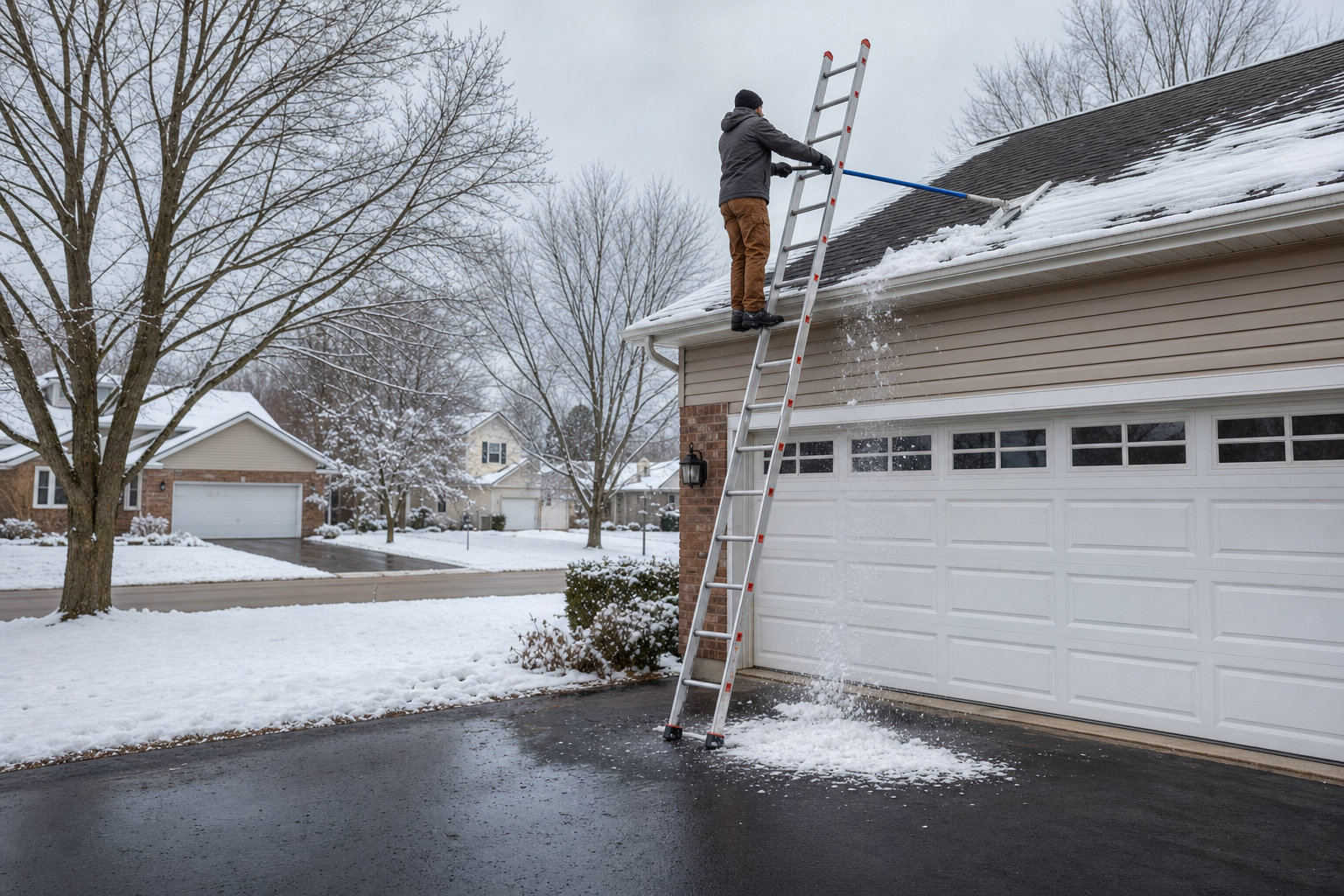
A roof rake can help remove snow from the lower roof edge when used from the ground, but aggressive scraping can damage shingles. The goal is to reduce weight and meltwater, not scrape the roof bare.
Chicago ice dam prevention should stay practical and safe. If you see interior water stains, heavy roof-edge ice, active dripping, loose gutters, or signs of ice dam roof damage, stop the DIY checks and schedule a professional inspection.
Roof Materials That Help in Winter
No shingle can stop ice dams if attic heat and drainage problems are ignored. Still, a good roofing system gives the home a better defense.
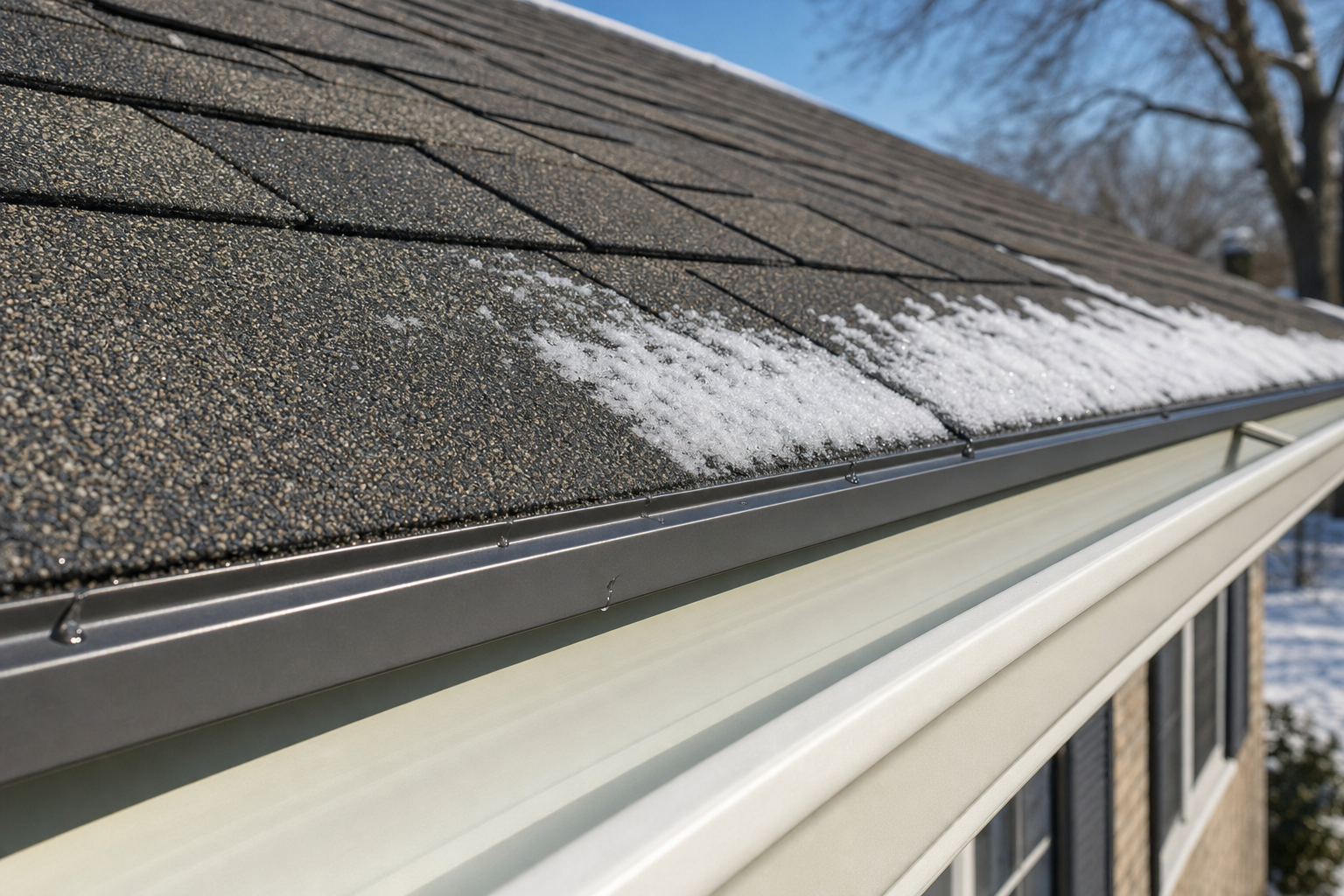
On a proper roof replacement, winter protection may include ice and water barrier at vulnerable eaves and valleys, synthetic underlayment, correctly installed starter shingles, balanced ventilation, durable flashing, and shingles matched to Midwest wind and freeze-thaw conditions.
Ice and water barrier is a self-adhering underlayment used at vulnerable roof areas, including eaves, valleys, and some penetrations. Ice and water barrier helps protect vulnerable roof edges, but it does not stop ice dams from forming. If attic heat keeps melting snow from underneath, water can still back up and test the roof assembly.
For residential sloped roofs, the priority is usually attic air sealing, insulation, soffit intake, ridge or upper roof ventilation, roof-edge protection, flashing, and drainage. For commercial flat roofs in Waukegan, North Chicago, Kenosha, and nearby areas, winter prep looks different. TPO, EPDM, modified bitumen/SBS, and built-up roofing systems need clear drains, sound seams, intact flashing, and inspection around penetrations before snow load and standing water become a problem.
When Ice Dam Risk Needs a Professional Inspection
Fall roof prep is best scheduled from September through November in the Chicago area. That gives homeowners time to clean gutters, check attic conditions, review ventilation, and fix vulnerable roof details before heavy snow and deep cold arrive.
A professional inspection is especially useful when the same area develops ice every winter, when attic moisture appears after cold nights, when shingles are lifted or missing, or when gutters are pulling loose. Lake Point Exteriors is based in Waukegan and serves Lake County and nearby Chicago-area communities, including Gurnee, Zion, Beach Park, Grayslake, Libertyville, Lake Forest, North Chicago, Kenosha County, Pleasant Prairie, and Racine County.
Ice Dam Prevention FAQ
What causes ice dams on Chicago-area roofs?
Ice dams usually form when heat escaping into the attic warms the roof deck, melts snow, and the meltwater refreezes at colder eaves or gutter lines.
Do clogged gutters cause ice dams?
Clogged gutters do not usually cause the roof heat problem, but they can trap water and debris at the roof edge, making winter drainage and ice buildup worse.
Can ice and water barrier prevent ice dams?
Ice and water barrier helps protect eaves and valleys from water intrusion, but prevention still depends on air sealing, insulation, ventilation, and drainage.
Is it safe to remove ice dams myself?
Homeowners should not climb onto snowy or icy roofs. Ground-level checks and careful roof-rake use may help, but heavy ice, active leaks, or unsafe conditions should be inspected by a professional.
When should Chicago-area homeowners schedule ice dam prevention work?
September through November is best, but attic, gutter, and roof checks can still reduce risk during winter before the next freeze-thaw cycle.
Schedule a Winter Roof or Gutter Inspection
If you are seeing heavy icicles, attic moisture, loose gutters, or signs of winter roof stress in Waukegan, Gurnee, Zion, Lake Forest, Libertyville, Kenosha County, Racine County, or nearby communities, Lake Point Exteriors can take a look. For ice dam prevention Chicago-area homeowners can act on before the next freeze-thaw cycle, book a free roof or gutter inspection, get clear photos of what we find, and plan the right repair or winter prep before small problems turn into bigger leaks.
References
- University of Minnesota Extension, “Preventing Ice Dams”, https://extension.umn.edu/protecting-home-rain-and-snow/preventing-ice-dams ↩
- National Weather Service Chicago, “Winter Weather Safety”, https://www.weather.gov/safety/winter ↩
- U.S. Department of Energy, “Air Sealing Your Home”, https://www.energy.gov/energysaver/air-sealing-your-home ↩